


Driving economic resilience
through localization
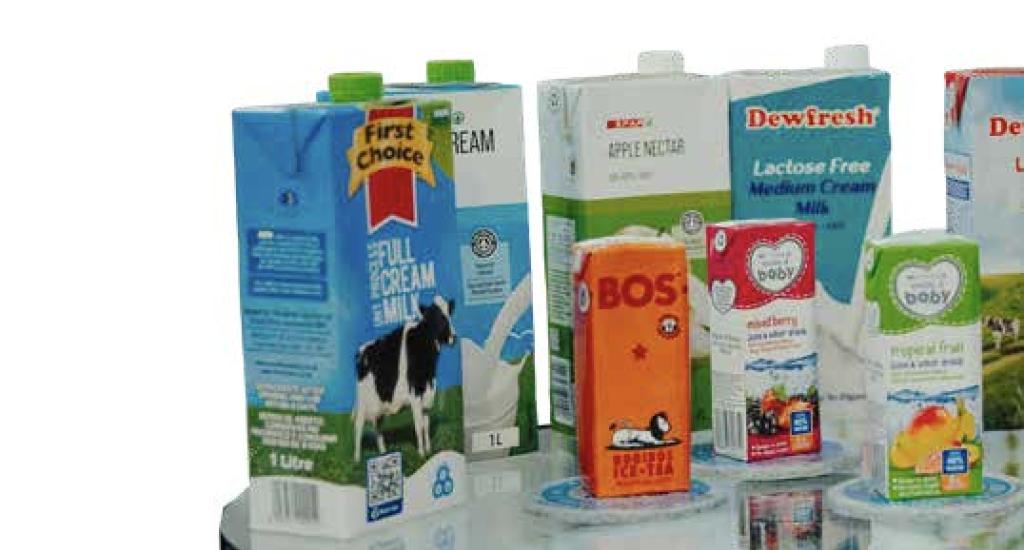
Efforts to strengthen South Africa’s local economy and supply chains received a significant boost at the 2026 Proudly South African (Proudly SA) Buy Local Summit and Expo. The annual event, held on 16 – 17 March at the Sandton Convention Centre in Johannesburg, showcased initiatives aimed at promoting domestic production and supporting local businesses.
A highlight of the summit was the Automotive Industry Transformation Fund's (AITF)pledge of R1 billion to enhance local production capacity. Established by multinational automotive original equipment manufacturers (OEMs), the AITF seeks to expand inclusive participation across the automotive sector value chain, fostering growth and innovation within the industry.
This commitment was among 12 key pledges unveiled at the summit to accelerate enterprise and supplier development. The initiatives are designed to particularly benefit micro, small, and medium-sized enterprises that manufacture and utilise locally produced goods, reinforcing South Africa’s push towards economic self-reliance.
The R1 billion localisation commitment adds to the
R6 billion already secured since the programme’s
inception in 2018.
Inclusive economy
Announcing the latest pledge, AITF Chief Executive Officer Jabulani Selumane emphasised that localisation is not merely a policy goal, but a strategic imperative essential to ensuring the long-term competitiveness and sustainability of the automotive sector.
“As part of this commitment, the AITF is working with industry, partners and stakeholders to unlock approximately R1 billion in funding, focusing on localisation and investment over the next four years,” said Selumane.
He added that the investment will focus on strengthening the capabilities of local manufacturers, enhancing supplier competitiveness and broadening the participation of black-owned enterprises across the secondary value chain.
Selumane noted that, collectively, these efforts reinforce the AITF’s commitment to building a robust local supplier base, ensuring that a greater share of automotive components is manufactured locally. He emphasised that the impact of these localisation initiatives extends far beyond financial investment.
“By strengthening supplier capabilities and strengthening participation in automotive value chains, they are helping to create new employment opportunities, supporting industrial entrepreneurs, as well as retaining existing jobs within the South African manufacturing ecosystem,” he said.
Growing confidence
Proudly SA CEO Eustace Mashimbye described the commitments as encouraging, highlighting a rising market appetite to boost South Africa’s production capabilities.
“These R1 billion commitments and additional commitments are indicative of the growing confidence by our private sector partners that localisation is not only the right thing to do, but an intervention that makes commercial sense,” he said.
As supply chains come under mounting pressure from geopolitical tensions and global uncertainty, Mashimbye argues that localisation is no longer simply a viable option, but an existential necessity.
He added that the growing localisation commitments are galvanising Proudly SA to bring more like-minded partners on board, with the aim of turbocharging economic growth, reindustrialising the economy and creating much-needed jobs.
More support
Standard Bank, the headline sponsor of this year’s summit and expo, also reaffirmed its commitment to its enterprise and supplier development programme, aimed at enabling 51% black-owned small and medium-sized businesses to access finance, markets and business development support.
“Through our comprehensive Enterprise and Supplier Development Programme, we have worked with thousands of black-owned enterprises, supporting them with access to finance, markets and business development. The programme has had significant success, enabling the sustainability of local South African businesses,” said Naledzani Mosomane, Head of Enterprise and Supplier Development for Business and Commercial at Standard Bank South Africa.
In 2025, the programme supported more than 1 200 participants, of whom 38% were women and 32% were youth-owned small and medium-sized enterprises.
“We disbursed R143.6 million worth of funding, and our enterprise and supplier development loan book stood at R228 million. Furthermore, we created over 890 new jobs through our various initiatives,” she said.
She added that, through the Basali Development programme, the bank has supported more than 600 black women-owned businesses and disbursed R5.4 million in grant funding, while the Youth Forward programme, in partnership with the Gordon Institute of Business Studies, strengthens entrepreneurial and leadership competencies among young business owners.
Building a resilient economy through localisation
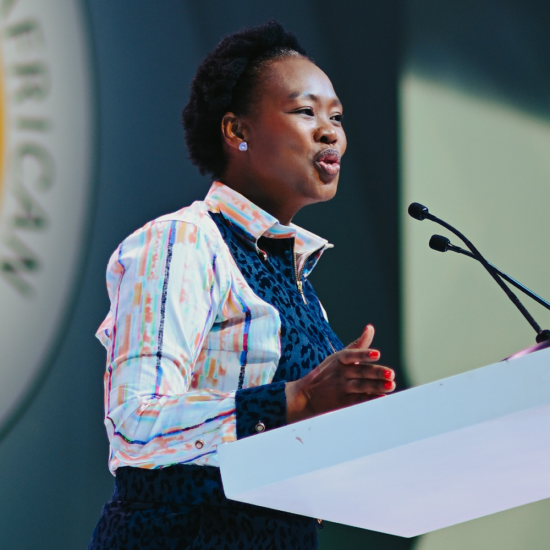
Addressing the summit, Small Business Development Minister Stella Ndabeni described localisation as a strategic imperative towards building a more resilient economy. She stated that government has now prioritised it alongside the development of regional value chains with other countries in the Southern African Development Community and across the African Continental Free Trade Area.
“Every rand spent at a local business helps circulate money within our economy, enabling businesses to grow, employ more people and build communities. MSMEs employ millions of people – with most reports suggesting this could be as high as 60% of employed persons in the country,” she said.
She said her department is pleased to have officially partnered with Proudly SA, using localisation as a lever to facilitate market access. A key objective of the collaboration is to leverage the Buy Local Summit and Expo as a platform for small enterprises to showcase their locally made products. The occasion also provides opportunities for businesses to network through the business-to-business matchmaking programme, helping them benefit from the import-replacement imperative.
“We are confident this will make a significant contribution towards our National Development Plan target of 9 million of the 11 million jobs by 2030 being created through MSMEs,” she said.
This approach will also help build critical economic resilience against rising global volatility, trade protectionism, and disruptions in supply chains. ❖
videos & photos