



Mkhwanazi steering skills development for a transformative W&RSETA
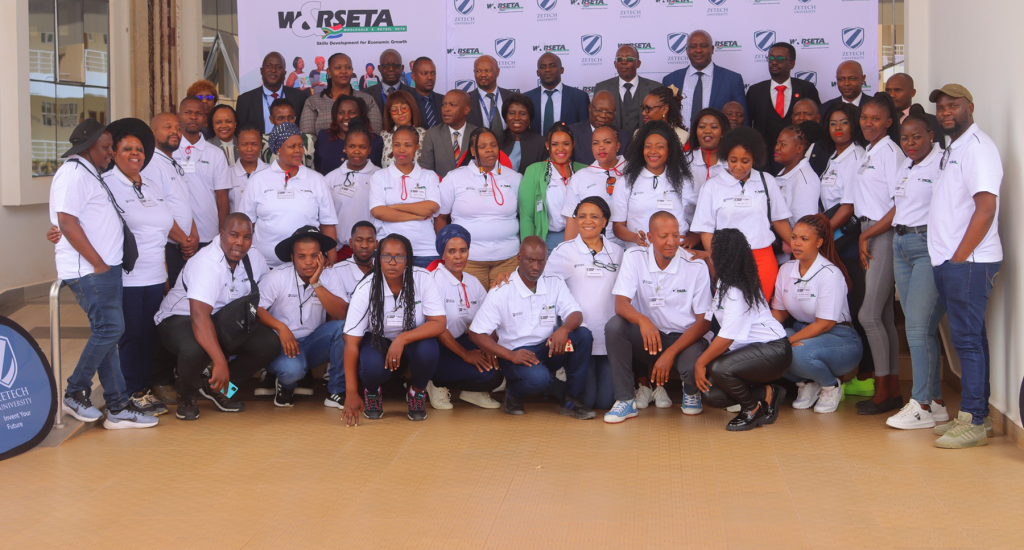
Tom Mkhwanazi’s reappointed as Chief Executive Officer of the Wholesale and Retail Sector Education and Training Authority (W&RSETA) affirmed the sector’s confidence in a leader who has spent years reshaping the country’s largest labour-absorbing industry through inclusive, future-focused skills development.
Reappointed in October 2025, his previous tenure was marked by strategic expansion, international benchmarking, and a fierce commitment to ensuring that South Africans thrive.
Facilitating skills development
The W&RSETA was established in 2000 under the Skills Development Act. It is mandated to facilitate skills development in the wholesale and retail sector through learning programmes, grant disbursements and rigorous monitoring of training.
It operates under the Department of Higher Education and Training as one of 21 Sector Education and Training Authorities (SETAs) servicing distinct parts of the economy. For Mkhwanazi, the significance of the sector cannot be overstated.
“This sector contributes about 14% to the GDP and about 20% to the country’s labour market, so it is quite a big sector. Our role is quite broad because we are looking at people who are in the organisation to be up-skilled, multi-skilled and re-skilled. We are also looking at young people who do not have opportunities because they have just left school... young people leave universities and colleges with knowledge but they do not have the skills to get into employment,” he said.
Inclusive economic participation
Much of Mkhwanazi’s leadership is centred on expanding support to constituencies that operate beyond formal structures. His foreword to the W&RSETA’s 2024/25 Annual Report highlights an intentional shift towards ensuring that young people, informal traders, small enterprises and community-based groups can participate meaningfully in the economy.
“We focus on ensuring that young people who come out of this environment start their own employment. We have a segment that focuses on four areas, including Small, Medium, and Micro Enterprises (SMME) support for skills development, informal sector, entrepreneurship development, and community-based organisation,” he explained.
These efforts formed part of a broader five-year strategy in which the SETA supported 83 678 unemployed youth and 60 440 workers through learnerships, skills programmes, graduate placements, bursaries, apprenticeships and entrepreneurship initiatives, with 42 473 participants completing their programmes.
This large-scale contribution laid the foundation for a more inclusive and adaptable workforce across the wholesale and retail sector.
A tailored approach
The needs across the sector’s priority groups differ greatly, and Mkhwanazi is acutely aware of this complexity. He noted that the informal sector requires tailored approaches that recognise time constraints, operational risks and regulatory pressures.
“The informal sector consists of people who work and do not have the time to be going for training programmes. Therefore, we had to ensure that the training programme is fit for purpose... They obviously struggle with compliance, municipal bylaws and food safety [among other challenges]. We must implement our programmes to assist them.”
Under his stewardship, the W&RSETA delivered support at an unprecedented scale: over 20 000 SMMEs, 15 000 informal traders, more than 1 000 emerging entrepreneurs, and over 1 000 community-based organisations.
Post-school education infrastructure
The SETA also made significant investments in post-school education infrastructure, allocating R108.3 million to nine Community Education and Training (CET) colleges and R246.5 million to 43 Technical and Vocational Education and Training (TVET) colleges over the five-year period.
Mkhwanazi is candid about the contextual difficulties that hinder seamless skills development in South Africa.
“Our work is only on post-school education... people in South Africa and the rest of Africa leave school at different levels and and, therefore, cannot then have one form of a training programme that is going to work for everyone. Those are the type of challenges we are facing.”
To improve impact, he has looked to African peers for solutions. For instance, Ethiopia’s large-scale SMME training model, which reaches 400 000 trainees annually, offers valuable lessons in diagnostic planning, language considerations and innovative scheduling.
“They have found a niche in terms of assessments, diagnostics and dealing with issues of language... these are all the issues that we take for granted.”
Regional collaboration
This regional collaboration has become a hallmark of his leadership. Under his guidance, informal traders have been exposed to new ecosystems in Kenya and Egypt, while young graduates have benefited from cross-border e-commerce training in China, forming part of a hybrid graduate placement and entrepreneurship initiative.
Strengthening local partnerships
He is equally committed to strengthening local value chains. In partnership with major retailers, the W&RSETA has supported small-scale farmers in the Eastern Cape and KwaZulu-Natal, enabling 200 participants to secure market access where they previously operated only at subsistence level.
For Mkhwanazi, the future of skills development cannot hinge on isolated interventions. “No education or skills development will be successful without working with a whole other ecosystem. If we are not collaborating in a certain area, we are just training people for unemployment,” he assrted.
This principle guides his approach to partnerships across government, industry, academia, civil society and international networks. It also underpins his vision for a W&RSETA that is more agile, more developmental and more attuned to the realities facing both workers and entrepreneurs.
videos & photos