




SALGA envisages more coalitions
post-2026 municipal elections
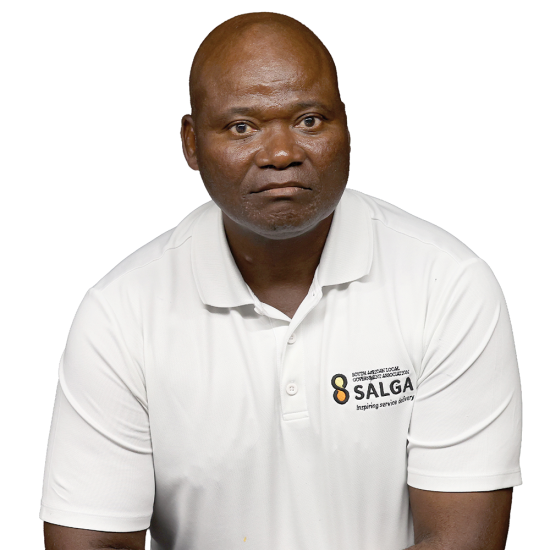
With the 2026 Local Government Elections approaching, the President of the South African Local Government Association (SALGA) Bheke Stofile envisages that there will be an increase in coalition governments across municipalities. Speaking to Public Sector Manager (PSM) magazine, Stofile said the country must prepare for an increase in coalition governments.He highlighted that although coalitions are not a new phenomenon, prevalence in municipalities has grown significantly over the years. Stofile added that, through a coalition framework developed by SALGA in collaboration with the Dullah Omar Institute and the University of the Western Cape, the association is well prepared to navigate coalition governments.
The framework offers practical, implementable guidelines for political parties and independent councillors in coalition governments to resolve challenges of instability and encourage cooperation in coalitions.
It outlines clear mechanisms to help structure and manage coalitions effectively in practice, covering the formation of coalitions and their ongoing governance.
The framework also acknowledges that instability within local coalition can have serious consequences. It may hinder a municipality’s ability to adopt policies and by-laws, make senior management appointments or pass a budget. Ultimately, such instability undermines the municipal administration’s capacity to deliver essential services to local communities.
Collaborating for smooth elections
To help ensure the smooth running of the upcoming local government elections, Stofile said SALGA’s role includes advocating for and encouraging its member municipalities to work closely with the Electoral Commission of South Africa (IEC). He explained that municipalities provide key support to the electoral process, including voting facilities and certain materials such as ballot papers.
“Through this, we believe that we are contributing to entrenching democracy in our country,” said Stofile.
Voter turnout
He urged South Africans to turn out in large numbers to register and to exercise their constitutional right to choose their leaders.
The IEC has announced that voter registration will take place on 20 and 21 June 2026.
Amid a steady decline in voter turnout in South Africa over the years, Stofile acknowledged the public’s waning interest and growing mistrust of government institutions.
He noted that declining voter participation directly undermines democracy and the selection of representatives. He cautioned that if the trend persists, it could place significant strain on all spheres of government, leaving many citizens without a voice in choosing leaders tasked with driving transformation in their communities and enhancing living conditions.
Serving the people
To address this, he urged local government officials to serve the public diligently and responsibly.
“We must work hard to address the service delivery challenges that are facing our communities. If you do not serve our people with credibility and integrity, the purse that pays for those services and your salary is going to dwindle,” he said.
“All of us are in government for one purpose: changing the lives of citizens for the better. We believe that we can achieve this with the collaborative efforts from all spheres of government. We wish for those who work in municipalities to take their jobs as a call to serve,” he added.
Fighting corruption
At the heart of service delivery challenges in municipalities, Stofile said, is persistent corruption, which has wide-ranging effects on government performance and the country’s development.
“The issue of fighting corruption in municipalities also needs a multi-disciplinary approach that involves SALGA, various spheres of government and political parties because that is where elected leaders come from,” he said.
One way SALGA supports municipalities in combating corruption is through its collaboration with the Ethics Institute, an independent public organisation that provides original thought leadership, services and products focused on organisational ethics.
The collaboration is designed to promote ethical behaviour among public representatives and municipal officials, while also encouraging political parties to implement programmes that foster ethical conduct.
“If this succeeds, I believe we can turn a tide regarding municipalities that are embroiled in corrupt activities,” he said.
Overcoming local government challenges
Stofile emphasised that municipalities cannot overcome their challenges alone and reiterated the importance of collaboration across all spheres of government. He highlighted that municipalities can be empowered through several key mechanisms, including:
- reforming the funding model to ensure municipalities receive a fair share of resources and have access to innovative financing;
- professionalising local government by protecting technical roles from political interference, investing in skills development and promoting ethical leadership;
- building genuine partnerships with banks, insurers and the South African Revenue Service to support revenue collection and financial sustainability; and
- aligning national, provincial and local plans to eliminate duplication and ensure that every rand spent delivers maximum impact.
SALGA has a constitutional mandate to transform local government, enabling it to fulfil its developmental role. Representing all 257 municipalities, its core responsibilities include lobbying for and protecting the interests of local government in intergovernmental relations, acting as an employer organisation, and building capacity within municipalities. ❖