


Breaking barriers:
Dr Tawane’s journey as South Africa’s trailblazing palaeoanthropologist and heritage leader
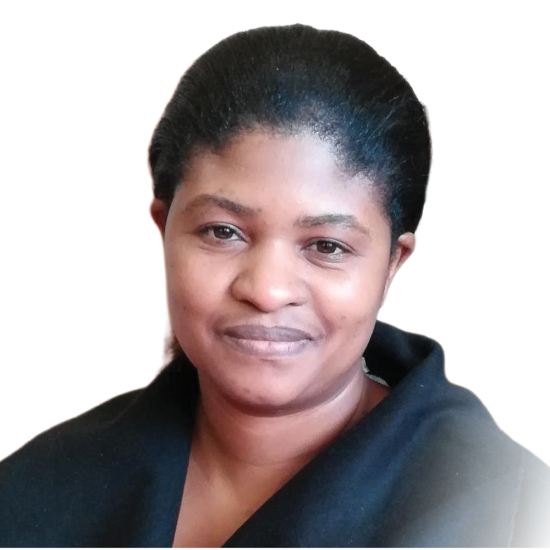
Dr Mirriam Tawane, the first Black South African woman to qualify as a palaeoanthropologist, exemplifies how the achievements of freedom and democracy have transformed the everyday lives of South Africans.
As the country marks Freedom Month this April, Public Sector Manager magazine shines a spotlight on Tawane – an exceptional achiever in a field historically dominated by men. With freedom came the call for equal rights for all, enabling many people like Tawane to pursue their dreams and break through longstanding barriers.
Breaking new grounds
As a palaeoanthropologist, Tawane studies human evolution and prehistory by analysing fossilised remains, such as bones and footprints, typically focusing on early hominins and their extinct relatives.
Her work draws on physical anthropology, archaeology, and geology to reconstruct the lives, behaviours, and biology of human ancestors.
“Obtaining this qualification in 2012 was indeed a great achievement, especially obtaining a career that is still not well known by the previously marginalised population group,” explained Tawane.
For Tawane, being among the first to defy discouraging statistics is both humbling and a sign that opportunities are becoming more accessible – opportunities that were previously denied to people of colour.
She acknowledges that transformation in certain sectors is not progressing at a rapid pace, but notes that there has been some improvement in inclusiveness and diversity in the intake of these fields.
Heritage management
Tawane serves as the Executive for Core Business at the National Heritage Council (NHC). She oversees four key units focused on heritage management, including the Living Heritage Unit; Funding Unit; Research and Knowledge Production Unit and the Resistance, Liberation and Heritage Route (RLHR) Unit, supervising their activities and ensuring the effective implementation of their mandates.
“These units are structured to support the mandate of the NHC which is mainly to preserve, protect and promote the country’s heritage,” she explained.
The Living Heritage Unit focuses on preserving intangible heritage in all its forms, while the Funding Unit provides financial support to heritage projects run by non-profit organisations, aligning with the NHC’s objective of funding initiatives that safeguard and promote heritage.
The Research and Knowledge Production Unit partners with diverse stakeholders to generate knowledge and advance education within the heritage sector. Meanwhile, RLHR Unit highlights South Africa’s journey to independence, documenting and sharing the story of the liberation struggle in line with the NHC’s mandate to promote the nation’s liberatory processes.
Right candidate for the job
Tawane brings extensive expertise to her role, holding a Bachelor of Science, an Honours Degree in Palaeontology and a PhD (originally a master’s qualification, later converted), all awarded by the University of the Witwatersrand. When she began her undergraduate studies, Tawane was uncertain about which career path to pursue due to limited career guidance. Nevertheless, she approached her education with a desire to keep multiple career options open, demonstrating foresight, adaptability and a commitment to exploring diverse opportunities – qualities that now inform her leadership at the NHC.
“Palaeoanthropology was never one of them. The interest began when I was doing a short course in Palaeontology, and I got to learn that women, especially women of colour, are not represented in the field. Since then, I have never looked back. It was a challenging educational journey, and I guess the motivation came from studying a course that sounds so foreign, yet the source of the research materials are the sites scatted in the country,” she explained.
Before joining the NHC, Tawane was a curator of the Plio-Pleistocene collection at the DITSONG: National Museum of Natural History in South Africa. She was responsible for curating a diverse and very significant collection consisting of hominid fossils and some faunal collections.
The collection includes the renowned “Mrs Ples” (Australopithecus africanus), a famous hominid fossil discovered at Sterkfontein in 1947. It also features exceptionally well-preserved faunal remains, including specimens of sabre-toothed cats and hyenas, highlighting the collection’s scientific and historical significance.
“One was to undertake research in these collections and publish peer-reviewed articles; thereby contributing to knowledge production in the
Palaeoscience. I also had to do outreach programmes, where I would take school learners and visitors through the collections and the museum exhibitions focusing on evolution,” said Tawane.
Empowering the next generation
Passionate about sharing knowledge and inspiring the next generation, Tawane began engaging with youth and school children while still a postgraduate student, encouraging them to explore opportunities in her field.
During this time, Tawane secured funding to implement human evolution workshops in Taung, aimed at educating local scholars about the Taung Skull World Heritage Site, which is situated in their own community. The workshops highlighted the site’s most significant discovery, the Taung Skull (Child), Australopithecus africanus, uncovered in 1924 during mining activities, and also introduced students to the diverse career opportunities within the palaeosciences.
Tawane explained that when the Taung Skull was first discovered, the scientific community did not accept Raymond Dart’s conclusion that it represented a species closely related to humans, as the prevailing view held was that humanity originated in Europe or Asia. It took nearly two decades for the importance of the Taung Skull, along with other African hominid fossil discoveries, to be fully recognised, ultimately establishing Africa as the cradle of humanity and underscoring South Africa’s contributions to global anthropology.
videos & photos