



South Africa Yearbook:
trusted information in a changing digital age
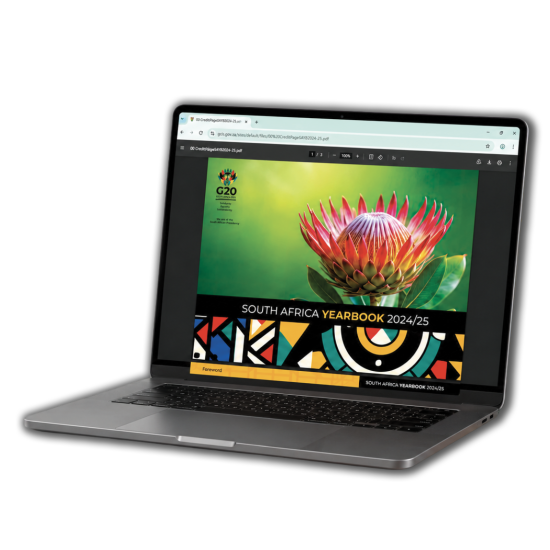
In an increasingly digital and fast-paced information environment, access to accurate, credible and authoritative information has become more important than ever. As misinformation and disinformation continue to pose a growing challenge globally and locally, trusted government publications play a critical role in ensuring that citizens have access to verified information about their country, its institutions and the work of government.
For more than 50 years, the South Africa Yearbook (SAYB) has served as one of government’s most important reference publications. By providing reliable information on South Africa’s governance, economy, society, policies and development priorities, the SAYB supports transparency, accountability and informed public participation. In an era where information can be shared instantly and often without verification, the SAYB remains a trusted source of facts, context and continuity, helping to strengthen public understanding and trust in government information.
Since its introduction in 1974, the SAYB has evolved from a printed annual reference publication into a comprehensive digital knowledge product. It provides authoritative information on government programmes, society, the economy, public institutions, national priorities and South Africa’s development trajectory. In doing so, it supports the public’s right to access information that is timely, accurate and easy to understand.
The evolution of the SAYB
Following the advent of democracy in 1994, the SAYB assumed a broader role. It had to reflect the country’s constitutional democracy, emerging public institutions and government’s commitment to development, transparency and public participation. The focus moved from simply documenting the State to providing information on policies, government programmes, achievements and opportunities that have a direct impact on people’s lives.
The digital era has changed how people access, use and share information. Citizens now consume and exchange content through websites, search engines, social media, messaging applications, online news services, data portals and artificial intelligence tools. Information is available instantly, across multiple devices and platforms and is increasingly interactive.
The information environment is, however, also crowded and in some instances unreliable. This makes the SAYB more relevant than ever, as it provides verified information, context and continuity in an environment often shaped by speed, opinion and misinformation.
Embracing digital technology
Technology has also changed how the publication is produced, accessed and used. Digital publishing enables users to download, search and share content more easily. Features such as online archives, infographics, QR codes and multimedia content allow users to move seamlessly from a general overview to more detailed information.
Viewed through the Government Segmentation Model, which recognises that different audiences have different information needs and preferences, the SAYB primarily serves an informed and information-seeking audience. This includes government communicators, educators, learners, students, researchers, policy analysts, public representatives, civil society organisations, business, labour, investors, diplomats and international stakeholders.
It also serves citizens who require accurate, reliable and comprehensive information about South Africa, its institutions, policies and development priorities.
For government communication, this change presents both opportunities and responsibilities. Government information can reach larger audiences faster than before. However, it can also be distorted quickly. As the custodian and coordinator of government communication, the Government Communication and Information System provides strategic leadership, promotes coherent government messaging and strengthens public access to information on government policies, plans, programmes and achievements. The SAYB gives communicators a common reliable factual base from which to communicate service delivery, national priorities and the progress being made towards improving the lives of South Africans.❖
videos & photos