



Professor Liesl Zühlke:
Healing little hearts and advancing justice
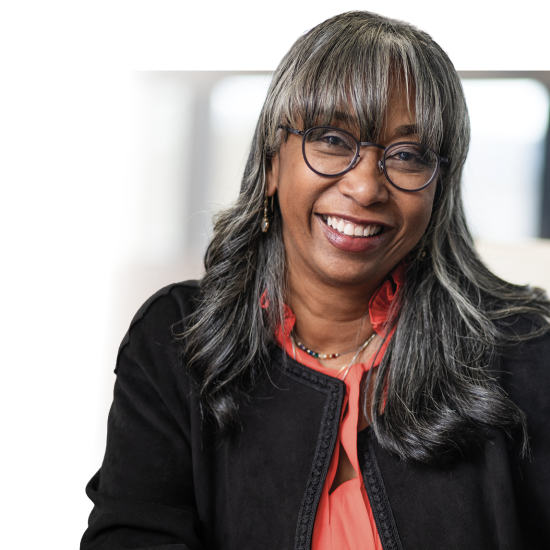
Long before Professor Liesl Zühlke became one of the world’s recognised women scientists, she was a curious child in Cape Town, fascinated by the mysteries of the human body and inspired by the stories of scientific pioneers.
“I have always been an avid reader and I was particularly drawn to stories of scientific breakthroughs and the lives of scientists such as Curie, Harvey, Jenner and Pasteur,” she recalls, adding that as a child, she read and reread books about their discoveries, struggles and determination.
But one medical achievement captured her imagination and inspired her to pursue a career in medicine. It was the world’s first human heart transplant, performed by South African cardiac surgeon, Dr Christiaan Barnard, at Groote Schuur Hospital in Cape Town in December 1967.
“[It was] my greatest source of wonder; the fact that it took place in my own city, in a hospital I could practically see from my home, made that achievement feel even more extraordinary. I think that is where my fascination with the heart began,” she explains.
That early fascination would eventually become a career built around healing, discovery and justice. While she wanted to study medicine from a very young age, paediatric cardiology became the field where her many interests converged: medicine, technology, children’s health, public health and social justice.
Zühlke serves as Vice President of the South African Medical Research Council's Extramural Research and Internal Portfolio. She is also a Paediatric Cardiologist in the Division of Paediatric Cardiology at Red Cross War Memorial Children's Hospital and Director of the Children's Heart Disease Research Unit at the University of Cape Town.
She is internationally recognised for her work on childhood-onset heart disease, particularly rheumatic heart disease (RHD) and congenital heart disease. She is also celebrated for advancing research, advocacy and capacity building in Africa.
An honour for African science
In June 2026, she was officially honoured at the UNESCO Headquarters in Paris as the 2026 laureate for Africa and the Arab States in the L’Oréal-UNESCO For Women in Science International Awards. While the event was a global celebration of scientific achievement, for her the moment belonged to the children, families, researchers and institutions that have shaped her journey.
“It felt quite surreal to be representing not only South Africa, but also Africa and the Arab States, on such a prestigious global platform,” she added.
For Zühlke, the significance of the award lies in the attention it brings to diseases that have too often been overlooked.
“On a personal level, this award is profoundly meaningful because it shines a global spotlight on RHD and congenital heart disease – conditions that disproportionately affect children from underprivileged backgrounds and vulnerable communities,” she explained.
Her work has always focused on children whose health is shaped not only by biology but also by poverty, geography, healthcare systems and inequality.
A disease of inequality
Although RHD is preventable, it continues to cause suffering and premature death among children and young adults, particularly in low-resource communities.
“RHD is, at its core, a disease of poverty, inequity and injustice. It has largely disappeared from high-income countries, yet it remains entirely preventable,” she explained.
The disease exposes the unequal realities of healthcare, she said, adding that diagnosis often comes too late when permanent damage to the heart valves has occurred. Treatment can require painful monthly penicillin injections, while cardiac surgery remains inaccessible for many who need it.
“RHD has rightly been called a barometer of social injustice because it persists not only in low- and middle-income countries, but also in inadequately resourced communities within high-income countries, highlighting stark differences in diagnosis, management and care,” she emphasised.
For children living with RHD, the impact extends far beyond the heart. It can affect education, play, family life and future opportunities. It can lead to heart failure, stroke, arrhythmias, embolic events and premature death while also placing families under severe financial pressure.
The burden also follows girls into adulthood, with serious consequences during pregnancy and childbirth for women living with advanced valve disease.
Research rooted in real lives
At Red Cross War Memorial Children’s Hospital, Zühlke’s clinical work has kept her research firmly connected to patients and families. She describes herself as “inherently a clinician-scientist” – someone whose research questions emerge from real-world challenges.
“The questions I ask are, therefore, not abstract; they arise from the children I see, the barriers families face in accessing care, the limitations of health systems, and the urgent need to generate evidence that can improve diagnosis, treatment, follow-up and outcomes in real-world settings,” she said.
This commitment led her to establish the Children’s Heart Disease Research Unit, dedicated to conducting, supporting and empowering children’s heart disease research with Africa’s needs at the centre.
Her research has addressed critical clinical and public health questions across the RHD pathway. She has also contributed to clinical trials and provided scientific and technical support to countries seeking scalable, context-appropriate solutions.
Yet some of her most meaningful work has been in advocacy, which is aimed at the eradication of the disease.
That advocacy contributed to the 2018 World Health Assembly resolution on rheumatic fever and RHD and to ongoing efforts to translate global commitments into policy, implementation and improved clinical practice.
Zühlke’s broader research also spans congenital heart disease, HIV in adolescents and cardiac disease in women of childbearing age. What connects these areas, she explained, is childhood-onset heart disease, vulnerable populations and the relationship between inequality, social determinants of health and health outcomes.
“This stark contrast illustrates why these fields are inseparable from questions of equity, access and justice in health,” she said.
Science, Technology and Innovation Minister, Dr Blade Nzimande described her recognition as “a source of profound national pride”.
Zühlke is of the view that South African scientists have the capacity, talent, courage and determination not only to thrive, but to change the world through their unique solutions.
Lifting as she rises
For her, scientific success is incomplete unless it creates opportunities for others. Capacity building, one of the areas for which she was recognised, is deeply personal. Her own journey as a clinician-scientist and research leader was challenging, particularly while completing her PhD and building a research career as a mother of young children.
She says her mentor gave her a principle that continues to guide her: “lift as you rise”.
“I have tried to emulate that principle in my own work,” she said, adding that she believes meaningful capacity development requires support for clinician-scientists, gender-sensitive infrastructure and equitable resources for researchers and health professionals in all settings.
Her message to young girls in South Africa who are uncertain about whether they belong in science is clear: “We are taking up our rightful places in science, medicine, and research. Your voice, your questions, your curiosity and your perspective matter. And above all, always remain true to yourself.”
But above all, she wants the voices of those most affected to shape the future.
“Most importantly, I would like to see the voices of people living with and affected by RHD elevated and included in planning so that they can help inform research programmes, policy and practice,” she concluded. ❖
videos & photos