


Engineering safer skies:
Nomfundiso Msweli’s vision for intelligent airports

At the intersection of aviation, artificial intelligence (AI) and engineering innovation, Nomfundiso Msweli is helping to shape the future of safer and smarter airports.
The 34-year-old engineer’s journey from KwaMashu, where she was born and raised, to becoming an award-winning engineering innovator reflects the power of early inspiration, persistence and a belief that technology can solve real-world challenges.
For Msweli, engineering began long before university lecture halls. It began with childhood visits to Dunlop Tyres, where her father worked as an electrician.
“My dad used to take me to his workplace for the Take a Girl Child to Work initiative. During December shutdowns, I would also be hired to assist with maintenance, which naturally led me to pursue engineering,” she recalled.
Msweli developed a curiosity about how things worked and an interest in using technology to address everyday challenges from a young age. She enjoyed mathematics and was drawn to understanding systems and the role innovation could play in improving people’s lives.
“I have always been fascinated by how technology can solve real-world problems and improve people's lives,” she said.
Following the dream
Msweli’s academic journey began in 2013, marking the start of a path that would see her build expertise across electrical engineering, telecommunications, electronics and innovation. She holds a Master’s degree in Electronic Engineering from the University of Johannesburg. Her research explored how drones and AI could improve airport infrastructure inspections.
Her academic foundation also includes a Bachelor of Technology (BTech) Honours in Electrical Engineering, specialising in telecommunications (cum laude) and a BTech in Electrical, Electronics and Communications Engineering, both from the University of South Africa. She obtained her National Diploma in Electrical Engineering and Instrumentation from the Mangosuthu University of Technology in 2015.
Making flying safe
Msweli serves as an Electronics Engineer at Airports Company South Africa (ACSA), managing, maintaining and improving electronic systems. These include communication systems, surveillance technologies, public address systems, flight information display systems and television distribution systems.
“The most rewarding aspect of my role is knowing that the systems I help maintain contribute directly to the safety, security and overall passenger experience. Airports operate around the clock and reliable systems play a critical role in ensuring seamless operations,” she said.
Innovation that transforms industries
Her recent achievements have placed her among South Africa’s rising engineering innovators. At the 2026 Engineering Council of South Africa Industry Awards, the young engineer received national recognition for her groundbreaking project, – Automated Runway Detection Systems Using Drone-Mounted CMOS Sensors and Artificial Intelligence – an achievement that celebrates not only technical excellence but also the power of local innovation to transform global industries.
The award marked a defining moment in her engineering journey, shining a spotlight on research that bridges advanced technology with one of aviation’s most critical priorities: safety.
“Receiving this award affirmed that the long hours of study, research and perseverance were worthwhile. It reminded me that dedication and continuous learning can lead to meaningful contributions to society.”
The recognition has strengthened her resolve to continue pushing the boundaries of what engineering can achieve.
“It has strengthened my commitment to advancing research in AI, aviation technology and smart infrastructure. I hope it inspires other engineers to believe that impactful ideas can come from South Africa,” she added.
She explained that traditional runway inspections are primarily visual assessments conducted by various inspection teams. The process is labour-intensive and time-consuming, and there is a risk that defects or abnormalities may be overlooked. She further noted that inspectors are required to physically access operational areas, which can temporarily disrupt airport operations by reducing runway availability for aircraft movements, while the manual nature of the process still leaves room for human error.
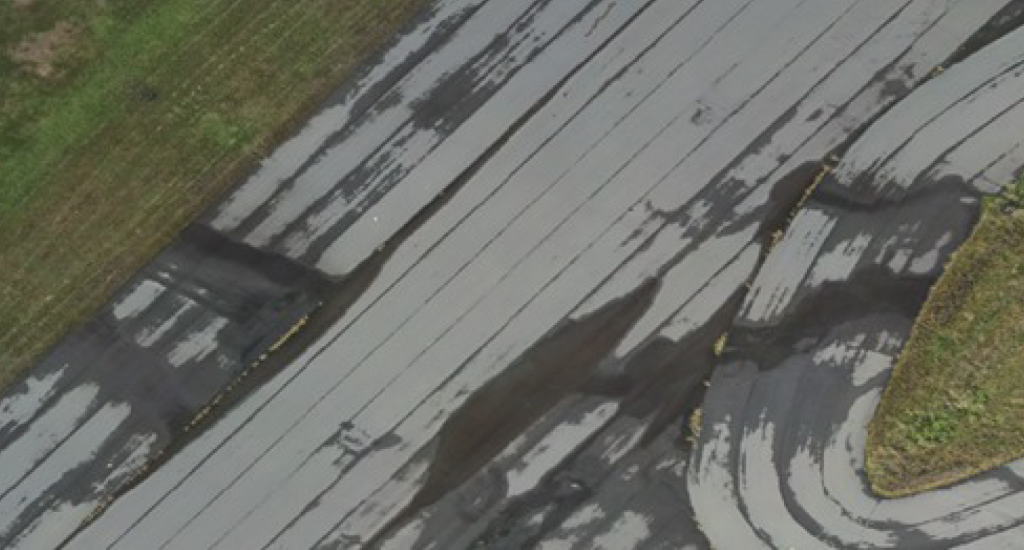
Her system uses an autonomous drone equipped with a high-resolution complementary metal-oxide-semiconductor (CMOS) camera. The drone is programmed to follow predetermined flight paths over runways and taxiways, capturing images and video footage while using GPS technology to accurately record the location of any identified defects or anomalies.
“The objective of my research was to develop a safer, faster and more intelligent method of inspecting airport runways and taxiways,” she explained.
Earlier detection could help airport teams respond before small problems become larger risks. Quicker inspections could reduce operational interruptions and support predictive maintenance based on accurate data rather than scheduled manual checks.
Reducing costs
Msweli further highlighted that the technology could deliver significant cost savings by reducing reliance on inspection vehicles, lowering vehicle maintenance and fuel expenses and decreasing the manpower required to conduct manual runway inspections.
The idea emerged as Msweli watched drones and AI gain ground across engineering sectors. She saw an opportunity to apply both technologies to aviation infrastructure, where safety, precision and operational efficiency are critical.
“Modern CMOS sensors provide high-quality imaging while remaining compact and cost-effective. When combined with AI, they enable automated analysis of large volumes of inspection data much faster than conventional methods.”
Developing the concept was not straightforward. The project required the integration of drone navigation, computer vision, AI and airport operational requirements into a practical and effective solution. Bringing these technologies together while ensuring compliance with aviation safety and operational standards presented a significant technical challenge.
“Another challenge was ensuring that the proposed solution remained practical for real-world airport environments rather than being purely theoretical,” she added.
Innovation lessons
The process, she said, taught her that innovation depends on more than technical ability.
“I learned that successful engineering innovation requires not only technical expertise but also patience, adaptability and a willingness to refine ideas through ongoing research and testing,” she said.
Msweli believes that AI and drones will become increasingly important in airports locally and internationally. The technologies have the potential to automate inspections, enhance security surveillance, improve asset management and provide real-time data to support informed decision-making.
Msweli’s ambitions extend beyond her Master’s research, with plans already underway to pursue doctoral studies at the University of Pretoria, focusing on AI and intelligent systems. She credits ACSA for fostering an environment that encourages learning, research and innovation.
She also hopes her journey will inspire more young South Africans, particularly girls and women, to pursue careers in engineering, science and aviation technology. This also aligns with government’s 2026 Science Month theme, "Science, Technology and Innovation are for Everyone.
“Do not be intimidated by industries where women have traditionally been underrepresented. Believe in your abilities, seek mentors, embrace challenges, and remain confident in your potential,” she said.
Innovation, in Msweli’s view, should be measured not only by novelty, but by its ability to deliver practical solutions and meaningful benefits to society. ❖
videos & photos