


Translation takes centre stage in promoting equal access to information

The 2025 International Translation Day (ITD) Conference brought language professionals, government officials, academics and civil society together at the Civic Centre Chambers in Cape Town, spotlighting the power of indigenous languages in shaping a more inclusive, multilingual future.
Held under the theme, “Indigenous Language Translation: Shaping a Future You can Trust,” the event aligned with South Africa’s constitutional mandate to promote linguistic diversity, while reinforcing the urgency for government institutions to comply with the Use of Official Languages Act of 2012.
Honouring language as a human right
In hi welcome message, Cape Town Mayor Geordin Hill-Lewis underscored the city’s support for language access and inclusion. Delivering the keynote address on behalf of Western Cape Cultural Affairs and Sport MEC Ricardo Mackenzie, the Chief Director of Cultural Affairs highlighted translation’s vital role in social cohesion and democracy.
PanSALB CEO Lance Schultz further emphasised that language rights are not optional. “Government departments must comply with the Use of Official Languages act (UOLA) of 2012,” he stated, warning that the language board will take legal steps against entities that continue to ignore the law. Schultz stressed that failure to provide services in all official languages undermines citizens’ constitutional rights and contributes to unemployment among language graduates.
Justice through language
Representing the Western Cape Department of Justice and Constitutional Development, Mr Rodney Isaacs spotlighted the critical role of certified translators and interpreters in legal settings.
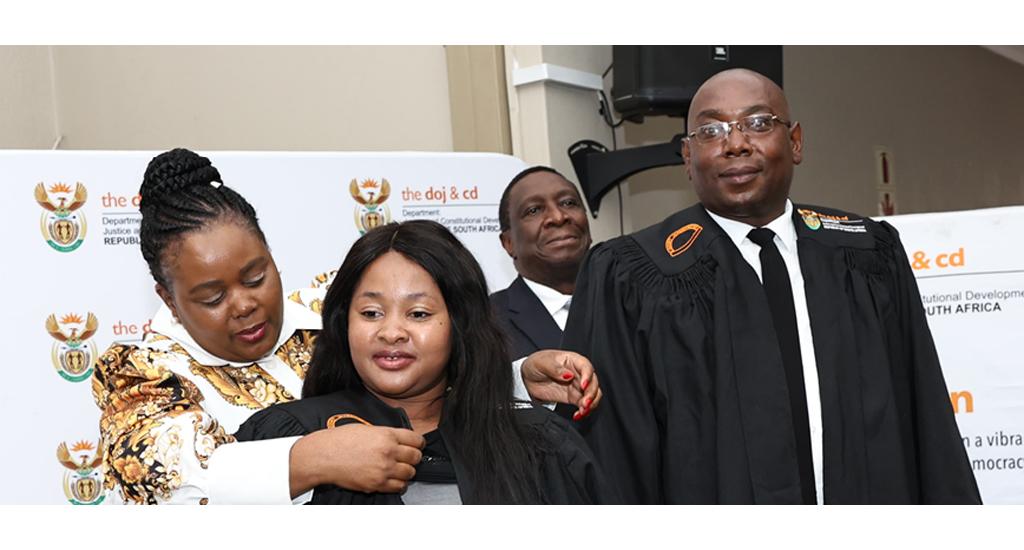
In October 2025, government launched the Court Interpreters’ Robing Programme – a first of its kind in the world. The initiative is aimed at professionalising the role of court interpreters and affirming their status as critical enablers of justice.
Speaking at the launch, Justice and Constitutional Development Minister Mmamoloko Kubayi said universal access to justice can only be attained when every citizen in the country can access justice and participate in court processes in the language of their choice.
“Properly utilised, language during court interpreting can transform our language diversity from being a barrier to an instrument for empowerment, social cohesion and a creation of a more just society.
“As part of the justice system, court interpreting must also be practiced in a manner that demonstrates a shift from language interpretation under the unjust system of apartheid to language interpretation in a democracy that embraces human rights and diversity,” she said.
As part of the launch, court interpreters will adopt a new professional standard that includes the wearing of official gowns and a black-and-white dress code.
Breaking barriers, building bridges
The conference, jointly hosted by PanSALB, the Western Cape Department of Cultural Affairs and Sport, the City of Cape Town and several academic institutions, including the University of Cape Town, University of the Western Cape and Stellenbosch University, provided a dynamic platform for robust discussion and strategic planning.
Government Communication and Information System Language Services, invited by the National Language Services, participated as a key stakeholder, reinforcing its ongoing commitment to multilingual government communication.
Speakers agreed that translation is more than a linguistic exercise but a human right and a tool for empowerment. The event also paid tribute to the International Decade of Indigenous Languages (2022 – 2032), a United Nations initiative that aims to preserve, promote and revitalise languages at risk of extinction.
Technology and the translator’s touch
While artificial intelligence and translation software like OmegaT are becoming integral to the language landscape, delegates were unanimous that machine translation cannot replace human expertise, especially in African languages.
There was consensus that professional translators and interpreters remain essential for accurate, context-sensitive communication, particularly in multilingual, multicultural societies like South Africa.
SASL in the spotlight
With the recognition of South African Sign Language (SASL) as the 12th official language, several sessions focused on the urgent need to professionalise and expand SASL interpreting services. Delegates called on government departments to ensure that SASL interpreters are present at all public events and to create permanent posts for at least two rotating SASL interpreters per institution.
The conference closed with a shared commitment to strengthen the language fraternity, enforce compliance with UOLA of the 2012 and break communication barriers that continue to divide
society.
Key takeaways:
Translation involves cultural and semantic accuracy, not just word-for-word conversion.
Professional language practitioners remain vital in the age of AI.
The Central Supplier Database is not an effective tool to source language professionals – targeted recruitment is needed.
Government must create sustainable jobs for graduate language practitioner and professionals.
All language stakeholders must protect and promote the art and integrity of translation, interpreting and SASL interpreting.❖
videos & photos