




Unlocking infrastructure delivery for South Africa:
A turning point for the construction sector
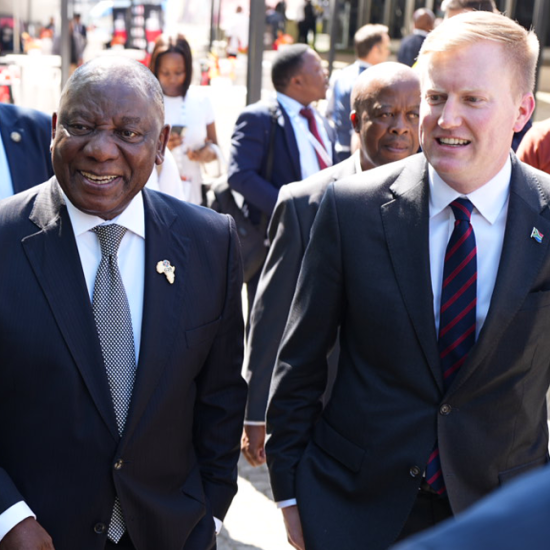
“We are poised for great growth. We have the money, we have the leadership, we have the opportunity – just go and construct South Africa”. These were the compelling closing words of President Cyril Ramaphosa at the 2025 National Construction Summit held in Gauteng from 14 to 15 November. His message set the tone for what has become one of the most decisive gatherings aimed at reshaping the country’s infrastructure future.
Hosted by the Construction Industry Development Board (cidb), in partnership with the Department of Public Works and Infrastructure (DPWI), the Summit addressed the critical need to unlock infrastructure delivery in South Africa. Despite the country’s extensive infrastructure budgets and strong political will, persistent challenges continue to slow progress – from construction-related criminality, and underperforming contractors and professionals to chronic underspending of infrastructure budgets and procurement bottlenecks.
Tackling challenges
The theme for the summit; “Unlocking Infrastructure Delivery for South Africa – Raising Construction Industry Performance,” reflected a national commitment to tackle these obstacles head-on. It emphasised accountability, performance improvement and restoring stability to a sector essential for economic growth, job creation and community development.
Transformative power of infrastructure
The President reminded delegates of the transformative power of infrastructure: roads that connect people to opportunities, schools and hospitals that restore dignity, water and sanitation systems that enable healthy communities and energy networks that support economic activity. He stressed that infrastructure is the backbone of development, one that boosts productivity, reduces inequality and attracts investment.
He pointed to encouraging signs of recovery and meaningful job creation in the construction sector. According to Statistics South Africa, the country saw an increase of around 130 000 jobs in the construction industry in the third quarter of 2025, driving the workforce towards approximately
1.39 million people. These statistics highlight the sector’s ability to scale employment quickly when supported by a reinvigorated infrastructure pipeline, streamlined regulatory processes and improved sector confidence.
Delivery and impact
With over R1 trillion committed to infrastructure investment over the medium term, alongside reforms designed to unlock greater private-sector participation, government is signalling a decisive shift towards delivery and impact. “We will not let anyone derail these efforts,” the President emphasised. “We will not negotiate with construction mafias”.
Speaking at the same event, Public Works and Infrastructure Minister Dean Macpherson reinforced the stance with a clear update on progress: “Since the signing of the Durban Declaration in 2024, we have made decisive progress in restoring the rule of law across construction sites. To date, more than 770 cases of construction-related extortion and intimidation have been reported, resulting in 241 arrests and 176 convictions. In KwaZulu-Natal alone, monthly site disruptions have dropped from more than 60 a month last year to fewer than ten today”.
However, both President Ramaphosa and Minister Macpherson noted that enforcement alone is not enough.
Construction action plan
The summit identified system weaknesses that make project sites vulnerable to criminality and inefficiency. To address these challenges, government has introduced the South African Construction Action Plan (SACAP), a coordinated national strategy focused on strengthening procurement, improving contractor performance, ring-fencing budgets, standardising processes and accelerating approvals. The SACAP includes the establishment of procurement war rooms in all provinces, the development of a national contractor blacklist, digitised real-time project tracking dashboards, and measures to professionalise the built environment across all levels of government.
Infrastructure South Africa’s enhanced role in project preparation, packaging and municipal support through the Presidential Adopt-a-Municipality Programme was identified as a critical enabler of fewer stalled projects and more bankable proposals.
Shared accountability
Cidb Chief Executive Officer Bongani Dladla, highlighted the transformative power of bringing all stakeholders together to design solutions collaboratively, rather than relying on a handful of decision-makers in a boardroom. He emphasised a zero-tolerance approach to projects that are not completed on time and within budget, and affirmed that the summit signals a shift towards shared accountability and delivery-focused action.
Mr Khulile Nzo, Chairperson of the cidb, underscored the need to focus on the “D” (Development) in the cidb. He noted that challenges are encountered by both constructors. He also highlighted persistent issues of fraud, the importance of contractor authenticity and legitimacy and the critical need to ensure that contractors possess the capacity and technical knowledge to meet project requirements.
Key solutions
Commissions allowed stakeholders to co-design solutions around four key areas – industry performance; sustainability, infrastructure resilience and innovation; skills Development and inclusivity; and governance and regulatory Compliance.
The solutions included introducing:
- a dedicated procurement framework separating infrastructure from procurement of goods and services;
- penalties for cancelled projects;
- unified industry performance frameworks;
- a grading system for consultants;
- a subcontractor rating system to promote fair treatment;
- a national green infrastructure framework led by the cidb;
- appointing contractors on competence, not price alone;
- targeted financial support;
- stronger private sector accountability; and
- procurement targets for women, youth and persons with disabilities for equitable sector growth.
A nation under construction
South Africa’s construction sector is entering a defining period. With a renewed political will to strengthen governance mechanisms, industry collaboration and clear action plans, the sector is positioned to regain its role as a powerful engine of economic growth and employment.
The 2025 National Construction Summit marked a turning point, a collective commitment to move from plans to projects, from ideas to implementation and from challenges to solutions. South Africa is, once again, becoming a nation under construction.