


AGSA takes
public audits to another level
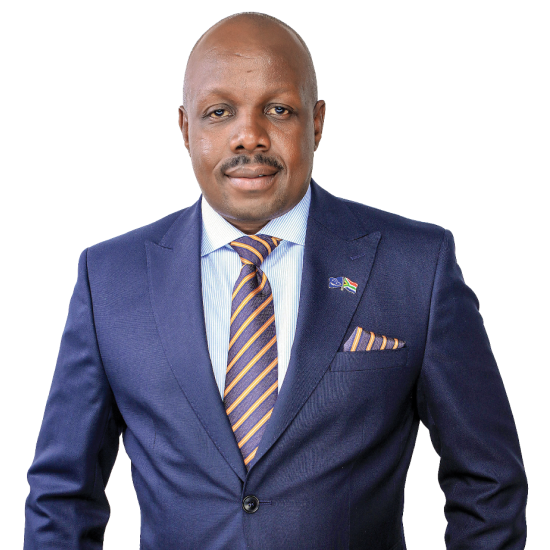
In a rapidly changing public sector landscape, the Office of the Auditor-General of South Africa (AGSA) is redefining its role — not merely as an oversight body, but as a proactive enabler of transparency and accountability. Deputy Auditor-General Vonani Chauke, who assumed the role in July 2021 after a distinguished career at Deloitte South Africa and SizweNtsalubaGobodo, believes the time has come for the AGSA to evolve.
“We exist to promote democracy,” Chauke explains. “And by democracy, I mean people should believe in the system of government.” That belief, he says, hinges on accountability — and on citizens trusting that public institutions are acting in their best interests.
Chauke says the AGSA’s work is guided by a new organisational strategy called Culture Shift 2030, which aims to transform the way government operates. “We asked ourselves what can we do to remain relevant? We cannot keep issuing findings where people see headlines and nothing happens. We developed a new strategy called Culture Shift 2030, and the whole point is to change the culture of government. If we change the culture, people will do things differently.”
AI-powered auditing
Central to this transformation is artificial intelligence. The AGSA's enhanced digital capabilities mean auditors no longer rely solely on samples. “I recently sat with some people in an informal conversation,” he recalls. “They were saying they try to delay giving us annual financials for as long as possible so we do not have enough time to audit. Just know this: we now have direct access to your financial systems, to the very last transaction.”
Before auditees submit their financials, AGSA auditors are already analysing transactions and identifying potential problems. “Our auditors do not go blindly and collect a sample; they select items they believe are problematic. Using AI, we can see which transactions might need further digging.”
Chauke is clear that the AGSA’s strategy is not to “catch out” auditees, but to support them. “We believe there are many areas where people want to do the right things, but they do not have the right information.”
The AGSA’s use of AI is already changing how audits are conducted. “If as AGSA we are able to build this capability that connects the entire government and see that a certain transaction is not proper, we tell them they are at risk,” Chauke explains. “If the culture changes, we will have the data and information to make the right decisions.”
The implications go far beyond compliance. “What that will do is increase transparency on how we are doing our transactions,” he says. “If the culture is one where we want to do the right things, we will have information and data to make the right decisions. Instead of the population not going to vote year in and year out, people will know that if we hold our leaders accountable — because we have the right data — and if they do the wrong things, there will be consequence management.”
Real-time intervention
Chauke envisions a future where auditing is continuous and collaborative. “We do not want to come six months after year-end. We do real-time audits,” he says. “Once we see problematic transactions – and in collaboration with other assurance providers such as internal audit and the audit committee – we share the information. If need be, we do not wait until we issue a report, but we refer matters to the Public Protector or the SIU (Special Investigating Unit). We believe that the ability to connect the dots on behalf of government will go a long way.”
Digital transformation and institutional memory
Beyond accountability, Chauke emphasises the importance of digital transformation in preserving institutional knowledge. “When people leave institutions, they leave with institutional memory,” he says. Digital systems ensure continuity and make information retrieval far easier. “Because it makes our lives so much easier, digital transformation is the way to go,” he adds. “And that is why AI becomes powerful. It uses digital information to self-learn and build comprehensive profiles.”
Responsible use of AI
However, Chauke warns that AI must be used responsibly. “At some stage, it makes mistakes,” he notes. “Sometimes we think it makes accurate decisions without us applying our minds. It is important that
we remember that as human beings, we have to use our judgment before we take as gospel the things that AI does.”
He points out that AI is already being used in critical decisions, such as shortlisting job applicants and approving home loans. “We need to ask if it is using the correct algorithm. Is there any bias in how it is applying the algorithm and deciding which candidate must be put forward?” he says. “It is still important for us to ask, how do we use AI?”
While AI improves efficiency, Chauke stresses that it cannot replace human judgment. “There is a concern in some quarters that because AI can do tasks much quicker and more accurately, it will replace human beings. It will never replace humans because the judgment they bring to the party still needs to be in play.”
The AGSA’s access to digital government data comes with both opportunities and risks. “As AGSA, we are in a situation where we have full access to various government data which is digital,” Chauke says. “Using AI, we can join the dots on behalf of government in many aspects. But most importantly, we need to appreciate the risk and realise that with this data we have to secure it. We cannot just create a single honeypot where hackers can come and get into the AGSA systems and have access to our government data.”
Despite these challenges, Chauke remains optimistic about the benefits of the AGSA's technological transformation. Through Culture Shift 2030 and the integration of AI, Chauke and his team are steering the organisation toward a more transparent, data-driven, and accountable future - one where citizens can truly believe in their democracy because it works as it should.
videos & photos