


Trailblazer for Peace:
SAPS Officer Kutloano Moloi represents South Africa in global mediation programme
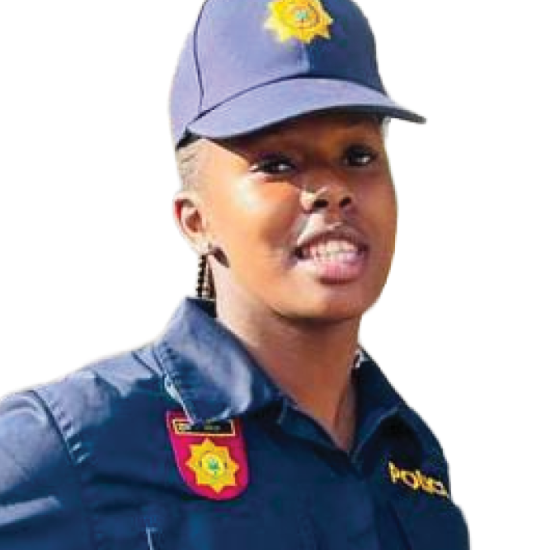
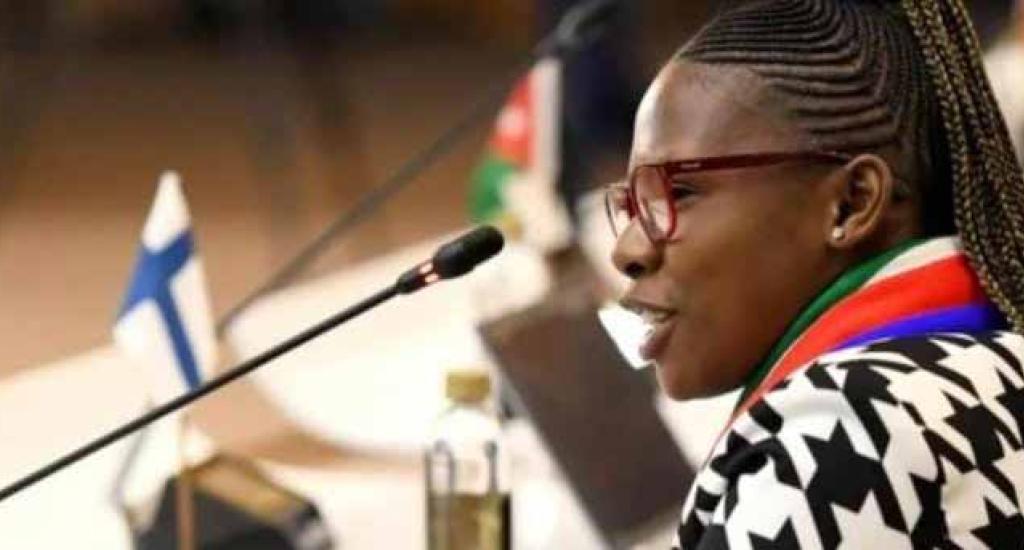
When Constable Kutloano Moloi walks into a room, she brings with her the lived experience of Orlando West, Soweto – a community shaped by struggle, unity and an enduring spirit of solidarity. It is this foundation that has carried the 27-year-old Public Order Policing (POP) Officer from
Johannesburg to the global stage, where she has become the first South African law enforcement officer selected for the inaugural South Africa–Finland Youth Peace Mediators Mentoring Programme.
Launched in June 2025, as part of Youth Month, the programme aims to build a network of young peace mediators equipped with the skills to contribute to conflict resolution, mediation and post-conflict reconstruction. From thousands of applicants, Moloi was one of only 15 young leaders around the world chosen by Department of International Relations and Cooperation’s Diplomatic Academy and Finland’s Centre for Peace Mediation.
Fertile background
For Moloi, the journey began at home.
“I grew up in Orlando West, Soweto – a place with a powerful history of struggle, unity and community spirit,” she said. “Life in Soweto taught me early that people survive not just through strength, but through solidarity and kindness... These experiences have shaped my belief that peacebuilding begins at home, in how we treat one another and in how we choose to show up for our communities”.
Career journey
Moloi joined the South African Police Service (SAPS) in 2023, through Project 10 000, beginning her career at the POP Unit shortly after completing the Basic Police Development Learning Programme. With a Bachelor
of Arts in Behavioural Sciences (Psychology and Sociology) and now pursuing an Honours Degree in Psychology, she entered policing with a clear intention.
“I chose a career where I could physically show up for my country – not only in words, but in action,” she explained. “I chose the SAPS because policing is more than just enforcing the law; it is about building trust, listening to communities and preventing problems before they turn into crises”.
She believes young officers have a critical role to play in reshaping policing: “If young people were represented within the SAPS and in our communities, we could help change how policing is experienced... I wanted to be part of that change”.
Moloi applied for the South Africa–Finland Youth Peace Mediators Mentoring Programme with a deep conviction that peace is built, not wished for.
“I applied because I believe that peace is not something we wait for but something that we build,” she said. “As a young officer, I wanted to grow beyond traditional policing and understand new ways of preventing conflict, especially among the youth”.
A shining star
Within months of joining the programme, she had represented South Africa at international workshops, youth dialogues and training sessions – but one moment stands above the rest.
Her visit to the African Union Headquarters in Addis Ababa was, she said, “a humbling moment.”
“Walking through those auditoriums reminded me that every policy, every discussion, represents millions of lives across the continent,” she reflected. “Meeting young leaders from different countries reminded me that even though our challenges differ, our hopes are similar. We all want a peaceful, united globe”.
The experience sharpened her mediation instincts. “It deepened my understanding of the African Union Peace and Security Council and the conflict mechanisms they use across Africa. It also built my practical skills in mediation, negotiation and dialogue facilitation – and how I can apply this to my job”.
Dedication and commitment
Between demanding shifts as a POP operator, academic deadlines and international peace training, Moloi’s schedule is relentless – but she calls it purposeful.
“It is definitely challenging because I am also studying, but purpose keeps me grounded,” she said. “What I learn in the programme helps me in the field, especially with de-escalation techniques and understanding people’s emotions in tense situations. And what I experience on duty gives me real-life insight into why peacebuilding training is needed.”
At the heart of Moloi’s mission is a belief that youth-centred peacebuilding can help reduce violence by addressing its root causes.
Youth-led solutions
“My dream is to help create youth-led dialogue platforms, school outreach programmes and community mediation initiatives that prevent conflict before it escalates,” she said. “Violence often starts where hope ends – so we need to restore hope within our communities”.
For her, policing must evolve: “I want to see policing become something young people can trust and participate in... By combining peacebuilding skills with policing practice, I believe we can build safer communities, reduce youth violence and create real partnerships between the SAPS and the people we serve. I want to be part of a generation that redefines what it means to protect and serve”.
In a world where young people are often portrayed as perpetrators or passive recipients of peace efforts, Moloi represents a different narrative: one where youth lead, innovate and build bridges.
videos & photos