


Basic education at the centre
of building South Africa’s future
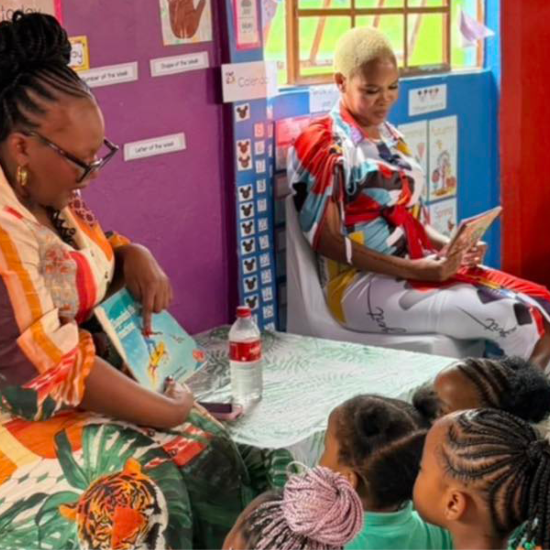
Basic education lies at the very heart of our national project. Long before the future of our country is debated in boardrooms, Parliament or public platforms, it is shaped quietly and daily in classrooms across South Africa. It is in our schools that young minds are nurtured, resilience is built, and the foundations for independence, further learning and meaningful participation in the economy are laid.
Education has always carried a particular weight in our national story. It has shaped opportunity and social mobility across generations, even as it bears the deep scars of inequality.
Yet it remains the most powerful instrument we have to expand opportunity, restore dignity and strengthen social cohesion.
At the beginning of this year, I had the privilege of releasing the 2025 National Senior Certificate (NSC) results. I reiterated then, as I do now, that the NSC is one of the largest and most complex national undertakings in our democracy – surpassed only by national elections.
Historic NSC milestone
In 2025, more than 900 000 candidates wrote the NSC examinations at approximately 6 000 centres across the country. Over 656 000 learners passed. The national pass rate increased by 0.7 percentage points from 2024, reaching a historic milestone of 88%.
These results tell an important story. They point to a system that is becoming more stable. Participation is improving. Inclusion is expanding. Most importantly, the integrity of the examination system is holding firm.
These are the second NSC results released in South Africa’s new era of multi-party government.
In May 2024, South Africans made a decisive choice: cooperation over division, maturity over instability, shared responsibility over blame. From that choice emerged the Government of National Unity, anchored in a commitment to strengthen institutions, grow the economy and create jobs.
In basic education, we are proving that renewal does not require collapse, and that reform does not require chaos. We can work together, across political and institutional lines, in the national interest.
But raising the bar at Grade 12 places a moral obligation on us to strengthen the foundations of learning. School readiness, early childhood development, reading for meaning by age ten and early numeracy are not optional extras – they are non-negotiables.
Matric not an event
When we speak about the NSC, we must resist the temptation to treat it as a single moment in time. Matric is not an event; it is the outcome of a journey that begins in early childhood and unfolds over more than a decade. Many learners reach this milestone under immense strain: poverty and hunger, unsafe environments, long travel distances, language barriers, overcrowded classrooms and uneven access to resources
These realities shape outcomes long before the first examination paper is written. That is why quality and equity in education cannot be separated.
To confront these challenges, we have made a deliberate shift towards strengthening the foundations of learning.
First, we are expanding access to early learning while driving quality and readiness. As early childhood care and education consolidates into the Department of Basic Education, we have placed quality firmly at the centre of this transition. In 2025, we set an ambitious target to register 10 000 Early Childhood Development (ECD) centres.
We exceeded that goal, registering more than 12 000 centres in a single year. This brings the total number of registered ECD centres to over 33 000, enabling more than a million children to benefit from subsidies that support both nutrition and quality early learning.
To expand access in our rural provinces, we established an outcomes-based education fund. Through this mechanism, we are investing R496 million to expand safe, quality early learning and to create over 100 000 new learner spaces in Limpopo, the Eastern Cape and KwaZulu-Natal.
We have now set a new target to create 250 000 additional ECD spaces by next year.
Language matters
Second, we are strengthening early grade reading through evidence-based interventions. In November 2025, we released the first-ever Funda Uphumelele National Survey, providing critical insight into where reading development breaks down and why language matters so profoundly in learning.
In response, we are expanding Mother Tongue-based Bilingual Education. In the same month, South Africa conducted its first bilingual Grade 4 assessments in Mathematics and Natural Science – a significant step towards more inclusive, effective and context-responsive learning.
Third, we are improving the tools and conditions for learning in the Foundation Phase. We are finalising an updated National Catalogue of Learning and Teaching Support Materials for Grades 1 to 3, strengthening last-mile delivery, and defining a core package of “non-negotiables” that every Foundation Phase classroom must have.
For the first time in over two decades, we have launched a review of the post provisioning formula to ensure that the allocation of teaching posts reflects today’s realities – including overcrowding, curriculum demands and the expansion of early learning.
With Grade R now compulsory, we are continuing to expand access while improving quality, particularly in poor and rural communities. We are currently upskilling 7 000 Grade R practitioners through a joint project with the University of South Africa, backing our policy commitments with real investment.
Our focus on foundational learning is also gaining international recognition. South Africa’s efforts to establish an IBSA Network for Quality Foundational Learning have been endorsed by the Heads of State of India, Brazil and South Africa.
Fourth, we are strengthening teacher development in practical ways that protect learning time, including prioritising Foundation Phase student-teachers through the Funza Lushaka bursary programme.
Child well-being and safety
Finally, we are treating child well-being and safety as a core pillar of learning. Children cannot learn when they are hungry, unsafe or traumatised. We are strengthening the National School Nutrition Programme, improving accountability, procurement and monitoring, and piloting an ECD nutrition programme to address child stunting caused by malnutrition. In June 2025, we strengthened the School Safety Protocol in partnership with the South African Police Service. Together with provincial MECs, we have also launched an Anti-Bullying Campaign to intensify prevention, reporting and response at school level.
This year, we will finalise the review of White Paper 6 on Inclusive Education, ensuring that learning barriers are identified early and that support reaches learners where vulnerability is greatest.
Our system serves approximately 13.5 million learners, supported by more than 460 000 educators, across nearly 25 000 schools, coordinated through hundreds of circuit offices, 75 education districts and nine provincial departments.
While we rightly celebrate the achievements of the Matric Class of 2025, it is deeply painful that, only weeks later, we were confronted with tragic incidents involving scholar transport that claimed the lives of innocent children.
I, therefore, appeal to all motorists to exercise extreme caution, particularly during peak school transport hours, and reiterate the responsibility of all operators to ensure the safety and roadworthiness of vehicles transporting learners. We cannot be satisfied with simply keeping the system running while its deepest challenges persist.
We must continue on a new course for basic education – one rooted in evidence, equity and a relentless focus on what matters most: quality teaching and meaningful learning for every child, in every classroom, every day. ❖
videos & photos