




From the classroom to the nation: Mweli’s unwavering mission to build South Africa through education
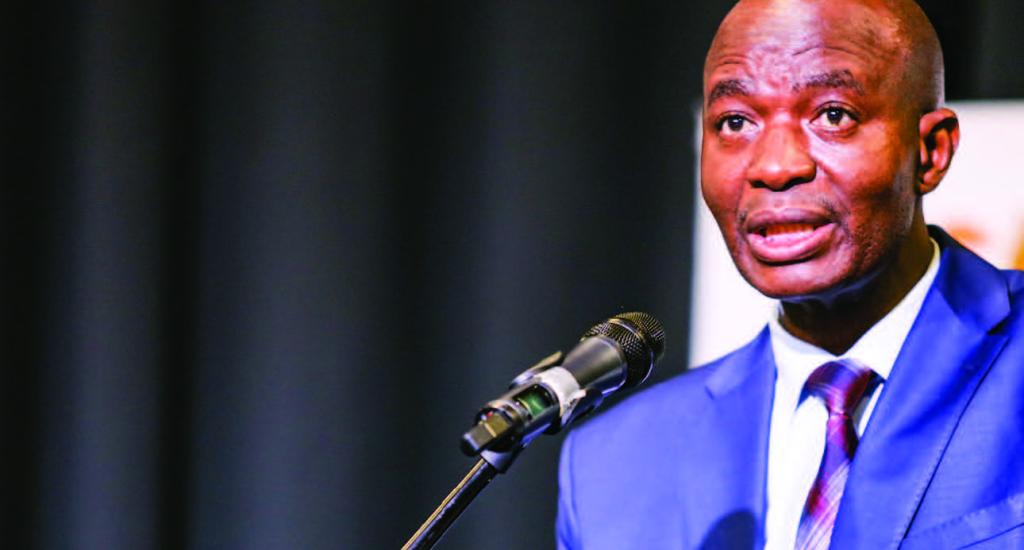
As the nation applauds the historic accomplishments of the Matric Class of 2025, Public Sector Manager magazine sits down with Basic Education Director-General (DG) Hubert Mathanzima Mweli, one of the key leaders driving transformation in South Africa’s schools. For Mweli, education is far more than a government portfolio; it is the foundation on which the country’s future is built.
His journey from a rural upbringing and classroom teaching to national leadership reflects a lifelong commitment to service, transformation and the firm conviction that education remains the country’s most powerful investment in social cohesion, economic growth and nation-building.
Raised in North West, Mweli’s roots can be traced to Makwassie, a small town shaped by migration, perseverance and strong community values. He kick-started his career in 1991, as a post-level one educator at Bophirima High School.
Teaching on the eve of South Africa’s democratic transition exposed him to both the deep inequalities embedded within the education system and the immense potential of young people when given access to quality education .
The classroom, he has often reflected, grounded his understanding that policy and leadership only have meaning when they translate into improved teaching practices and better learning outcomes for learners.
Building a strong foundation
In 1994, Mweli transitioned into provincial administration in the North West. He was tasked with establishing a school governance and management unit, placing him at the centre of post-apartheid education reform. In this role, he contributed to the development of organisation governance and funding of schools,which later informed the legislation that reshaped school governance, strengthened accountability and expanded parental and community involvement across the education system.
Professional journey
His career spanned quality assurance roles as an external evaluator and senior management positions across government. This include a brief but formative tenure as Director: Human Resources at the Department of Sport, Arts and Culture, where he gained additional exposure to labour relations, organisational development and public sector finance.
He later returned to the North West Department of Education, where he served as Chief Director of the Southern Region during a complex period of cross-boundary municipal restructuring. He subsequently moved to the provincial head office and was eventually appointed Head of Department.
“It was an emotional and affirming experience. Addressing a R1.2-billion deficit and earning recognition for improved governance confirmed that when systems are stabilised, educators and learners are empowered to succeed,’’ Mweli said
In 2010, Mweli was called to national service in the Eastern Cape as part of the Section 100(1)(b) administration intervention. “It was widely regarded as one of the most challenging assignments in public education, and it sharpened my understanding of systemic reform accountability and the urgent need to stabilise learning environments in under resourced and historically disadvantaged provinces,’’ Mweli said.
Leading the country’s basic education
He later returned to national office to head the Curriculum Branch and, in August 2015, he was appointed DG of the Department of Basic Education, assuming responsibility for steering one of the country’s most critical social sectors.
At the core of his leadership is a firm belief in the strength of South Africa’s curriculum. These views are supported by international benchmarking studies conducted by Umalusi, with global education experts confirming that the curriculum is globally competitive in both design and assessment.
The DG also challenges outdated perceptions about teacher capacity,’’ South Africa has made significant progress in building a cohort of well-qualified educators across key subjects such as mathematics and science, supported by universities ranked among the best in the world.’’ Mweli said.
The future
Looking ahead, Mweli highlights the introduction of new technical and specialised subjects, including technical mathematics and sciences, electronics and maritime studies as critical to aligning education with future skills demands and economic transformation. While fiscal constraints and ongoing austerity measures limit rapid expansion, he remains resolute that education must be treated as a long-term investment rather than a cost.
Importance of mother tongue
Mweli emphasises that language continues to be a significant challenge, with many learners studying in a language that is not their mother tongue.
“More than 60% of Bachelor’s level passes are achieved by learners studying in a second language, a powerful reflection of resilience, dedicated teaching and sustained learner effort across the system,’’ Mweli said.
Mweli consistently credits educators as the backbone of the basic education system. From urban centres to townships and rural villages, teachers devote weekends, evenings, and holidays to supporting learners – often with little recognition. Their dedication, he believes, is what continues to drive progress, even in the face of economic and systemic pressures.
“...our education system continues to move forward strengthened by a world-class curriculum, dedicated professionals and resilient learners. When we invest in education, we invest in dignity, growth and the long-term prosperity of our nation”.
Working together
For Mweli, the future of basic education lies in collective effort educators, principals, parents, officials and communities working together to ensure that every child, regardless of background, has access to quality education. It is a mission rooted in service, sustained by belief and guided by the conviction that education remains South Africa’s most powerful tool for change. ❖