




Leading genomics from Africa:
Professor Shahida Moosa’s mission to transform medicine
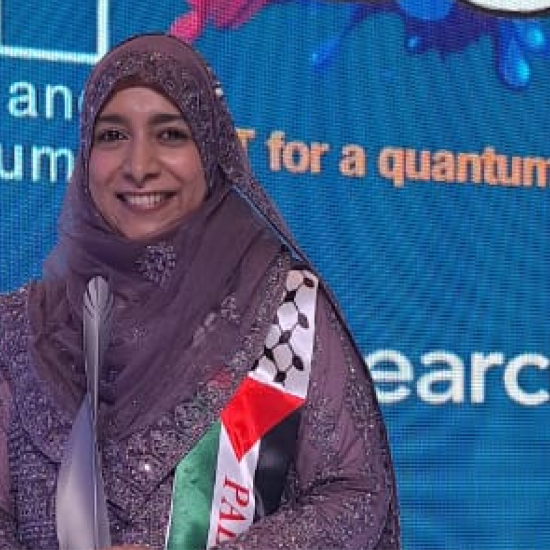
Professor Shahida Moosa is at the forefront of a quiet revolution in medicine – one led from Africa and shaped by African realities. A clinician-scientist and medical genomicist, she has built a career on the conviction that genomics research driven on the continent can redefine global science while delivering more equitable, life-changing healthcare in Africa.
As the Head of Medical Genetics at Tygerberg Hospital and Professor for Medical Genetics at Stellenbosch University (SU), Moosa’s work sits at the interface of clinical care, cutting-edge genomics research, education and health policy, with a strong focus on ensuring that advances in genomic and precision medicine are accessible, relevant and equitable for African populations.
“I chose a career in medical genetics because it sits at the intersection of patient care, science and education. It allows me to serve African patients and students in a way that is both clinically meaningful and transformative,” she explained.
Early in her career, Moosa witnessed firsthand the life-changing power of genomic medicine; its ability to end long diagnostic odysseys, guide more precise treatment and offer families not only answers, but clarity and dignity.
System weaknesses
Concurrently, she became deeply aware of a stark imbalance: African patients were systematically underrepresented in genomic research and that the health system in the continent had limited access to these powerful tools.
“Patients I was seeing in the clinic did not have access to the same diagnostic and therapeutic tools which their counterparts abroad had access to. This struck me as extremely unfair and I made a commitment to do my part to right this inequity,” she reflected.
Many of her patients face complex, lifelong conditions in under-resourced settings, yet Moosa is unequivocal that they deserve the same standard of precision care as patients anywhere in the world.
Through her expertise in genomics, she delivers holistic, person-centred care that integrates clinical insight, biological understanding and psychosocial support.
A unique approach
Trained internationally as a clinician-scientist and medical genomicist, Moosa brings extensive expertise in clinical genomics, bioinformatics, molecular biology and molecular genomics to her leadership of the Rare Disease Genomics in South Africa research group.
This integrated approach allows her to combine patient care, research and teaching in ways that directly strengthen African health systems while empowering students and young researchers to become leaders.
After completing her specialty training at Wits University, she went on to earn a PhD in human genetics and genomics at the University of Cologne in Germany, graduating summa cum laude, followed by a postdoctoral fellowship at Harvard Medical School and Boston Children's Hospital.
Paying it forward
Training abroad to gain expertise that was not available locally at the time shaped her determination to ensure that the next generation of African scientists and clinicians can access world-class genomics education without leaving the continent – enabling them to build careers at home while serving their own communities.
Academically, her work focuses on rare diseases, inherited cancers, and complex phenotypes, integrating genomic and multi-omic approaches with clinical medicine, bioinformatics, qualitative research, and health economics.
She leads and coordinates large multidisciplinary and multi-institutional programmes, including Genomics for Health in Africa (GHA), a first of its kind in sub-Saharan Africa, which aims to provide diagnoses to millions Africans living with undiagnosed rare diseases and familial cancers, leveraging the power of the African genome for precision health in Africa.
Awards and achievements
In 2025, Moosa won the NSTF-SAMRC Clinician-Scientist Award for her leadership and coordination of the GHA programme, an achievement that is deeply meaningful to her because it recognises not only individual scientific output, but the integration of clinical care, research leadership, and capacity building in a South African context.
Behind this recognition is many years of sustained and often invisible work for Moosa, which includes building teams, aligning diverse stakeholders and creating systems that allow genomics to function within real clinical environments.
“My leadership of the GHA programme has required extensive coordination across disciplines, including clinical genetics, oncology, pathology, bioinformatics, ethics, health economics, and policy.
It has also involved forging partnerships between universities, laboratories, health departments, and international collaborators, while ensuring that African priorities and leadership remain central,” Moosa reflected.
She co-leads the newly established Africa/European Union Cluster of Research Excellence, the GHA programme. For her, creating and leading the Undiagnosed Disease Programme, which later evolved into GHA remains the highlight of her career.
Showcasing African capabilities
She added that the award also reflects a long-term commitment to building African genomic capacity, rather than exporting samples or talent.
“Through GHA, we are demonstrating that precision medicine can be designed, led and implemented from Africa, for Africa, by Africans, while contributing meaningfully to global science,” she said.
As Head of Medical Genetics at Tygerberg Hospital, she leads a team of medical geneticists, genetic counsellors and genetic counselling interns to provide holistic academic clinical care to patients and families with suspected genetic conditions.
“Our team also provides professional training across the hospital and our referral centres. Every day of the week is different, with outpatient clinics and inpatient referrals.
We have very busy prenatal genetic clinics on Mondays and Tuesdays, where we see pregnant women and their fetuses for assessments and counselling.
“Wednesday is our paediatric outpatient clinic, and Thursdays and Fridays we run various multi-disciplinary clinics and outreach clinics to Worcester and Paarl hospitals.
In between, we also see ward patients and run a very busy oncology service for patients with suspected inherited cancers,” she explained.
Women empowerment
In addition to her clinical work, Moosa also runs an all-female, multidisciplinary research group, where she hosts postdoctoral fellows and postgraduate students who work on genomics, bioinformatics, qualitative aspects of rare diseases and health economics.
“Our mission and vision are to integrate research in all areas related to genomics into routine clinical care and to impact patients and families positively. This includes looking after their emotional needs and mental health challenges,” she said.
Furthermore, Moosa has been awarded a C2 National Research Foundation (NRF) rating in recognition of her status as an independent researcher and is the only Medical Geneticist in South Africa with an NRF rating, which is a highly competitive, independent evaluation of a researcher’s standing and impact within the global scientific community, based on sustained research outputs, international peer recognition, and scholarly leadership.
The rating widely regarded as a benchmark of research excellence in South Africa, plays a key role in shaping national research priorities, funding decisions and institutional prestige. ❖