




Professor Nnenesi Kgabi’s vision to elevate the NSTF
by bridging science and policy
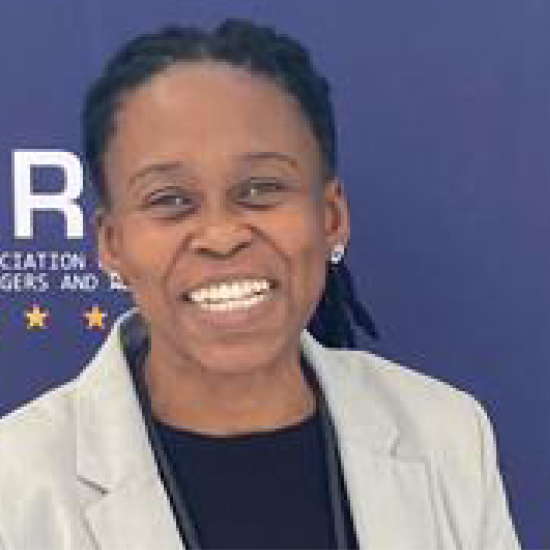
When Professor Nnenesi Kgabi stepped into the role of Chairperson of the National Science and Technology Forum (NSTF), she brought with her a clear sense of purpose and continuity. Appointed in November 2025, for a term running until October 2028, Kgabi is focused on strengthening the organisation’s relevance by deepening member engagement and extending its reach across all nine provinces and sectors of South African society.
She describes her appointment as a bridge between strategic cycles, linking the current 2022-2027 framework with the next phase from 2028 to 2032 – positioning the NSTF to build on its achievements while preparing for a new era of national impact.
“My intention is not to work alone in this important role, thus working jointly and in collaboration with the NSTF board and executive committee,” she said.
Ultimately, her goal is to build on the development of a new strategy that will propel the NSTF to be an engaged, relevant and impactful organisation.
Strategic partnerships
Speaking to Public Sector Manager magazine, Kgabi said the strategy is designed to strengthen collaboration across government, industry, academia, professional societies and civil society. Through these partnerships, the NSTF aims to advance South Africa’s science, engineering, technology and innovation (SETI) sector, while accelerating the implementation of solutions that support inclusive socio-economic growth.
“Overall, I intend to improve the reach, relevance, visibility and impact of the NSTF in South Africa,” she explained.
South Africa is well aware of the critical role that SETI plays in the country’s socio-economic advancement. The challenge, Kgabi notes, is not a lack of strategies or development plans to address persistent social and economic challenges.
Rather, she argues, there is a pressing need for committed, purpose-driven organisations that can bridge the gap between policy and implementation.
In this context, Kgabi believes the NSTF must be strategically positioned to serve as a catalyst for accountable SETI implementation – driving socio-economic development while supporting and strengthening existing national initiatives.
Background
A seasoned scientist, Kgabi holds a PhD in Environmental Sciences from North-West University and currently serves as Chief Director of Research and Postgraduate Support at the institution.
Her career reflects a rare blend of scientific rigour, leadership and governance across academia and the public sector.
In addition to her scientific training, she holds a Master of Administration in Evangelical and Charismatic Studies from the University of Birmingham, as well as a Postgraduate Diploma in Business Administration from Wits University – qualifications that underpin her multidisciplinary approach to leadership.
Kgabi also plays an influential role across several regional and national bodies. She is Chairperson of the Southern African Development Community (SADC) WaterNet Board, Vice President for Research Management within the executive committee of the Southern African Research and Innovation Management Association, and Chairperson of the Human Resources Committee of the Water Research Commission Board. She further serves on the South African Bureau of Standards Technical Committee on Research Management.
Her international standing is reflected in her work with the Swiss Programme for International Research by Scientific Investigation Teams under the Swiss National Science Foundation, as well as her role as a merit reviewer for the United States National Science Foundation.
Increasing the scope
Excited about her new role at the NSTF, Kgabi highlighted the organisation’s impact on learners across the country, particularly through initiatives such as the Brilliants and Share ‘n Dare programmes, which aim to inspire the next generation of scientists, engineers and innovators.
“Most academics and professionals also participate in the NSTF discussion forums. The professionals involved in the member organisations also have the opportunity to share their insights on NSTF platforms.
These initiatives are well known and appreciated, however, we need to strengthen the innovation awareness, reach and impact for communities in the predominantly rural communities,” she said.
Career accomplishments
Highlighting her career accomplishments, Kgabi points to a research trajectory marked by notable awards and active participation in programmes under the United Nations Educational, Scientific and Cultural Organization (UNESCO) from the early 2000s through 2018.
These include her involvement in the UNESCO/Regional Office for Science and Technology in Europe International Union of Pure and Applied Physics programme, followed by participation in the UNESCO/African Network for Scientific and Technological Institutions. Her work later extended to the TWAS–UNESCO Associate Scheme of the World Academy of Sciences for the Advancement of Science in Developing Countries, and the UNESCO Chair in Sustainable Water Research for Climate Adaptation in Arid Environments. This trajectory also led to her role in the UNESCO Brilliant Minds – Sustainable Solutions programme.
Her participation in regional and international research missions is another highlight of her distinguished career. This includes the Eighth African Roundtable on Sustainable Consumption and Production in 2014, the Sea Earth Atmosphere Linkages Study in Southern Africa in October 2015, the National Aeronautics and Space Administration-Observations of Aerosols above Clouds and their Interactions mission in 2016, and the Aerosol, Radiation and Clouds in Southern Africa project in 2017. These missions reflect her hands-on engagement with critical environmental and atmospheric research on both regional and global scales.
In her leadership journey, Kgabi has contributed extensively to both national and regional scientific communities. She served as a member of the Applied and Industrial Physics Interest Group of the South African Institute of Physics (SAIP) from 2003 to 2009. In 2005, she was nominated by SAIP as Team Leader of the South African delegation to the Second International Union of Pure and Applied Physics Conference on Women in Physics in Rio de Janeiro, Brazil. This role led to her membership on the national Working Group on Women in Physics in South Africa, a SAIP committee, where she served from 2005 to 2009.
She also served as a SADC Expert, providing technical support to the SA-European Union (EU) Dialogue Facility on the impact of COVID-19 on the EU and SADC Water Research Agendas. More recently, she served as Regional Focal Point for Africa in the World Association of Industrial and Technological Research Organisations from 2021 to March 2023.
Fighting a climate change
Kgabi believes that the South African research community has made significant strides in climate change research and advanced nexus studies. However, she points out persistent gaps; both between research and policy development, and between policy and implementation; that need to be addressed to translate scientific knowledge into tangible socio-economic impact.
“Most research results are confined to journals and book chapters, and never get to be translated to inform policy or solutions that can be implemented at sector or community level,” she said.
“The fight against climate change does not only require a nexus research approach, it calls for multisectoral and multistakeholder implementation approach,” she added.
National service
Her message to public servants and the broader public is clear: the success of a nation relies not only on sound policies but also on the dedication and commitment of those tasked with implementing them, public servants and citizens alike. ❖