


DSTI
launches National Science Month to place innovation at the heart of South Africa’s future

Since 2000, the Department of Science, Technology and Innovation (DSTI) has implemented National Science Week (NSW) as the country’s premier science engagement programme. Over more than two decades, NSW has made important progress in advancing our country’s Science Engagement Strategy.
However, because science, technology and innovation are increasingly central to addressing the complex challenges facing our world today, we believe South Africa needs a broader and more sustained science engagement programme.
We view science as more than a driver of discovery. It is also a powerful engine of economic transformation, industrialisation and national competitiveness. Around the world, countries that have successfully advanced to high-income status have done so by placing science, research and innovation at the centre of government policy, industry and education.
South Africa has world-class scientists and globally recognised research institutions. Yet our investment in research and development remains stubbornly low, at approximately 0.61% of the gross domestic product (GDP).
This level of investment is significantly below the National Development Plan target of 1.5% and far behind leading innovation economies. South Korea invests more than 4.5% of GDP, Israel invests more than 5% and the OECD average is about 2.7%.
It is for this reason that the DSTI adopted a new mantra: “Placing Science, Technology and Innovation at the Centre of Government, Education, Industry and Society.”
The mantra reminds us that fulfilling this responsibility cannot be business as usual. We must significantly raise public awareness of the value of science in everyday life, while elevating science, technology and innovation as key drivers of South Africa’s socio-economic development.
It is against this background that the department decided to introduce National Science Month as an expanded, more inclusive platform for public engagement with science.
Objectives of National Science Month
Through National Science Month, we seek to:
- demonstrate the power of science as a tool for understanding the natural and social world;
- create and harness new technologies to resolve societal challenges such as social inequality, social justice and ecological sustainability;
- promote informed decision-making and public access to scientific knowledge; and
- instil a culture of deliberate knowledge exchange between scientists and the public.
Informed by these objectives, the launch takes place under the theme; Science, Technology and Innovation are for Everyone. Through this theme, we seek to communicate that science, technology and innovation belong to all people, regardless of ethnicity, class, gender, belief or location and that they must serve society as a whole.
Setting the tone
The launch is setting the tone for a comprehensive, month-long programme of meaningful public engagement with science. It includes an exciting science exhibition comprising 132 stands and more than 100 exhibitors from participating institutions and partners.
Participating institutions include the Vaal University of Technology (VUT), the University of the Witwatersrand, the University of Johannesburg, the University of KwaZulu-Natal, the University of Cape Town, North-West University, the University of Limpopo, Stellenbosch University, the University of Venda, Tshwane University of Technology, Durban University of Technology, Mangosuthu University of Technology, Sol Plaatje University and Nelson Mandela University.
The DSTI entities such as the Council for Scientific and Industrial Research, the National Research Foundation, the Technology Innovation Agency, the South African National Space Agency (SANSA), the Academy of Science of South Africa and the South African Council for Natural and Scientific Professions are also part of the exhibitors and will also host science engagement programmes throughout the month.
A range of themes
A key feature of this inaugural edition of National Science Month is its broad range of themes, including technology and innovation, health, environmental management, service delivery, education, journalism, human rights, climate change, space science, decolonising knowledge systems, science diplomacy, decision-making, public awareness of research institutions and youth engagement.
South Africa’s science story
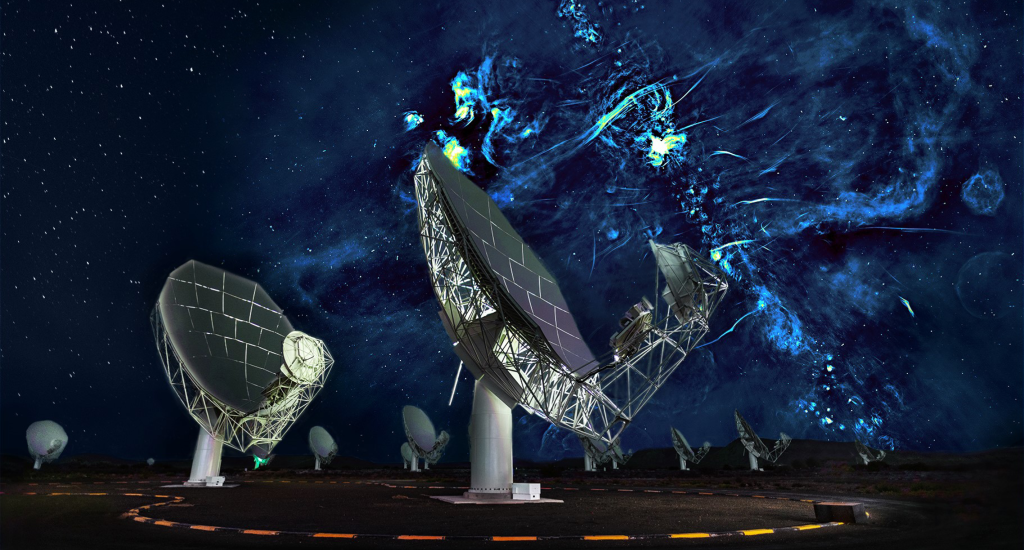
During the month of July, we must tell the public about the groundbreaking and transformative work we are doing in space science and astronomy through some of our country’s
mega-science projects such the Square Kilometre Array and the Southern African Large Telescope.
We must also tell the public about the contributions of some of our country’s most advanced scientific infrastructure platforms, including iThemba LABS in the Western Cape – the largest particle accelerator-based science facility in the Southern Hemisphere, generating radioactive isotopes for medicine and conducting materials research.
Another example of our country’s world-class science infrastructure is the SANSA Space Weather Centre in Hermanus, Western Cape. It is Africa’s only 24/7 operational regional space weather warning centre. This state-of-the-art facility monitors solar activity and provides early warnings and forecasts to protect vital ground- and space-based technologies across the continent.
Inspiring the next generation of scientists
We must also use National Science Month to inspire our learners and young people to pursue careers in science, technology and innovation with confidence.
By doing so, we can help South Africa develop more scientists, researchers and innovators in the fields that are most critical to our country’s future growth and development.
Our young people must know about the work of Professor Mashudu Tshifularo and his team at the University of Pretoria, who pioneered the use of 3D-printed titanium implants to reconstruct the broken bones of the middle ear and restore a patient’s hearing.
Another example is Dr Sandile Ngcobo, who invented the world’s first digital laser at the CSIR. This breakthrough enabled researchers to digitally control the shape of a laser beam on a computer, rather than by manually adjusting physical mirrors.
Drawing from these breathtaking examples of South Africa’s science, technology and innovation capabilities, my message to the learners here today is simple: your dreams are valid. You must never allow anyone to tell you that you cannot become a scientist.
Let us join hands in taking the message of science to every town and village in our country. Let us tell every community that science, technology and innovation are for everyone.
*This is part of a message delivered by the Deputy Minister of Science, Technology and Innovation, Dr Nomalungelo Gina, at the launch of the inaugural National Science Month at VUT on 4 July 2026.
videos & photos