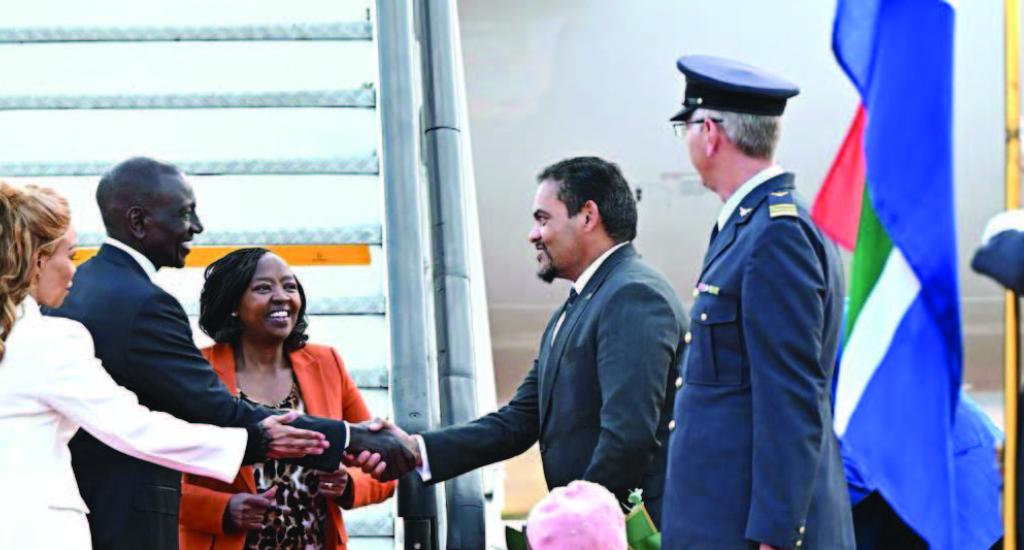



Kenya State Visit deepens strategic partnership and advances Africa’s development agenda
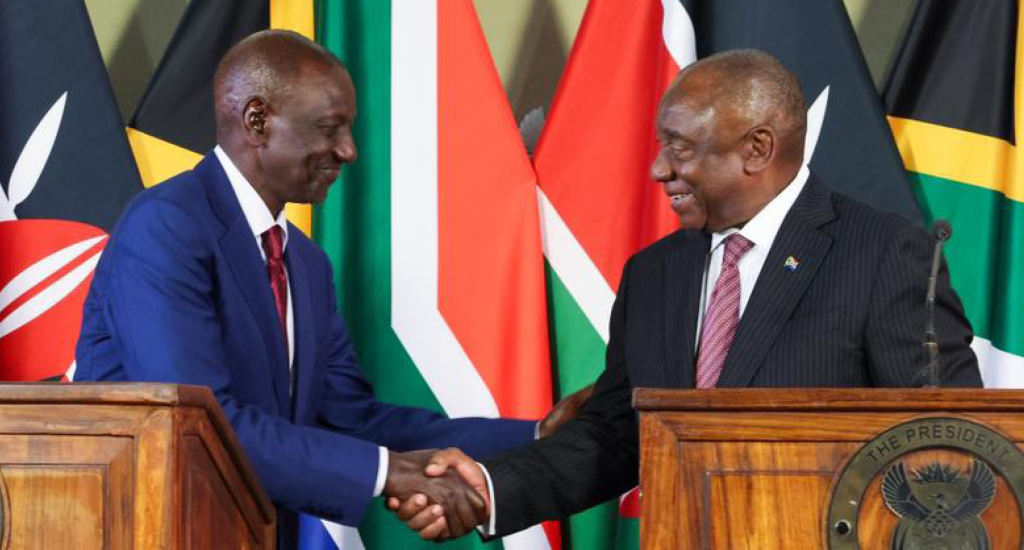
The recent State Visit by Kenyan President William Ruto to South Africa was more than a routine diplomatic engagement between two of Africa’s most influential economies. It marked a moment of renewed ambition, signalling a shared commitment to deeper continental integration, accelerated economic transformation and a stronger African voice in global affairs.
Hosted by President Cyril Ramaphosa at the Union Buildings in Tshwane, the visit carried both symbolic and strategic weight. It reaffirmed
long-standing ties between South Africa and Kenya while laying the groundwork for expanded cooperation in trade, infrastructure, skills development, governance and regional integration.
Addressing the media after official talks, President Ramaphosa underscored the depth of the partnership, describing Kenya as one of South Africa’s most important strategic partners in East Africa and on the continent more broadly.
“Our countries enjoy longstanding ties of friendship, solidarity and cooperation. “These ties are rooted in our shared history, our common aspirations for African development and our mutual commitment to peace, democracy, regional integration and multilateralism," he said.
Deeper collaboration
The visit culminated in the signing of six Memoranda of Understanding, covering areas as diverse as trade, maritime cooperation, women’s empowerment, technical and vocational education and training, arts and culture, and sports and recreation. Collectively, the agreements establish a formal framework for closer cooperation and are expected to deepen collaboration between public institutions, businesses, and citizens in both countries.
At the centre of the discussions was the steadily growing economic partnership between South Africa and Kenya. President Ramaphosa noted that Kenya remains South Africa’s largest trading partner in East Africa and an important destination for South African investment, underscoring the strategic value of the relationship.
That economic partnership is already visible in the expanding footprint of South African companies in Kenya. Businesses from South Africa have established a presence across a range of sectors, including financial services, information and communications technology, retail, pharmaceuticals, manufacturing, and infrastructure development. At the same time, Kenyan businesses are increasingly extending their reach into South Africa, reinforcing commercial ties between East and Southern Africa and illustrating the growing interdependence of the continent’s regional economies.
Inclusive development
The leaders also turned their attention to the opportunities presented by the African Continental Free Trade Area
(AfCFTA), which both South Africa and Kenya regard as a powerful instrument for unlocking growth, advancing industrialisation, and strengthening intra-African trade.
President Ramaphosa said he and President Ruto were aligned on the need for the AfCFTA to drive inclusive development. “President Ruto and I agreed that the AfCFTA must serve as a catalyst for inclusive growth, industrialisation and job creation,” President Ramaphosa said. “It should facilitate the development of regional value chains, support African manufacturing and create greater opportunities for young people, women and entrepreneurs across our continent.”
Beyond the bilateral agenda, the visit also offered the two countries a platform to advance shared continental priorities. Both leaders highlighted the importance of reforming global governance institutions so that they better reflect present-day realities, with particular emphasis on the United Nations Security Council, where Africa continues to push for permanent representation.
Global participation
The two leaders also welcomed Africa’s growing influence in global decision-making forums. The African Union’s (AU) inclusion in the G20 was highlighted as a significant breakthrough, creating new opportunities for the continent’s priorities to be heard and advanced on the world stage. South Africa’s leadership role within the G20 was commended, while Kenya expressed its support for amplifying African concerns through engagement with the G7 and other international platforms.
The discussions also turned inward, focusing on the need to strengthen the AU. Both countries agreed that the AU must become more effective, responsive and financially sustainable if it is to meet the continent’s growing expectations. Central to this vision is the need for African nations to finance their own institutions, reducing dependency on external support and reinforcing African ownership of the continent’s development agenda.
Another significant theme to emerge from the visit was the urgent need to mobilise development finance for Africa’s infrastructure ambitions. The leaders raised concern that trillions of dollars held by development finance institutions globally are not being channelled adequately into transformative projects on the continent.
Economic growth and regional integration
Kenya’s ambitious plans to generate 10 000 megawatts of electricity and expand its transport network through the construction of new highways were identified as examples of investment-ready projects with the potential to drive economic growth and deepen regional integration. South African development finance institutions, alongside private sector investors, are already playing an increasing role in such initiatives, particularly in the areas of renewable energy and infrastructure development.
Energy security also featured prominently in the discussions. Against a backdrop of volatility in global fuel markets, driven in part by geopolitical tensions, the two leaders explored ways to strengthen Africa’s energy resilience. Kenya’s plans to invest in an East African refinery were highlighted as part of wider efforts to bolster regional energy security, reduce dependence on external supply chains and build a more self-sufficient energy future for the continent.
Health security
Health security and pandemic preparedness emerged as another important pillar of the dialogue. With Ebola outbreaks affecting parts of East Africa, Kenya outlined a range of measures aimed at protecting public health, including daily screening at ports of entry, the establishment of quarantine facilities and strengthened emergency response systems. The discussion underscored the growing recognition that regional cooperation in health is essential not only for safeguarding lives, but also for protecting economic stability and development gains.
President Ramaphosa announced South Africa’s contribution of US$2.5 million towards efforts to combat Ebola in the region, underscoring the spirit of continental solidarity needed to respond effectively to public health emergencies.
The leaders also discussed regional peace and security challenges, including developments in the Democratic Republic of Congo, where many Kenyan citizens are currently based. Kenya confirmed that contingency measures are in place to protect its nationals and respond swiftly to any potential emergencies, reflecting the seriousness with which both countries view instability in the region.
As the visit drew to a close, Presidents Ramaphosa and Ruto reaffirmed their shared commitment to advancing peace, democracy, accountability and inclusive development across the continent.
President Ramaphosa praised Kenya’s role as a gateway to East Africa and as an influential voice on questions of peace, security, and development. He also congratulated Kenya on its selection, alongside Uganda and Tanzania, to host the 2027 Africa Cup of Nations, describing the achievement as “a proud and historic moment for East Africa.”
Ultimately, the State Visit demonstrated how strategic partnerships between African nations can be harnessed to advance both national interests and continental priorities. More than a diplomatic exchange, it reflected the shared ambition of South Africa and Kenya to help build a prosperous, integrated and self-reliant Africa.
videos & photos