


Language at the heart of inclusion
in South Africa
Language is not merely a tool for communication; it is a living archive of a people’s history, identity and worldview. Through language, generations pass down knowledge, traditions and values, shaping how communities understand themselves and the world around them. Indigenous languages, in particular, carry deep cultural meaning – preserving philosophies, spiritual beliefs and ways of life that cannot easily be translated or replaced.
In South Africa, linguistic diversity is protected by the Constitution, which recognises 12 official languages and accords them equal status.
This constitutional commitment not only safeguards the country’s rich cultural mosaic but also upholds every citizen’s right to communicate and express themselves in the language of their choice. Institutions such as the Pan South African Language Board (PanSALB) are central to advancing and protecting these linguistic rights.
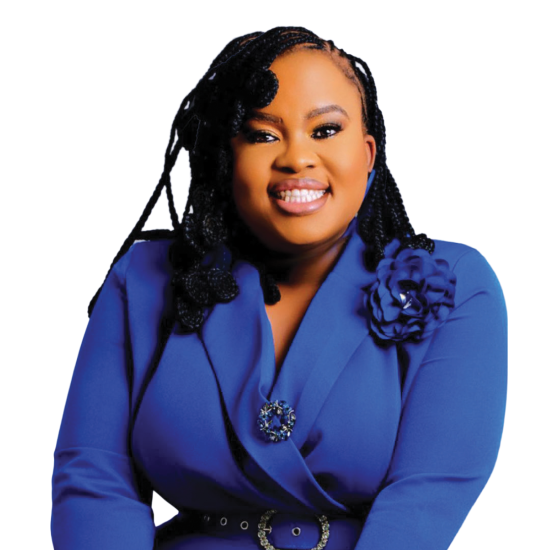
Leading this important mandate is PanSALB’s newly appointed Chief Executive Officer, Dr Keaobaka Seshoka, who is determined to strengthen the promotion and development of South Africa’s languages.
Her vision is of a nation that embraces multilingualism as a tool for social cohesion, where citizens are encouraged to learn and speak all official languages to foster greater understanding, respect and unity.
At the heart of Seshoka’s vision is the belief that language should never be a barrier to opportunity. She envisions a South Africa where every language is valued, every voice is heard and no child is disadvantaged or excluded because of the language they speak.
“Let the future speak all our official languages. Let us create a South Africa where we treasure, value, preserve and respect all our languages, and one that understands that multilingualism is a resource and not a problem,” she said.
Culture and heritage
As a linguist and language activist, Seshoka firmly believes that all languages are equally important and deserve respect, as they are vital carriers of culture and heritage. She also emphasises the interconnectedness of languages, noting their mutual intelligibility. For instance, speakers of Setswana can often understand Sesotho and Sepedi, while those who speak isiZulu can generally comprehend other Nguni languages such as isiSwati and isiXhosa.
Her deep passion for language has enabled her to develop broad linguistic abilities. She understands almost all of South Africa’s official languages and speaks the majority of them fluently.
30 years of constitutional democracy and language
In commemorating the 30th anniversary of the adoption of the Constitution, Seshoka emphasised that while the board has made significant progress in developing language policies over the past three decades, the focus must now shift towards effective implementation.
“Our country has progressive and well-crafted policies, but these require equally strong and practical implementation strategies,” she explained. She said that she was particularly interested in how government departments and the private sector gave effect to language policies in their day-to-day operations, adding that language equality remained central to the vision of a united and inclusive South Africa.
She added that the Constitution’s recognition of all official languages is rooted in the principle that every community deserves dignity and acknowledgement. “When a language is marginalised, the people who speak it often feel excluded as well,” she said.
Acknowledging that many people remain unaware of their linguistic rights, Seshoka reiterated that every South African should be able to access services, education, information and opportunities in a language they understand.
Bridging the gap between language policy and implementation
The CEO revealed that the board is strengthening mechanisms for accountability and monitoring compliance with language legislation and policies across both the public and private sectors. It is also reinforcing collaborations with government departments, municipalities, state-owned entities, educational institutions, traditional leaders, civil society and the private sector to ensure effective implementation.
Seshoka acknowledged that many institutions still require support in adopting multilingual policies, and affirmed PanSALB’s commitment to providing ongoing guidance, training and technical assistance to help them meet these requirements.
“A lot of private companies have come to the party. For example, when you go to the ATM you have options to choose a language that you understand, and some of the advertisements for our local products are done in our official languages,” she explained.
However, Seshoka noted that PanSALB must continue to raise awareness, particularly within the private sector, to reinforce the importance of catering for the diverse South African market through inclusive language practices.
Modernising language through technology
In October 2025, PanSALB partnered with Google to launch an artificial intelligence (AI) glossary for isiZulu, isiXhosa and Afrikaans, equipping millions of South Africans with the language tools needed to engage with AI in their mother tongues.
The glossary provides definitions for 100 standard AI terms in each of the three languages, making complex technological concepts more accessible and inclusive.
This initiative forms part of a broader collaboration between Google and African partners aimed at advancing digital innovation while bridging the digital divide for millions of people who speak indigenous languages across the continent.
“The AI Glossary initiative represents a significant step forward in ensuring that South Africans can engage with emerging technologies in languages they understand. AI is shaping the future of education, business, governance and communication. If our indigenous languages are absent from these technological developments, millions of South Africans risk being excluded from the digital economy,” Seshoka explained.
She added that the glossary plays a key role in making AI concepts more accessible by providing appropriate terminology in local languages. It also demonstrates that African languages are fully capable of expressing modern scientific and technological ideas.
“Our long-term vision is to ensure that all official languages are meaningfully represented within the digital and AI ecosystem. The future of multilingualism must include digital multilingualism,” said Seshoka.
videos & photos