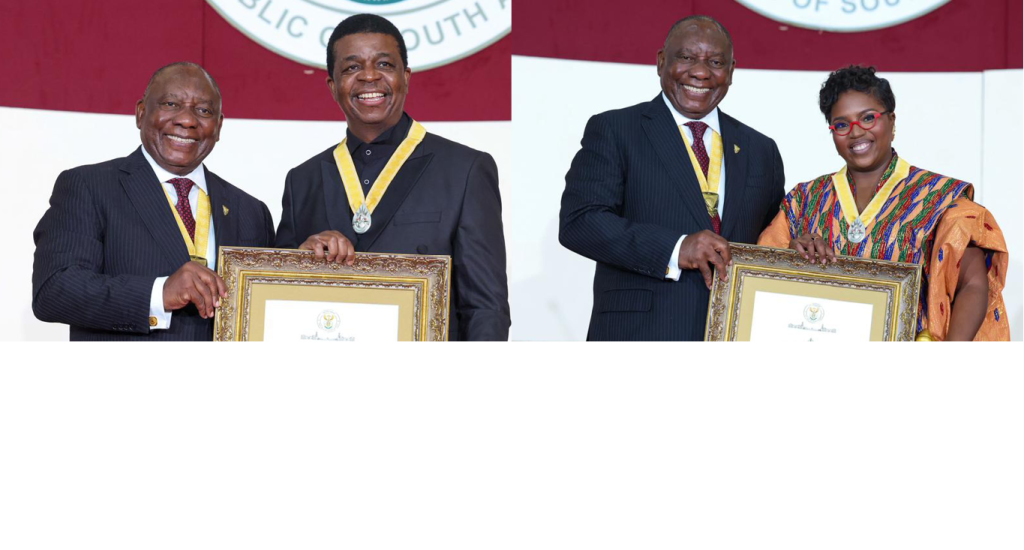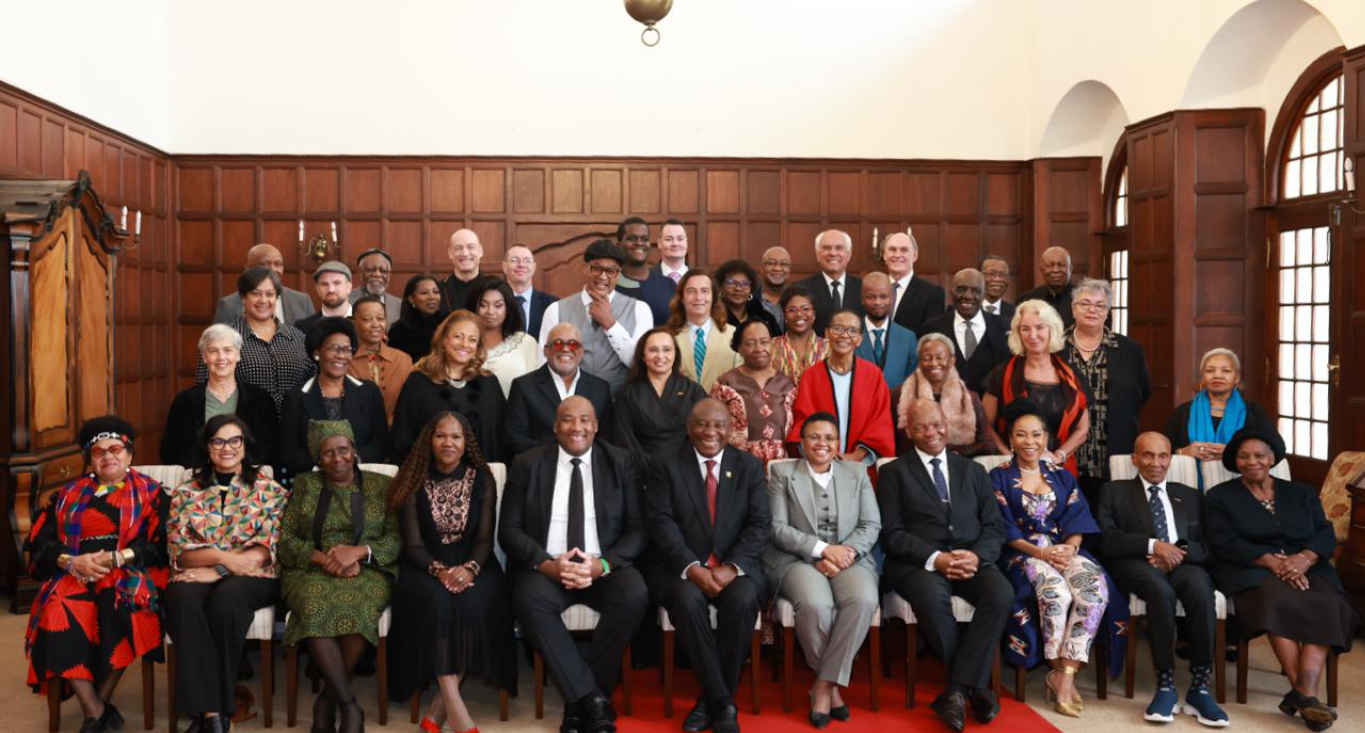




National Orders ceremony celebrates achievers across sectors

There are moments when a nation pauses, not just to celebrate excellence, but to reflect on the journey that made such excellence possible. The 2026 National Orders ceremony, held at the Sefako Makgatho Presidential Guest House in Tshwane recently, was one such moment.
Set against a backdrop of powerful national milestones – 30 years of the Constitution, 50 years since the 1976 Youth Uprising, 60 years since the District Six forced removals and 70 years since the 1956 Women’s March – the event carried a deeper resonance. It was not merely an awards ceremony but was a bridge between history and the present, honouring individuals whose contributions continue to shape South Africa’s democratic story.
South Africa has long been synonymous with recognising its citizens for outstanding achievements across sport, the arts, science and social development. The National Orders stand as the country’s highest form of recognition, bestowed by the President on citizens and eminent foreign nationals who embody the ideals of a free, just and inclusive society.
This year, 38 recipients – some honoured posthumously – were recognised for their contributions across diverse fields; including music, politics, medicine, literature, education and human rights. Their stories reflect a shared thread of resilience, creativity, and service to the nation.
President Cyril Ramaphosa, Grand Patron of the National Orders, described the awardees as patriots who have brought life to the dream of a democratic South Africa.
“In a land of innumerable heroes and heroines, the South African people have decided that it is these men and women they will lift to the sky. This is the greatest honour,” he said.
Icons of achievement and influence
Among those honoured were figures whose impact reaches far beyond their respective disciplines. Three-time Rugby World Cup-winning Springbok coach Rassie Erasmus was recognised for his contribution to sport and national pride, while kwaito pioneer Oscar ‘Oskido’ Mdlongwa was celebrated for shaping South Africa’s cultural soundscape.
Renowned flautist Wouter Kellerman was acknowledged for using music as a tool of unity, and Professor Tulio de Oliveira received recognition for his leadership in scientific research during the COVID-19 pandemic, including his role in identifying the Omicron variant.
Inclusion and representation
For some recipients, the honour reflects not only personal achievement but also advocacy for often overlooked communities. Andiswa Gebashe, a leading voice for the South African Sign Language (SASL) and the deaf community, received the Order of Ikhamanga in Silver.
Speaking on the sidelines of the ceremony, Gebashe emphasised that while progress has been made, more work is needed to integrate the SASL into mainstream arts and media.
Her message highlighted a central theme of the event: that recognition must go hand in hand with continued efforts to build a more inclusive society.
The ceremony also honoured international allies through the Order of the Companions of O.R. Tambo in Silver, awarded to individuals who demonstrated solidarity with South Africa during its liberation struggle.
Among them was Naomi Kleinfeld from the Netherlands, who risked her life working within South Africa as an ally of the liberation movement. Her commitment to justice and opposition to apartheid reflects the global support that helped shape the country’s path to freedom.
Other recipients included Pierre De Heer (Netherlands), Teresa Hillary Clarke (USA), Antonio da Silva Gomes Cordeiro (Mozambique, posthumous) and Professor Chérif Keïta (Mali).
Carrying the legacy
For others the awards carry deep personal significance. Lindumuzi Mngoma, accepting the Order of Ikhamanga in Gold on behalf of his late father, Professor Khabi Mngoma, reflected on the sacrifices made by artists during apartheid.
He welcomed the recognition of musicians but expressed concern that younger generations often see artistry primarily as entertainment rather than a powerful form of cultural expression and resistance.
“It would be great if today’s youth can come together in their communities to participate in music and other forms of art to keep the legacy of past musicians alive,” he said.
videos & photos