



Managing migration
and public concerns within the framework of the Constitution

The right to march, to protest and to be heard is one of the most hard-won gains of our democracy. It was forged through sacrifice, often in the face of brutal repression. Today, it is protected by the Constitution – a living testament to those who stood up, spoke out and paid the price for the freedom we enjoy today.
This month, the nation marks the 50th anniversary of the 1976 Youth Uprising. It remains one of the most painful yet defining moments in our history. On 16 June 1976, young people took to the streets to reject injustice and demand dignity in education, and many lost their lives in the process.
Under the theme, RESET@50 – The Future Calls, this commemoration is not only about remembrance, it is about action. We must ensure that today’s young people are empowered to shape South Africa’s democratic, economic, social and cultural future.
We also mark 70 years since the 1956 Women’s March, when thousands of women united against injustice. These historic moments coincide with the 30th anniversary of the Constitution of the Republic of South Africa, 1996, which restored dignity, equality and fundamental rights to all.
Our Constitution does more than guarantee rights. It is a guide for how we navigate complexity, resolve tensions and uphold the values that define us as a nation.
One such area of complexity today is migration.
In recent weeks, the country has witnessed marches and public demonstrations against illegal immigrants. These developments reflect real frustration within communities. Government recognises these concerns and acknowledges that they are often shaped by broader socio-economic pressures, including unemployment, inequality, strain on public services and concerns about crime. These are real challenges that many South Africans are facing daily, and government is actively working to address them.
At the same time, the Constitution guarantees every person the right to freedom of expression, assembly and peaceful protest. These rights are central to democratic participation and must be protected. However, they must be exercised lawfully, peacefully, and with respect for the rights and dignity of others. When protests turn to intimidation, violence or discrimination, they undermine social cohesion and erode the very constitutional principles they seek to defend.
Government’s position is clear: the right to protest is protected, but it must always be exercised within the framework of the law.
Equally, government is acting decisively on the issue of illegal migration. A comprehensive response is being implemented, combining legislative reform, strengthened enforcement and system modernisation. These include the passing of the Immigration Amendment Act of 2025, which strengthens the legal framework in line with constitutional principles and the approval of the Revised White Paper on Citizenship, Immigration and Refugee Protection, which sets a clear policy direction for a more effective, secure and modern migration system.
These reforms are supported by coordinated action across the Justice, Crime Prevention and Security Cluster. Recent engagements brought together government, political parties and community stakeholders to reinforce a common understanding: concerns must be addressed through lawful processes, and public demonstrations must comply with legal requirements, including proper notification, to ensure safety and accountability.
Cabinet has adopted a comprehensive approach to migration management. It is endorsed by the President’s Coordinating Council. This includes bringing together national, provincial and local government, as well as traditional leadership.
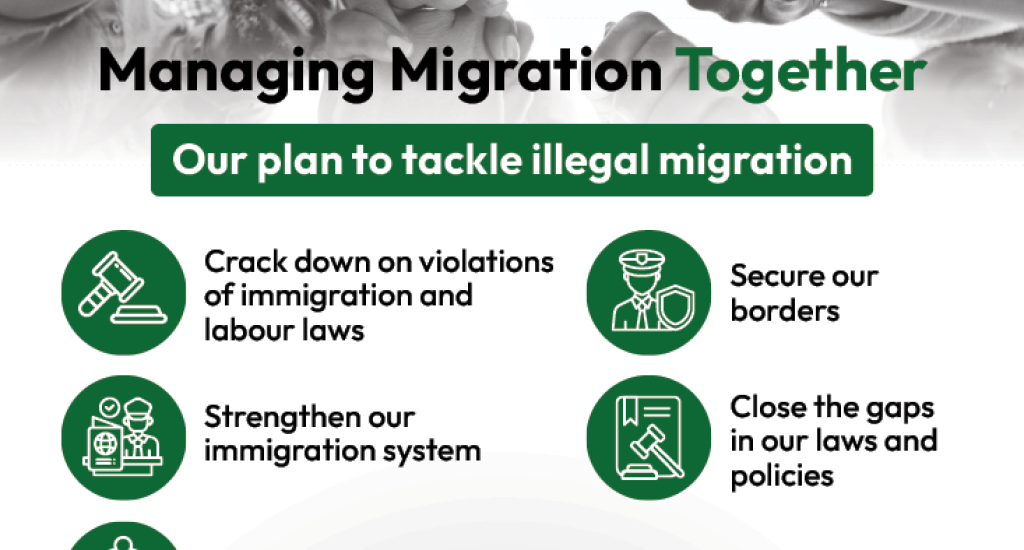
In his recent national address, President Cyril Ramaphosa outlined key actions that government is taking to respond to these challenges. These include intensifying the enforcement of immigration, labour and related laws; strengthening measures to prevent irregular and illegal entry into the country; taking decisive action to stamp out corruption within the immigration system; and advancing reforms to strengthen immigration laws and policies. Government is also deepening cooperation with countries across the African continent to build a coordinated regional response to migration pressures. Government’s response is not new; it is being intensified.
Over the past two financial years, more than 109 000 undocumented migrants have been deported, reflecting a significant increase in enforcement activity. This strengthened approach is supported by improved inter-agency coordination, enhanced use of technology to verify identities, and more effective border management systems.
At the same time, government is taking firm action to root out corruption within the immigration system. Since July 2024, dozens of officials implicated in fraud and corruption have been dismissed, while arrests and prosecutions are ongoing through collaboration with law enforcement agencies. This decisive action is critical to restoring integrity, strengthening public confidence and ensuring that immigration laws are applied fairly and consistently.
For public servants, this moment calls for clarity, discipline and leadership. We cannot allow illegality to persist. At the same time, we cannot allow lawlessness in how we respond to it. The Constitution requires us to uphold both security and human dignity, without compromise.
As we commemorate 30 years of constitutional democracy, we are reminded that the strength of our Constitution lies not only in the rights it guarantees, but in how we choose to uphold and protect them.
Let us move forward with purpose; addressing the socio-economic challenges that drive frustration, strengthening our systems to combat crime and illegal migration, and ensuring that our actions consistently reflect the values of unity, dignity and the rule of law.
In upholding the Constitution, we affirm not only our rights, but our shared responsibility to build a just and cohesive society for all who live in South Africa.
videos & photos