



Engineering her rise:
Amanda Nkoe’s path to leadership
For Amanda Nkoe, the decision to pursue engineering was not a random choice made at the end of high school.
It was a path carefully guided by family influence, personal curiosity and a growing appreciation for the tangible impact of infrastructure.
Today, the Bloemfontein-born engineer serves as Maintenance Manager: Planning within Network Asset Management at Transnet Rail Infrastructure Manager (TRIM), a role that reflects more than a decade of steady growth from trainee to strategic leader.
Growing up in the Free State capital, the 35-year-old, in an interview with the Public Sector Manager (PSM) magazine, said she was exposed to the world of construction through her father, who worked in civil construction.
“What I love about engineering is seeing everything you have developed, from theoretical principles to holding it in your hands, and contributing positively to society at large,” said.
With a clear career path in mind, Nkoe enrolled at the Central University of Technology, where she pursued a degree in Civil Engineering. She later completed a postgraduate diploma in Project Management through MANCOSA and is currently advancing her studies towards a Master of Engineering in Civil Engineering at the University of Cape Town.
Engineering for impact
Engineering, she realised, offered the opportunity to create systems and structures that directly improve people’s lives.
“I have further strengthened my technical foundation through specialised certifications in track geotechnology, continuously welded rail, and bridge design,” she says. “This combination of engineering depth and project management capability allows me to operate effectively across both technical and strategic environments, from on-site execution to executive decision-making”.
A beneficiary of youth empowerment initiatives
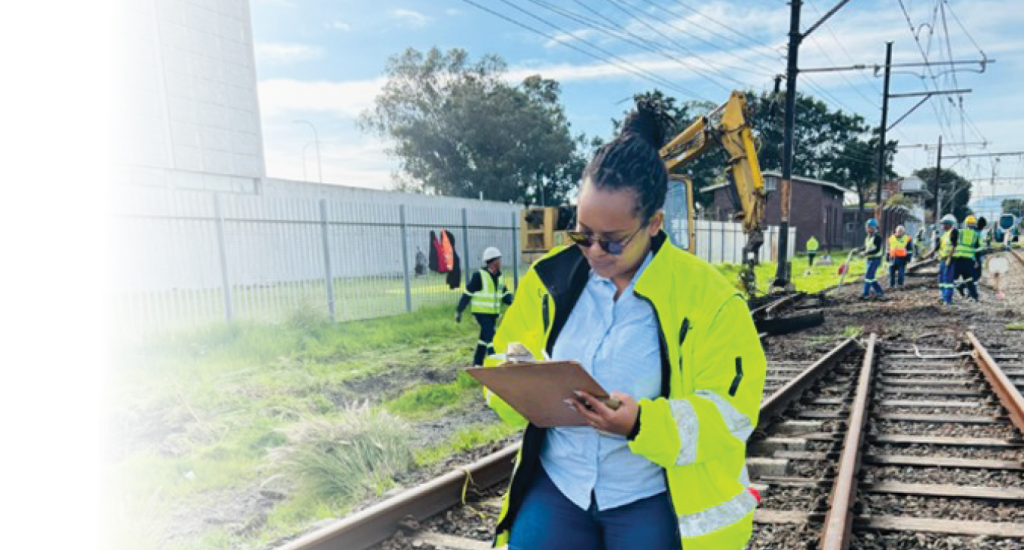
Nkoe’s entry into the rail sector came in 2013, when she joined Transnet as a Track Technician in Training. It was her first opportunity to apply classroom knowledge to real-world infrastructure.
It was during this programme that she developed a strong technical foundation through hands-on experience.
Working at track level provided her with practical insight into how rail systems operate – from maintenance routines to safety procedures. This early exposure would later prove invaluable as she moved into leadership positions.
A year later, she secured a place in the Transnet graduate programme and joined the Transnet Coal Line, one of the country’s most critical freight routes. The experience broadened her understanding of large-scale infrastructure operations.
“Over the past decade, this progression from trackside operations to strategic leadership has given me a comprehensive understanding of both the technical and economic dimensions of rail infrastructure”.
Defining career moments
As Nkoe gained experience, she took on increasingly complex responsibilities. Her progression through Transnet was marked by consistent performance, technical growth and a willingness to lead in challenging situations.
“One of the most defining moments in my career was leading the rapid restoration of a major rail corridor, following severe weather damage,” she recalled. “Despite significant operational constraints, my team successfully rebuilt critical sections of track within tight timelines”.
That moment, she added, represented more than technical achievement, saying it reinforced her belief in the importance of teamwork and resilience.
“Seeing the first train safely pass through the restored section remains a standout achievement,” she said.
Experiences like this strengthened her confidence and positioned her for leadership roles that required both technical expertise and strategic planning.
Her current role at the parastatal entity places her at the centre of long-term infrastructure decision-making. In it, she leads multidisciplinary teams, manages maintenance budgets, and coordinates both planned and emergency interventions while maintaining strict safety and operational standards.
“I also engage with key stakeholders, including regulators and operational partners, to ensure alignment and efficient service delivery,” she added.
Driving innovation through technology
Her work also increasingly involves adopting modern technologies to enhance infrastructure reliability.
“A key focus has been implementing digital asset management systems and predictive maintenance models, shifting operations from reactive to proactive approaches,” she explained.
This shift reflects the growing role of technology in infrastructure management and the importance of forward-thinking leadership.
Recognition and representation
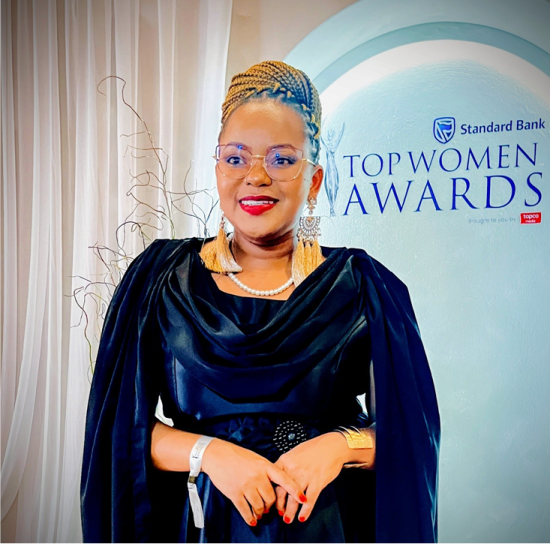
Nkoe’s steady progression has been recognised beyond her workplace. Being named a finalist in the 2025 Standard Bank Top Women Awards marked a significant milestone in her career.
For her, the recognition was not just about personal achievement but about visibility for women in engineering.
“It validates the demanding, often unseen work within the rail industry and reinforces that engineering excellence and purposeful leadership are both recognised and valued,” she added.
Like many women in engineering, Nkoe has encountered challenges related to perceptions of authority and capability.
“A recurring challenge has been overcoming the ‘authority gap,’ where technical capability is sometimes questioned based on perception rather than performance,” she reflected.
Her approach to overcoming this challenge has been rooted in consistency and self-improvement.
“I have navigated this by consistently delivering results, maintaining technical excellence, and continuously upskilling,” she said. “By showing up, leading from the front and remaining authentic, I have reinforced that credibility is built through action, not assumptions”.
Mentorship and support
Mentorship also played a critical role in her development, crediting both senior leaders and technicians for shaping her professional mindset formally and informally.
“A senior female engineering leader has provided strategic guidance and resilience, while experienced technicians on the ground have offered invaluable practical insight.”
One principle from these mentors continues to guide her work.
“One lesson that has stayed with me is simple: excellence in execution is what ultimately earns respect,” she told PSM.
Reflecting on her journey from choosing engineering as a career to becoming a leader in rail infrastructure, Nkoe remains passionate about encouraging young women to pursue technical careers.
“Take your place with confidence and lead with purpose... Focus on building technical depth, remain curious and prioritise impact over visibility”.
For her, engineering remains deeply connected to national progress.
“By committing to excellence and leadership, young women can play a transformative role in the future of infrastructure,” concluded the young engineer.
videos & photos