


From reform momentum to tangible results:
Delivering on South Africa’s 7th Administration mandate
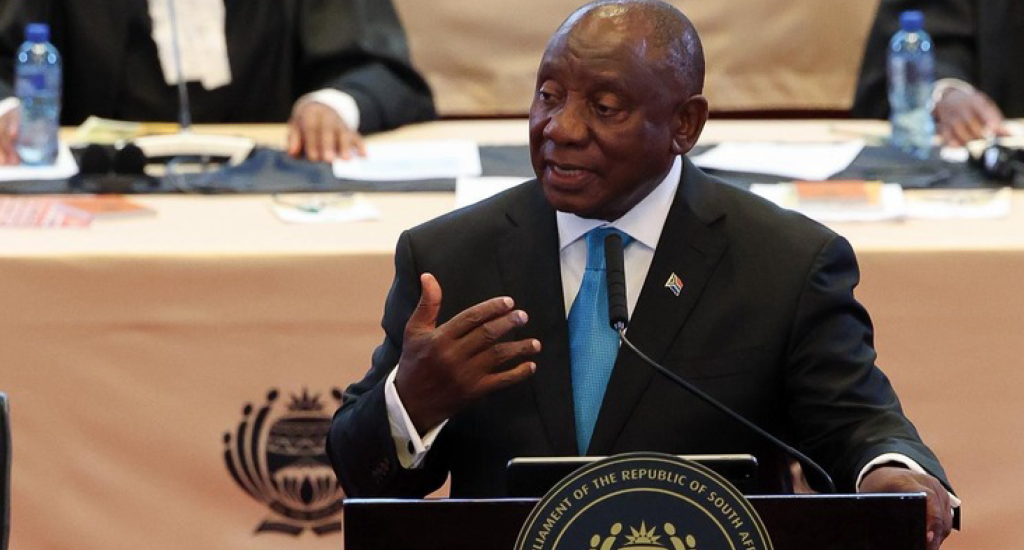
In the 2026 State of the Nation Address (SoNA), President Cyril Ramaphosa made a decisive call: South Africa must move from stabilisation to acceleration. The foundation has been laid, and reforms are underway. But the defining task of the 7th Administration is to translate reform momentum into measurable improvements in the lives of all South Africans.
The recent assessments conducted by the Department of Planning, Monitoring and Evaluation (DPME) on the implementation of the Medium-Term Development Plan (MTDP) 2024 – 2029 confirm that progress in the work of government is real. Yet, the assessments also underscore a central truth – delivery must deepen, accelerate and reach every community.
A reform agenda taking root
The MTDP 2024 – 2029, the programme of action and implementation blueprint of the 7th Administration, operationalises the vision of the National Development Plan (NDP) into measurable strategic priorities:
- Driving inclusive growth and job creation
- reducing poverty and tackling the high cost of living
- building a capable, ethical and developmental state
The DPME’s review of performance between April and September 2025 tells a story of steadiness and resilience amid global uncertainty.
South Africa recorded 0.8% gross domestic product growth in the second quarter of 2025, the strongest quarterly performance since 2022. In the third quarter, 248 000 jobs were added.
Significantly, the country experienced more than 175 executive days without load shedding, marking a significant improvement in energy reliability and investor confidence.
Operation Vulindlela
Structural reforms under Operation Vulindlela are unblocking constraints in energy, logistics and water. South Africa’s exit from the Financial Action Task Force grey list has strengthened financial credibility. Infrastructure financing has gained momentum, with R1.03 trillion allocated over the Medium-Term Expenditure Framework and substantial blended finance approvals through the Infrastructure Fund.
These are not isolated achievements. They represent the early dividends of a reform programme designed to stabilise and reposition the economy for sustained growth.
Confronting persistent structural challenges
Yet, stabilisation alone is insufficient.
Unemployment remains at 31.9%, with youth unemployment at 58.5%. A Gini coefficient of 0.63 indicates inequality remains and continues to shape the daily realities for millions of South Africans.
The National Development Plan is unequivocal: women, youth and persons with disabilities must be mainstreamed into South Africa’s economic trajectory.
Scaling investment and industrial momentum
Encouraging signs are emerging in industrial policy and investment mobilisation.
Over R44 billion in new investments have been secured across sector masterplans, including expansion in the new energy vehicle ecosystem and battery minerals value chains.
Tourism arrivals reached 7.6 million between January and September 2025, while MSME support programmes created or sustained more than 86 000 jobs.
These green shoots must now be scaled. Reform credibility must translate into higher investment, broader participation and sustained job creation.
Building a capable and ethical state
The SoNA reaffirmed that delivery depends fundamentally on state capability.
The DPME’s assessments indicate measurable progress:
- 93% of senior managers in the Public Service have undergone lifestyle audits
- 55% of the recommendations of the Commission of Inquiry into State Capture have been completed or substantially completed
- Ministerial Performance Agreements are now tightly aligned to MTDP 2024 – 2029 and SoNA commitments, strengthening accountability at the highest level
Through the District Development Model (DDM), planning and coordination across national, provincial and local spheres of government are becoming more integrated. An inter-ministerial committee is supporting distressed municipalities, while reforms to the local government framework are under way.
Digital transformation is emerging as a key enabler of capability – from digital identity reforms to the MyMzansi citizen platform prototype. However, municipal capacity, procurement inefficiencies and fiscal pressures continue to hamper implementation in parts of the country.
The lesson is clear – reform must be accompanied by institutional strengthening.
From measurement to acceleration
The DPME’s role is not limited to monitoring performance. It is also to drive corrective action and support course correction.
Recent MTDP reviews have identified priority levers for accelerated delivery – including strengthening housing implementation, improving infrastructure project preparation in municipalities and enhancing administrative efficiency in health and social grant systems.
Evidence-based monitoring is increasingly informing decision-making at Cabinet level. Performance is being tracked. Bottlenecks are being identified. Accountability is being reinforced.
The imperative of acceleration
The SoNA marked a pivot from reform initiation to reform consolidation and acceleration.
Evidence from the DPME’s assessments of the government’s implementation of the MTDP shows that the foundations of recovery are in place – in energy reforms, infrastructure development, logistics recovery, tourism growth and public sector accountability.
But reform momentum must now yield visible change in the lives of South Africans through:
- more jobs, especially for young people
- faster and more reliable service delivery
- safer communities
- a professional, ethical and capable state
South Africa has entered a new phase, one defined not by promise, but by implementation.
The task before us is to convert momentum into measurable impact.
The progress is real. The direction is clear. The responsibility now is to accelerate delivery – together – in building a nation that works for all. ❖
videos & photos