



PSC welcomes
sharpened legislation
The Public Service Commission Amendment Bill is poised to become one of the most consequential reforms in South Africa’s public administration landscape.
Should it see light of day, the legislation will significantly expand the authority of the Public Service Commission (PSC), strengthening oversight across national, provincial and local government, as well as state-owned entities.
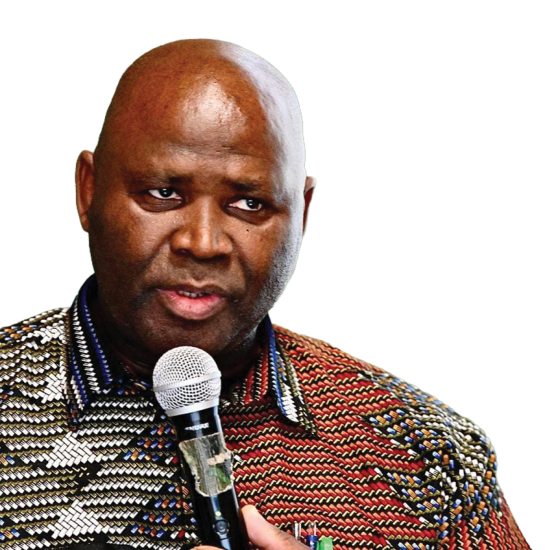
In a recent interview with the Public Sector Manager magazine, PSC Chairperson, Commissioner Somadoda Fikeni, was at pains to emphasise the importance of the long-in-the-making document. The Bill is currently before National Council of Provinces after Parliament’s nod in March 2025.
The Bill was conceived in June 2023, when it was first published for public comment. This is the furthest the Bill has gone, with previous attempts aborted.
For Fikeni, the document represents one of the most significant milestones in the evolution of public administration since the democratic era. More importantly, he believes it provides practical tools to address long-standing governance weaknesses.
At the heart of it is the proposed expansion of the PSC’s mandate beyond national and provincial government to include local government and state-owned entities. These are government structures that have in recent years faced significant governance challenges.
Fikeni explained that the current interpretation of the legislation limited the commission’s reach.
“Most of the time those institutions were outside the gaze of the PSC, for one simple reason – the notion of public service was interpreted narrowly to mean national and provincial government,” he said.
A single public administration
The Bill changes that fundamentally.
“The Bill immediately gives us powers to go to local government, and it gives us powers which we were exercising provincially and nationally. It gives us powers to go to Eskom, to Transnet and every other state-owned entity.
“The harmonising and standardising of standards and norms for public administration, and creating a single public administration will be greatly assisted in that sense,” he said.
Stronger enforcement powers
Another key shift introduced by the Amendment Bill is the strengthening of the PSC’s authority to enforce its recommendations.
Historically, departments were notorious for ignoring PSC findings, weakening accountability mechanisms.
“The new Bill says you will no longer ignore those directives from the PSC and the findings. You would have to challenge them in court rather than just ignore them”.
He compared the reform to similar legislative strengthening seen in other oversight institutions.
“You saw the same thing with the Public Protector when the case law started giving it more teeth. You have seen the same thing with the Auditor-General (AG)l. Now the PSC is coming to that space”.
Independent investigation
Fikeni added that the PSC occupies a unique oversight position because it can initiate investigations independently.
“we can do our own accord investigation without anyone reporting, and we can recommend policy changes. We can partner with the department or with an institution to change certain things”.
Currently, the commission’s secretariat operates as a government department under the Department of Public Service and Administration (DPSA) – an arrangement that at times presented governance complexities.
This reform, he noted, removes an institutional contradiction.
“In that way, we will not have this awkwardness of overseeing the DPSA, and at the same time having our department reporting to the Minister. They will be completely outside”.
A professional public service
The Bill complements broader reforms aimed at professionalising the Public Service, particularly the implementation of the National Framework towards the Professionalisation of the Public Service approved by Cabinet in October 2022.
Fikeni stressed that professionalisation begins with merit-based recruitment and expert-led selection processes.
“Professionalisation of the Public Service will ensure that a panel of experts is created by the PSC,” he said. “If you are appointing a director-general (DG) or head of department, you will no longer just have a Minister calling another Minister and then one other DG to sit around the table”.
Instead, expert panels aligned to specific sectors will guide recruitment.
“If it is science and technology, if it is communication and digital technologies, we go to the relevant professional bodies or highly respected experts in that field to say, ‘you will be part of this panel’”.
Such reforms are intended to restore integrity in leadership appointments, he said.
“One of the reasons that we saw a decline in our public service over time was that people were being appointed for loyalty rather than for competence,” he said.
Lifestyle audits
Alongside structural reforms, the PSC is prioritising anti-corruption interventions such as lifestyle audits, particularly those in high-risk functions.
He explained that ethics officers in departments must be trained to detect unexplained wealth and suspicious financial behaviour.
“All of a sudden, a person who is earning R15 000 just rolls in in a Maserati or another type of car... the lifestyle audit ought to target those”.
Initially, the audits will focus on sensitive roles such as procurement and human resources (HR).
“We are proposing to target the sensitive areas for now as we roll it in supply chain, project managers, HR and people who are in the value chain most exposed in procurement”.
These measures will be strengthened through collaboration with oversight bodies such as revenue authorities and forensic agencies.
“If entities are overwhelmed, we are beginning to say, let us coordinate with the AG, with SARS and other departments so that we can have an early warning system”.
Innovative technology
Technology also features prominently in the PSC’s reform strategy. The commission is advocating for an integrated digital system that records biometric information for all public servants.
Such a system would address long-standing problems such as ghost workers and disciplinary evasion.
“You do not get expelled in province A and reappear in province B. whenever you put your finger, your face or your iris into the system, it will bring in all those files”.
The Amendment Bill identifies municipalities as a primary focus area for the PSC due to local government being at the coalface of service delivery.
“That is where most criminal cases, corruption cases and service delivery issues are concentrated”.
SOEs will also receive targeted oversight, he added.
“If we get that one right, especially in the current geopolitical situation, our logistics and harbours will be in good space”.
Restoring confidence
While the Amendment Bill holds promise for positive change in the public sector, its success will ultimately hinge on effective implementation.
“The problem in South Africa is that we come up with good policies, but struggle with implementation,” Fikeni cautioned.
Nevertheless, he remains optimistic that the new legislative framework will strengthen accountability and restore confidence in public institutions.
videos & photos