


Restoring dignity
through opportunity and protection

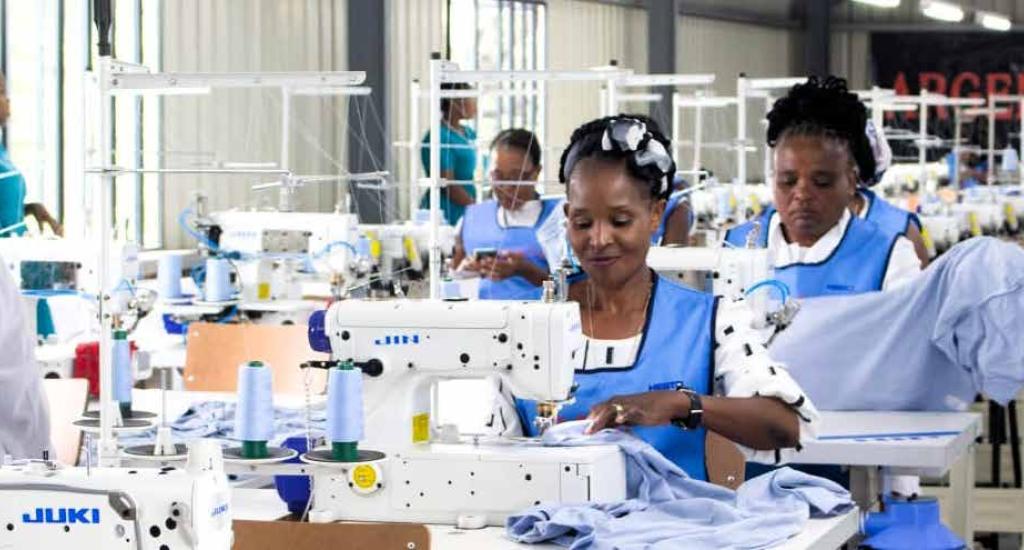
May Day is a profound reminder of the hard-fought battles for labour rights, and the collective power of social dialogue. From the factory floors and deep-level mines to the bustling tech hubs and vast agricultural lands, the hands of our workers continue to build the foundation of our democracy and power up the engines of our economy.
May Day serves as an annual pledge to ensure that the Decent Work agenda is not just a policy framework, but a lived reality for every citizen.
This Worker’s Month, South Africa stands in solidarity with the global community to pay tribute to the unwavering resilience, dedication, and sacrifice of the South African workforce.
From 1994, South Africa’s public service merged into a single, non-racial system to serve all citizens equally and fairly. This journey of transformation enshrined in our Constitution with new values, would not have been possible without the sacrifice of those public service workers who joined the millions of South Africans in the struggle against an unjust segregated apartheid system.
The Department of Employment and Labour remains deeply committed to its dual mandate: protecting the vulnerable and facilitating the entry of the unemployed into the mainstream economy.
We recognise that the greatest threat to the dignity of our people, in particular the youth, is the scourge of unemployment. To this end, our labour activation programmes (LAP) have transitioned from mere concepts into powerful catalysts for change.
Hence, we have declared 2026; “the Year of Putting Young South Africans to Work, in Honour of the 1976 Youth and Commemoration of the Youth Uprising Golden Jubilee”.
By strategically deploying billions of rands into various sectors, we are not simply spending public funds; we are investing in human capital.
These interventions are designed to bridge the gap between existing skills and the evolving demands of the modern market. Whether it is through training-to-placement schemes or supporting budding entrepreneurs, our goal is to ensure that no South African is left behind in the shifting economic landscape.
Furthermore, we continue to strengthen the social security safety net through the Unemployment Insurance Fund (UIF) as well as the Compensation Fund.
These institutions are the silent guardians of our workforce, providing essential relief and support when workers face unforeseen circumstances. We are aggressively modernising these services to ensure that they are accessible, efficient, and responsive to the needs of those they serve, who are most often vulnerable workers and beneficiaries.
We remain vigilant in our enforcement of the National Minimum Wage and occupational health and safety standards. A worker who is safe and fairly compensated is a productive worker, and a productive workforce is the only path to a prosperous South Africa. However, growth cannot exist without justice.
As the Ministry of Employment and Labour, we have tabled before Parliament Bills aimed at the protection of the rights of the labour force; the Employment Services Amendment Bill (ESAB) and the National Labour Migration Policy (NLMP), while the Labour Law Amendment Bills are currently undergoing public consultation.
Employment Services Amendment Bill
The ESAB aims to modernise the regulation of the labour market. The primary focus is on the regulation of the employment of foreign nationals and enhancing job opportunities for South African citizens.
The Bill amends the Employment Services Act of 2014, to address rising unemployment and the high representation of foreign nationals in specific, lower skilled sectors, and has since been approved by Cabinet and taken to Parliament for further processing.
National Labour Migration Policy
The NLMP and ESAB are intrinsically linked with the NLMP, providing the policy framework for managing foreign labour and ESAB provides policy legal force.
Together, they aim to regulate the employment of foreign nationals in our country through quotas and sector restrictions. Cabinet has also approved the NLMP.
Labour Laws Amendment Bill
The department has published the Labour Laws Amendment Bill, 2025 together with the Labour Relations amendment Bill, 2025 and related notices, marking an important step in strengthening protections for workers across the country. The proposed changes modernise key labour laws and introduce practical measures aimed at improving job security, promoting fairness, and extending fundamental rights to vulnerable and previously excluded categories of workers.
The Bills also aim to improve enforcement mechanisms, ensuring that employees receive the full benefits of the law.
In summary, the amendments introduce a more equitable parental leave system by replacing the fragmented maternity and parental leave framework with a shared parental leave model.
A single or sole employed parent is entitled to four months’ parental leave, while two employed parents share four months and ten days, subject to agreed arrangements or equal sharing in the absence of an agreement, with priority given to the birthing mother.
Protecting the most vulnerable
Most vulnerable are workers often in retail, security or hospitality – frequently vulnerable to irregular hours, no guaranteed income and last-minute cancellations.
As the department of Employment and Labour, we remain committed to advancing a fair, modern and inclusive labour market that protects the dignity and rights of the labour force.
The announcement of the 10 000 inspectors by President Cyril Ramaphosa at this year’s State of the Nation Address is a significant jobs boost aimed at significantly strengthening our capacity to enforce compliance with labour legislation, protect vulnerable workers and ensure fair labour practices across all sectors of the economy.
The 10 000 inspectors, together with the Project 20 000 inspector interns will support stability and fairness in the labour market.
As we commemorate Workers' Month, let us renew our social compact. I call upon organised labour, the private sector, and civil society to join hands with government.
In the words of South Africa’s first democratically elected President, our beloved Dr Nelson Rolihlahla Mandela on the occasion of his Inauguration in 1994; “We know it well that none of us acting alone can achieve success. We must, therefore, act together as a united people, for national reconciliation, for nation building, for the birth of a new world”.
Let us, therefore, continue to transform our labour market into an inclusive space of opportunity, innovation and mutual respect.
To the workers of South Africa: your labour is the architect of our future. We salute your contribution to this great nation.❖
videos & photos