


Constitutional democracy yields
tangible results for young academic
This year marks 30 years since the signing of the Constitution of the Republic of South Africa, 1996 – a landmark document that ignited hope for millions who had been deeply marginalised under apartheid. In ushering in democracy, it sought to redress past injustices by enshrining fundamental rights, including access to education, and by introducing restorative measures aimed at building a more equitable society.
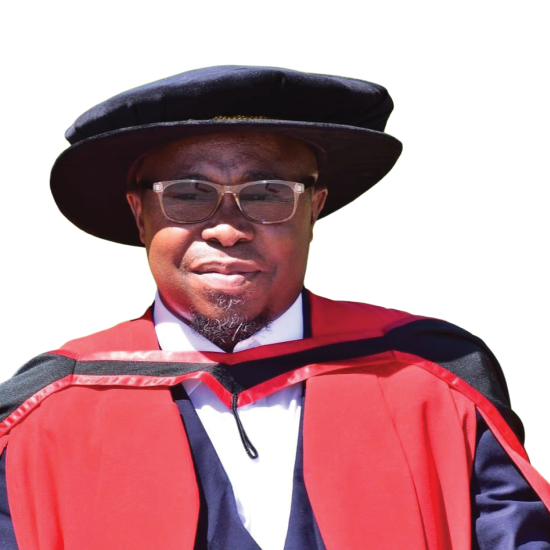
In this issue, Public Sector Manager (PSM) speaks with young academic, Dr Thapelo Mokoatsi, in a wide-ranging interview. His journey reflects the transformative power of South Africa’s constitutional guarantees, which he credits with opening doors for himself and many others from previously disadvantaged backgrounds, enabling them to participate meaningfully in shaping the country’s development trajectory.
A respected South African historian and journalist, Mokoatsi holds a PhD in History from Rhodes University. He is a history lecturer teaching second- and third-year students at the University of the Free State (UFS). He also co-supervises Honours and Master’s students at the institution.
Reflecting on the Constitution, Mokoatsi tells PSM that its 30-year milestone symbolises a wealth of opportunities now within reach. For him, the anniversary is not only a moment of reflection, but a reminder of the possibilities created by a democratic framework that continues to shape lives and futures.
“I can now contribute to the development of my country in a meaningful way, unlike during apartheid where black people were not allowed to study and express themselves through their skills and knowledge. I can travel the world, teach and advance my scholarship in the best universities in the world,” he said.
Fruits of democracy
Mokoatsi believes South Africa has made significant strides in ensuring that the current generation can meaningfully enjoy the freedoms secured through democracy. His own academic journey bears this out, having benefited directly from student funding programmes introduced by the democratic government.
His undergraduate studies were supported by the National Student Financial Aid Scheme, while his PhD was funded through a bursary from the National Institute for the Humanities and Social Sciences (NIHSS).
In 2013, Mokoatsi was recognised as the Best Honours Student by the Centre for Africa Studies at the UFS. His academic promise was further affirmed in the early stages of his doctoral journey when he was named a finalist in the Mail & Guardian Top 200 Young South Africans in 2017, under the Film and Media category.
Beyond academia, his work as a writer has also gained national visibility. His article on Queen Labotsibeni, titled Pioneers: Swazi Queen Labotsibeni, was published in the Mail & Guardian’s 2021 World Press Freedom Day supplement – highlighting his contribution to telling important historical narratives for a broader audience.
Opening opportunities
“This achievement earned me a postdoctoral research fellowship at Johannesburg Institute for Advanced Study (JIAS) in 2022. I was overwhelmed and in disbelief that I got this important recognition. I later found out that my scholarship from the NIHSS had nominated me for it,” he reminisces.
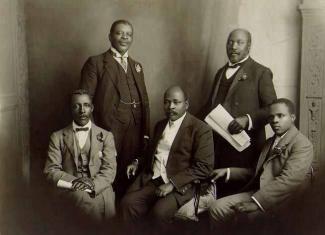
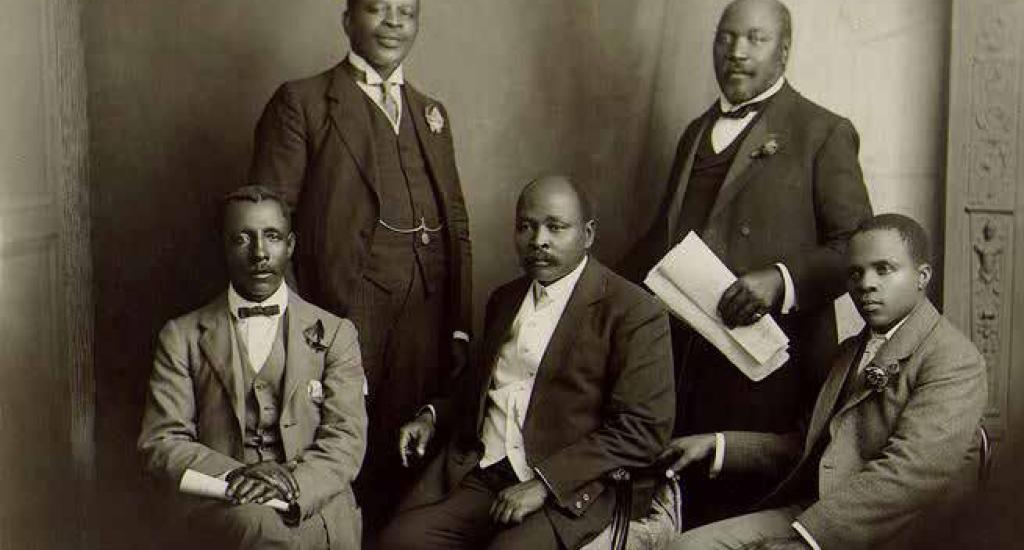
His PhD focused on the biographical studies of Saul Msane (1856-1919), one of the African National Congress founders. His thesis is titled: Saul Msane: Friend or Foe of the People?’ the life of late nineteenth to early twentieth century South African Politician and Journalist.
He was recognised for his body of work, which includes over 60 articles published by The Journalist covering late nineteenth to early twentieth centuries South African pioneer journalists who were born between the 1800s and 1900s.
Having acquired his qualifications from junior degree to Master of Arts at the UFS, Mokoatsi had a full circle moment when he was appointed in his current position in 2025. This was also his first permanent job after his three-year postdoctoral research fellowship at the JIAS.
His areas of specialisation as a lecturer focus on biographical studies, the history of the Black Press, African political history and social history.
He is committed to extending his academic work beyond the ivory tower, bringing scholarship into conversation with broader communities through engaged, public-facing research.
He is also co-editor of Towards Women Intellectual and Liberation Struggle Histories in South Africa – a volume that reflects on the history and legacy of new African ideology within South Africa’s modern evolution, using a set of thematic areas to offer a broader perspective on its development.
Africa Month
As the continent marks Africa Month in May, commemorating the 1963 founding of the Organization of African Unity (now the African Union), Mokoatsi says South Africa plays a significant role in driving economic growth across the continent. He adds that the country has also been a key player in fostering unity among African states.
He highlights that many South African companies – including Shoprite, Checkers, Usave, Standard Bank, Nedbank, MultiChoice, MTN and Vodacom – operate across the Southern African Development Community (SADC)..
He further explains that, given South Africa’s population of about 60 million, regional and continental economic policies that benefit all member states enable South African companies to secure a significant share of the broader African market. He further notes that resources such as gold and other minerals from Zimbabwe are refined in South Africa, contributing to job creation not only locally but across the region.
South Africa currently serves as Interim Chair of the SADC and is set to assume the official chairship of the regional body in August 2026.
videos & photos