


Ellenson’s leadership
drives transformation and clean governance

When Dr Thandeka Ellenson was named Top Leader in Public Sector 2025 at the Standard Bank Top Women Awards, the moment marked more than a personal triumph.
The moment, she conceded in a recent interview with Public Sector Manager magazine, symbolised years of steady transformation, institutional reform and purposeful leadership.
For the Chief Executive Officer (CEO) of the Moses Kotane Research Institute (MKRI) – an entity of the KwaZulu-Natal Department of Economic Development, Tourism and Environmental Affairs – the honour is deeply personal, but also profoundly collective.
“This recognition is both humbling and affirming. It represents not only a personal milestone but also the collective effort of the teams and institutions I have had the privilege to lead and serve,” she said.
With a career spanning over two decades in both the public and private sectors, her leadership journey has been moored in ethical governance and meaningful development outcomes.
“My journey in the public sector has always been driven by a commitment to ethical leadership, service excellence, and meaningful impact,” she explained. “
This award reflects years of dedication to strengthening institutions, advancing inclusive development and ensuring that public resources are utilised to improve the lives of our people”.
As the Executive Authority of the MKRI, Ellenson has spearheaded a strategic shift towards positioning the organisation as a credible research and innovation authority capable of informing policy and driving economic development. The institute has evolved significantly, transitioning into a Schedule 3C public entity in May 2024.
This transition, she explains, has been one of the defining leadership challenges of her tenure, with the shift requiring operational restructuring, new compliance systems and strengthened oversight mechanisms.
Adaptive leadership
“The transition required resilience, clarity of purpose and strong stakeholder engagement,” she explained. “One key lesson was the importance of adaptive leadership – being able to navigate uncertainty while keeping the organisation focused on its mandate”.
The transition also underscored the importance of people-centred change management. “Organisational transformation must be people-centred, ensuring that staff are supported and aligned with the vision,” she added.
Her time serving as Acting Head at the KwaZulu-Natal Department of Economic Development sharpened her leadership perspective, with the stint having exposed her to the complexity of policy implementation and intergovernmental coordination.
“Serving at a departmental level provided valuable insight into the broader machinery of government,” she explained. “It strengthened my strategic outlook and reinforced the importance of agility, collaboration and evidence-based decision-making”.
Evidence-based policy
For Ellenson, research is not an academic exercise but a tool for meaningful change. She strongly advocates for policy decisions rooted on credible data and rigorous analysis.
“Research-driven policymaking ensures that decisions are informed by credible data, rigorous analysis and real-world insights,” she says. “In a complex socio-economic environment, assumptions can be costly. Evidence allows government to identify what works, allocate resources effectively and design interventions that are targeted and impactful”.
The MKRI’s research outputs have supported provincial strategy development and long-term planning. This work contributes directly to aligning development initiatives with economic priorities and service delivery objectives.
The institute’s role as a research and innovation hub extends beyond producing reports. It serves as a catalyst for knowledge generation, skills development and innovation-led growth across KwaZulu-Natal.
Leaving no one behind
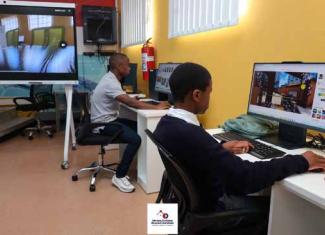
Among the Institute’s most visible achievements has been the establishment of digital centres aimed at expanding technological access in underserved communities. These centres provide infrastructure, training and support that enable individuals to participate in the digital economy.
“They open pathways to education, entrepreneurship and employment, thereby reducing inequality and fostering inclusive growth” added Ellenson.
The impact has been measurable. Over several years, the institute exceeded its targets by establishing more digital centres than initially planned, enabling rural communities to access information and communication technologies that were previously unavailable.
The digital innovation extends beyond infrastructure. The institute has also supported innovation project – from smart agriculture technologies to environmentally sustainable products, contributing to job creation and entrepreneurship development.
Partnerships as catalysts for progress
Ellenson attributes much of the institute’s success to strategic collaboration, adding that partnerships with academia, government and industry play a central role in ensuring that research outputs are relevant and actionable.
Maintaining strong governance systems has been a defining feature of Ellenson’s leadership. The institute has consistently achieved clean audit outcomes, reflecting disciplined financial management and a commitment to transparent reporting.
“We have prioritised financial discipline, robust internal controls, and a culture of accountability at all levels of the organisation,” she says.
Looking ahead, Ellenson envisions the MKRI becoming a leading centre of excellence not only in South Africa but across Africa.
While awards often celebrate individual excellence, Ellenson views her recognition as a reflection of collective progress and shared purpose.
“Leadership is not about individual achievement but about empowering others to succeed and ensuring that institutions serve the people effectively”.
videos & photos