

How BRICS summit outcomes could benefit South Africans
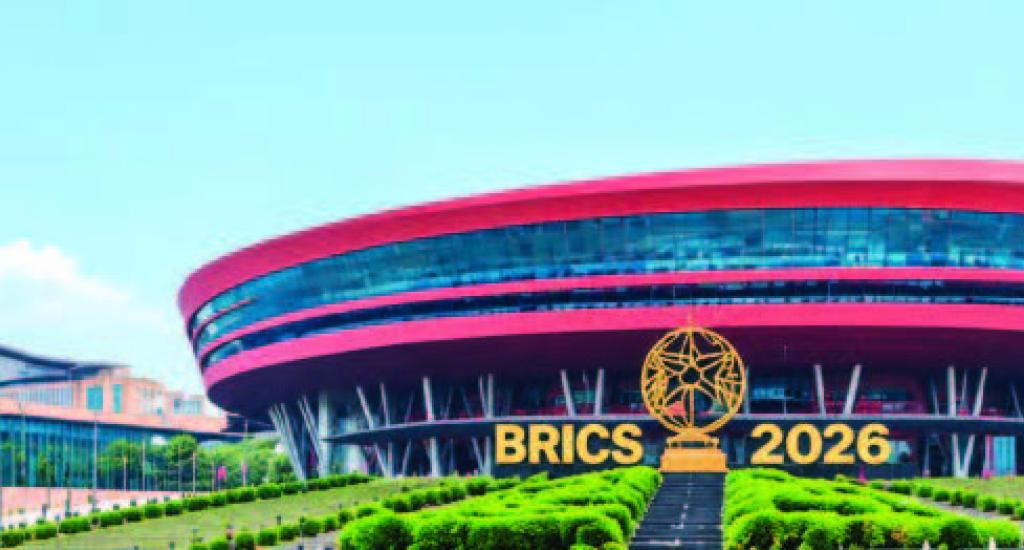
From new export opportunities and investment commitments to support for small businesses, the outcomes of the 18th BRICS Summit have the potential to drive growth, create jobs and expand market access for South Africans.
Global summits can feel far removed from the daily realities of South Africans waiting in long queues at clinics, searching for employment or stretching household budgets in the face of rising living costs.
Yet decisions taken in international forums often shape the economic opportunities available at home. When President Cyril Ramaphosa joined other leaders in New Delhi for the 18th BRICS Summit in September 2026, the agenda touched on many of the forces that shape those daily realities: investment, industrial growth, energy, technology, trade and the resilience of public institutions.
South Africa used the summit to advance its priorities of attracting investment, expanding trade within BRICS and increasing investment in African infrastructure linked to the African Continental Free Trade Area. The potential benefits for citizens include more local processing of minerals, stronger demand for South African products, improved logistics, broader participation in regional and global value chains, and wider market access for micro, small and medium enterprises (MSMEs).
Realising these benefits will not be automatic. Success depends on sustained implementation, reliable infrastructure, investment-ready projects and collaboration between government and the private sector.
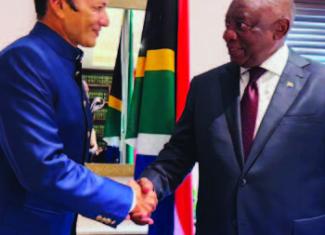
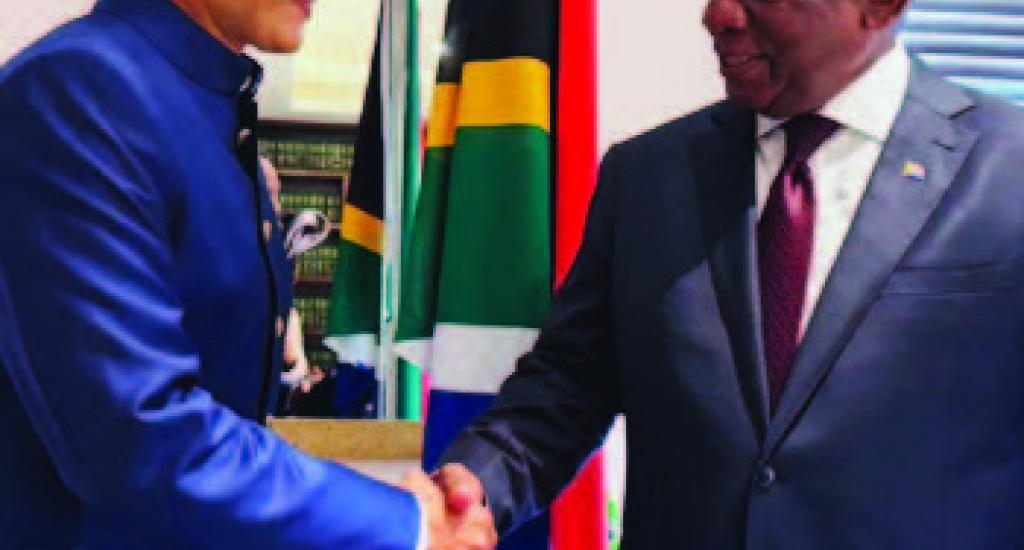
As part of this effort, the President met with Indian business leaders to strengthen bilateral trade and investment ties and position South Africa as the gateway to the African market.
Deeper trade relations
Trade opportunities for South Africa in India’s vast market are significant. The country has a population of about 1.48 billion and, according to the International Monetary Fund, is expected to record a gross domestic product of US$4.15 trillion in 2026, with growth of about 6.5%.
To narrow the trade deficit and increase value-added exports, the Department of Trade, Industry and Competition (the dtic) is focusing on increasing exports of manufactured and value-added products.
Trade, Industry and Competition Deputy Minister Zuko Godlimpi, who formed part of the President's delegation, said engagements with Indian business leaders revealed a strong appetite for investment in South Africa.
“When the President had a series of engagements with Indian business leaders, it was a positive surprise that all the major conglomerates that are listed on the stock market in India are very eager to invest in South Africa. They view South Africa as an anchor base for the expansion into Africa,” he said.
He noted that Indian companies were interested not only in selling goods to South Africa but also in manufacturing locally.
“They want to build their products in South Africa. If it is a steel manufacturing company, they are not talking about bringing steel from India to South Africa. They want to produce that steel in South Africa,” he said.
The Deputy Minister said BRICS offered South Africa an opportunity to attract substantial capital from countries such as India and China, which are at the forefront of technological innovation in automotive and steel manufacturing, critical minerals and computing.
“That helps us to develop information and technology, including not just the transfer of skills, but also the transfer of the know-how in building things, as well as the know-how of selling things in a much more global market,” Godlimpi said.
Tapping into new trade areas
The Deputy Minister also highlighted a landmark protocol signed on 8 September 2026, which granted South African cherry producers access to the Chinese market for the first time.
The protocol is expected to bring substantial economic benefits to South Africa, as China is the world’s leading importer of cherries.
The finalisation and signing of the Cherry Protocol confirmed the two countries’ commitment to expanding trade under the Framework Agreement on Economic Partnership for Shared Development and gave South African cherries tariff-free access to the Chinese market.
China has also submitted a draft protocol for the import of South African blueberries. Agriculture Minister Willie Aucamp has asked Team South Africa to fast track the coordination of inputs and negotiations with a view to finalising the protocol before the end of the year.
In April 2026, South Africa and China signed a supplementary citrus phytosanitary agreement to unlock opportunities in the citrus sector. The agreement is intended to ease export requirements, strengthen market access for Western Cape producers, support economic growth and create jobs.
eTrade South Africa
To help micro, small and medium enterprises (MSMEs) access international markets, the dtic has introduced the eTrade South Africa Programme, which helps established businesses strengthen their export readiness.
The programme equips South African businesses with the knowledge, skills, tools and market access needed to participate in cross-border eCommerce and expand their international footprint.
“If you are a small business that is emerging in South Africa and you are trying to sell your product, let us say a shoe, one of the things you might encounter is that the South African shoe market is too small to accommodate 500 MSMEs that are producing shoes.
“But if you think about the fact that India has about 1.5 billion people, China has about 1.5 billion people, an MSME needs only to sell its shoes to about 200 000 or 100 000 in India or China for their business to make sense,” the Deputy Minister explained.
The initiative is being implemented in partnership with DHL’s GoTrade Programme to increase the participation of MSMEs and emerging exporters in international trade.
Through the programme, MSMEs receive capacity-building support to improve export readiness, understand trade finance and obtain information about different markets.
“We have spoken to banks about a strategy of encouraging their SMME clients to access information about the GoTrade Programme. We will provide them with assistance, including funding instruments in the BRICS ecosystem.
“That also includes a series of equity funders in other BRICS countries who are willing to put their money forward to help SMMEs scale up,” the Deputy Minister said.
Access to information
Godlimpi identified limited access to market information as one of the biggest barriers facing South African businesses seeking to expand into BRICS markets. He said the GoTrade Programme was designed to help address this challenge by connecting businesses with information on market opportunities, export requirements and financing options.
“The second issue is tariff problems. When a South African product enters the shelves of a different country, there are particular tariffs in place.
“Qualifying agricultural products are doing much better in China now than at any other period in history, because we were able to negotiate tariff-free market access for them. The same applies to the Indian market,” the Deputy Minister explained.
He added that government was working towards a system of compulsory specifications that would help SMMEs understand the requirements of different markets.
“They would then not have to chop and change their compliance work, which makes it difficult for them to move products from South Africa to market.
“There is the issue of transportation costs. China is what, 13 or 14 hours away from South Africa by flight? So, you can imagine the transportation costs involved. That is part of what the GoTrade Programme is tackling with the trade finance element,” the Deputy Minister said.
More than a fifth of South Africa's trade is with BRICS countries, while the country has also benefited from development finance through the New Development Bank, commonly known as the BRICS Bank.
Funding from the bank has supported major investments in energy, water and transport infrastructure.
South Africa also has access to a $100 billion pool of currency reserves through the BRICS Contingent Reserve Arrangement in the event of a liquidity crisis. ❖
videos & photos