

Shanghai moves to
a rhythm on its own
When an assignment to cover a week-long science forum with the Department of Science, Technology and Innovation (DSTI) in Shanghai, China, landed on my desk in early September, I was more enthusiastic than usual about this trip.
That was purely because China fascinates me: from feng shui (pronounced fung shway) and the Great Wall of China to its political system and commerce. How did this East Asian imperium mutate from a war-torn, impoverished agrarian empire into the modern economic superpower we know today?
A simple desktop search will tell you it was through decades of strategic economic reforms, infrastructure investment and pragmatism. That sounds a tad bit facile. Lucky for me, I was about to find out. But not before trudging through six time zones over 18 gruelling hours, which was not ideal for a light sleeper.
I was in Shanghai for five days to cover the 19th Pujiang Innovation Forum. South Africa had been named the forum’s Country of Honour, bringing its scientists, innovators and government representatives into the spotlight.
Founded in 2008 by China’s Ministry of Science and Technology and the Shanghai Municipal People’s Government, the Pujiang Innovation Forum is an annual international conference that brings together scientists, entrepreneurs, policymakers and investors to explore advances in science and technology and strengthen global collaboration. Its discussions span basic research, emerging technologies, future industries and science governance.
Beautiful and calm
When we landed at Pudong Airport, it quickly became evident why Shanghai, with an estimated gross domestic product of R14.66 trillion, is China’s economic hub. Located on the East China Sea at the mouth of the Yangtze River, this municipal city of 30 million people is a high-tech global financial centre.
The drive to the Shanghai
Marriott Parkview felt like an introduction to a city that knew how to keep moving without appearing hurried. As a South African in Shanghai for the first time, I watched the roads open ahead of us, clean and orderly, with traffic flowing in a steady rhythm, often punctuated by disorderly manoeuvres that all drivers appeared to be at peace with.
The streets seemed remarkably free of the litter and disorder I had half expected in a city of such scale. Even the spaces between buildings gave an impression of care.
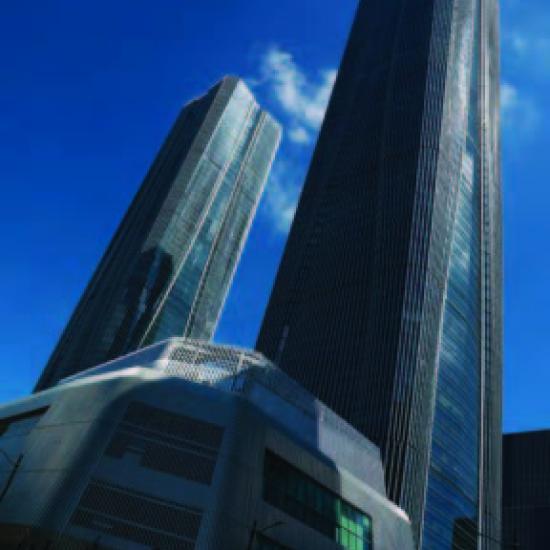
What struck me, however, was the sheer number of blocks of high-rise residential towers hugging the multi-layered elevated expressways, which wove between skyscrapers like giant ribbons as we drove into the yawning horizon of obscurity.
I looked for the familiar signs of a busy city – people lingering at street corners, noise spilling into the road, the sense that everything was happening at once – but the scene felt unexpectedly calm. There was movement everywhere, yet little commotion.
I remember being struck by that contrast: the vastness of Shanghai and the quiet composure of the drive through it. From the airport window, the city seemed both intensely urban and carefully ordered, its roads, buildings and everyday life fitting together with a precision that made my first arrival feel less like entering chaos and more like being carried gently into a different rhythm.
A boat cruise on the Huangpu River
After five days of deciphering Mandarin-saturated science and technology jargon, we took a boat cruise on the Huangpu River. Coming from Durban, I wondered why the excursion was in the evening. The unfolding neon-drenched, kaleidoscopic marvel soon explained why.
The hour-long cruise etched in my memory a vivid sense of a city looking to the future while remaining unwilling to defile its historic architecture, with skyscrapers gasping for prominence across the Huangpu River from grand European buildings more than a century old.
Two evenings earlier, we were treated to a China–South Africa Night gala, featuring speeches by guests while we indulged in a flavourful buffet at the tranquil Shanghai Dong Jiao State Guest House. According to the hotel’s website, it is Shanghai’s largest garden-style state guest house, occupying about 490 hectares of landscaped grounds.
“Gardens, lawns and stands of trees cover 80% of the total area, making for a uniquely peaceful atmosphere within easy reach of Zhangjiang High-Tech Park Pudong and excellent transportation links connecting the Dongjiao to the rest of metropolitan Shanghai and, via Pudong International Airport, the rest of China, the region and the world,” reads the website.
A night of entertainment
At the soirée, the South African delegation was regaled by performances that embraced the cultural nuances of both countries. These included performances of the Hunan Flower-Drum Opera and “Liu Hai Cuts Firewood”, performed by Chen Shiyi and Zhang Qing.
China-based South African vocalist Judith Mudau put on a show-stopping performance of Brenda Fassie’s iconic Vulindlela. Local acts Jazz SH and YES SHOW presented a music and dance medley featuring Night Shanghai; Rose, Rose, I Love You; Phoenix Dance; By the Suzhou Creek and Pata Pata. The Hunan Acrobatic Arts Theatre performed Ode to Harvest – The Straw Hats, and the Little Star Art Troupe performed the South African song Siyahamba and the forum’s theme song, The New Mission.
videos & photos