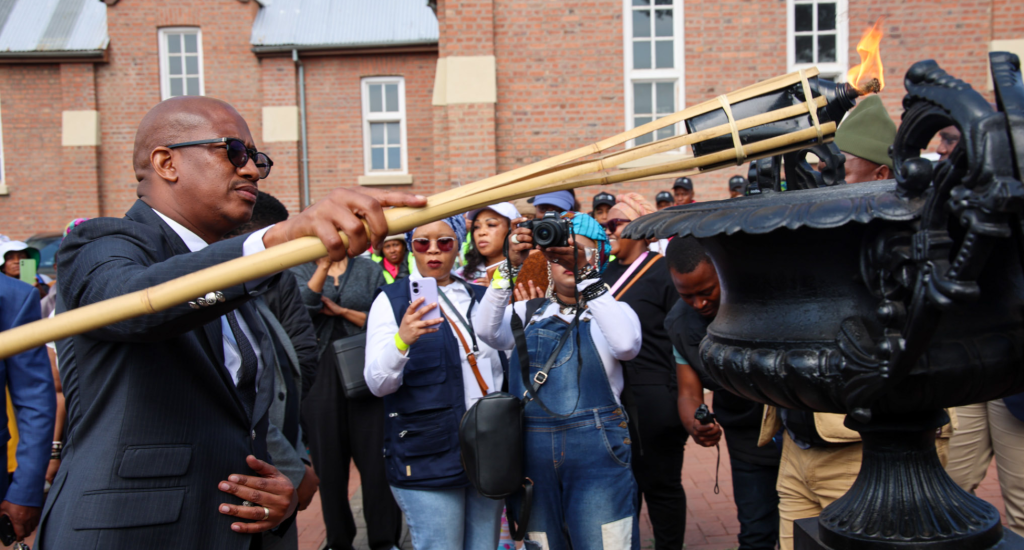


Women’s courage must inspire fight against GBVF – Morolong
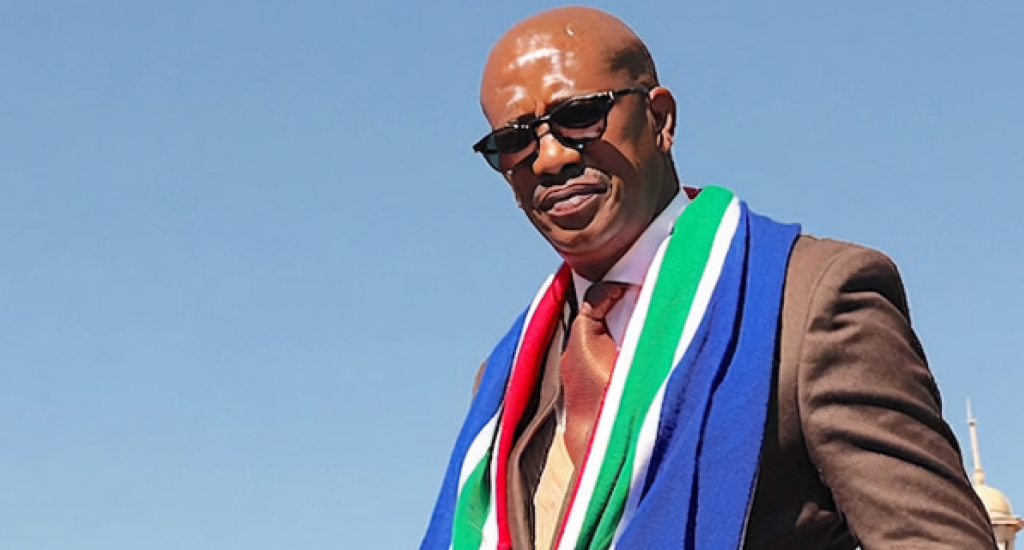
South Africa cannot be free while women live in fear of violence, Deputy Minister in The Presidency Kenny Morolong has warned.
Speaking to Public Sector Manager magazine, the Deputy Minister urged men to turn the courage of women freedom fighters into action against gender-based violence and femicide (GBVF).
Morolong made the remarks while reflecting on the Milestones of Freedom Campaign.
He said women were never spectators in the struggle for democracy. Instead, they organised, marched and resisted oppressive laws. Honouring them, he argued, requires more than remembering their names; it demands protecting the rights and dignity for which they fought.
“We have a responsibility to protect women. We have a responsibility to protect the girl child,” Morolong said.
“We have a responsibility to make sure that those who abuse women and who rape children do not do that in our name. We have a responsibility to call them out because this abuse is not meted out by females. It is the male figure that is responsible for the atrocities that we see in our country today, where women have been killed, women have been abused and women have been raped.”
A national priority
The urgency sharpened in August and September, as the number of women’s bodies found in Ekurhuleni, Gauteng, since July reached 11. The toll prompted President Cyril Ramaphosa to address the nation, acknowledging that government’s response had not been enough. During the address, the President announced four time-bound national interventions to prevent violence.
These include the Police and Justice Ministers working with the South African Police Service and the National Prosecuting Authority to launch a national case recovery operation. Within 60 days, it must identify unresolved murders, attempted murders, rapes and serious sexual offences involving women and children, including delayed cases and matters awaiting forensic evidence.
The President also ordered a funded national plan within 60 days to reduce DNA and forensic backlogs; immediate municipal women’s safety audits to identify dangerous, unlit and neglected spaces within 60 days; and a coordinated legislative and enforcement package to restrict alcohol access and reduce alcohol-related violence, also due within 60 days.
Milestones of Freedom Campaign
The Milestones of Freedom Campaign was launched by President Ramaphosa at the Union Buildings in June under the theme, “Honouring the Past. Delivering the Future”. It connects four defining anniversaries: 30 years of the Constitution, 50 years since the 1976 youth uprising, 70 years since the 1956 Women’s March and 60 years since the forced removals from District Six.
The Deputy Minister, who has been championing the campaign, emphasised that it is not just a remembrance of the past, but a call to use history as a guide for the work that remains unfinished.
“We are celebrating Milestones of Freedom this year because a nation that forgets its past has no future. Therefore, our past must influence the strides that we are yet to make as a country to fundamentally alter the circumstances under which our people live,” he explained.
Cabinet approved a whole-of-government and whole-of-society programme, featuring public dialogues, civic education, cultural events, youth engagement and service weeks. The rollout reached all nine provinces between 26 July and 22 September, using commemorations, clean-ups and intergenerational dialogues to connect memory with civic responsibility. The Eastern Cape honoured Sarah Baartman while confronting GBVF.
When women took the stand
As South Africa observes the 16 Days of Activism for No Violence Against Women and Children, milestones such as the 1956 Women's March and the adoption of the Constitution take on renewed significance. Both stand as enduring reminders of the struggle for women's rights and the country's commitment to equality, dignity and the protection of the most vulnerable.
For Morolong, the march exemplifies women shaping South Africa's democratic future.
“We celebrate Lilian Ngoyi, Helen Joseph, Rahima Moosa, Mam’ Sophia Williams-De Bruyn and many other women who undoubtedly changed the course of history when they marched to the Union Buildings. Through their courage, they demonstrated that women have always been at the forefront of the fight against social injustice, particularly against apartheid segregation,” said the Deputy Minister.
He added that one of the campaign's most important lessons was the power of unity, noting that the campaign had reminded South Africans of the solidarity that underpinned the struggle against apartheid. According to Morolong, the campaign demonstrated that there is little that can withstand a united South Africa working towards a common purpose.
Women’s resistance
Morolong traced the history of women's resistance from Charlotte Manye Maxeke, who attended the 1912 founding conference of the South African Native National Congress and later founded the Bantu Women's League, to Josie Mpama, a prominent figure in the 1929 beer-hall protests. "Women have always led from the front. They were not spectators,” he said.
The campaign also brought renewed attention to the many women whose contributions to the liberation struggle have yet to receive their rightful place in mainstream historical accounts.
“There are many untold stories of heroes and heroines whose commitment to the liberation of South Africa has brought us to where we are today – where you and I can enjoy the fruits of our hard-won democracy,” he said.
A joint effort
Despite women's resistance helping to build a constitutional order founded on equality, dignity and freedom, the continued scourge of GBVF stands in stark contrast to the rights and protections these women fought to secure. Morolong acknowledged that, despite government interventions and legislative measures, the fight against GBVF cannot be won by government alone.
The Deputy Minister noted that the whole-of-society response requires men to reject perpetrators openly, challenge harmful behaviour and refuse the silence that protects abusers.
Women, he said, must be able to walk the streets at any time without fear of attack. Anything less diminishes the meaning of democracy.
The Milestones of Freedom Campaign, therefore, asks South Africans to treat history as a responsibility rather than a ceremonial memory. The courage of the women of 1956 must be measured against the safety, dignity and opportunities enjoyed by women today.
“Without the contribution of womenfolk, we would not have achieved our formal liberation in 1994,” Morolong said.
“The lasting legacy for the Milestones of Freedom is that we would not have abandoned our past. We want to build a generation of new leaders who will forever remind us where we come from as a nation – a generation of young people who will be proud of their heritage,” he concluded. ❖
videos & photos