



From commitment to action: Strengthening justice, safety and support for GBVF victims
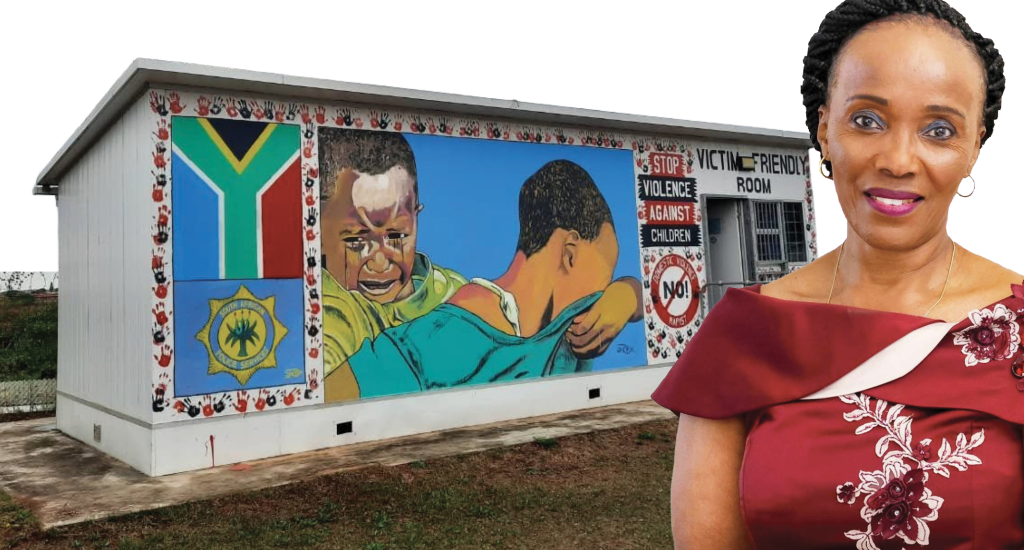
Gender-based violence and femicide (GBVF) remains among the most profound challenges confronting South Africa's constitutional democracy. Every act of violence against a woman, a child or any other victim undermines our collective commitment to human dignity, equality and the right to live free from fear. Behind every reported case is a human being whose safety, dignity and future may have been profoundly affected by violence.
As government, we recognise that addressing GBVF requires more than condemnation after a tragedy has occurred. It requires sustained prevention, effective law enforcement, accessible justice, responsive victim-support services and accountability across all sectors of society. Most importantly, it requires us to ensure that the rights guaranteed by our Constitution are experienced in the everyday lives of those who depend on government and its partners for protection.
Access to justice, safety and protection for all victims and survivors of GBVF remains a government priority. Our responsibility is to ensure that this commitment translates into tangible improvements in the lives of survivors, stronger institutions and safer communities.
Building on the progress already made
South Africa has made important strides in establishing the policy, legislative and institutional foundations for a coordinated response to GBVF. The National Strategic Plan (NSP) on GBVF (2020 – 2030) provides a framework for addressing the underlying causes of violence, strengthening justice and protection, improving survivor support and advancing women's economic empowerment.
The legislative framework has also evolved. The National Council on GBVF Act 9 of 2024 provides for a statutory mechanism to strengthen national coordination and oversight. The appointment of the National Council's members in 2026 represents an important step towards improving collaboration between government and relevant stakeholders.
Within the criminal justice system, specialised Sexual Offences Courts, Thuthuzela Care Centres and victim-support services provide important mechanisms for assisting survivors. These interventions bring together elements of healthcare, psychosocial support and the administration of justice, helping survivors navigate systems that can otherwise be difficult and traumatic to access.
Government departments, civil society organisations, community-based structures and development partners have also contributed to prevention, awareness, counselling, shelter services and community mobilisation. Their work demonstrates that the fight against GBVF is a shared responsibility requiring expertise, resources and commitment from across society.
These developments provide a foundation on which to build. However, we must be equally clear that the existence of legislation, institutions and programmes does not, on its own, mean that every survivor receives the protection and justice they deserve.
The next phase of our collective response must focus on the consistent implementation of commitments, the quality of services delivered and the measurable difference these interventions make.
Justice must be accessible to every survivor
For many survivors, reporting violence is an act of courage. It may involve confronting fear, economic dependence, threats from perpetrators, social stigma and uncertainty about whether the justice system will respond effectively.
When a survivor approaches a police station, seeks a protection order or reports sexual violence, the response they receive can influence their willingness to pursue justice and seek further assistance. They must be treated with dignity, listened to without prejudice and supported through the processes that follow.
No survivor should be subjected to victim-blaming, unnecessary delays, repeated and avoidable trauma or the indignity of being passed from one institution to another without meaningful assistance.
Strengthening access to justice requires professional investigations, effective evidence management, adequate forensic capacity, competent prosecution and improved coordination between police, health services, social workers and the courts. It also requires that survivors receive timely information about their cases and have access to appropriate legal and psycho-social support.
Accountability must apply to perpetrators through lawful processes, but it must also extend to institutional performance. Where procedures fail, cases are unnecessarily delayed or survivors cannot access services, those responsible must identify the shortcomings and take corrective action within their mandates.
Justice must not be determined by a survivor's income, geographical location, disability or ability to navigate complex bureaucratic systems. A responsive justice system must be accessible to all.
Safety and protection must begin before violence occurs
Our national response must place greater emphasis on preventing violence before it results in injury, trauma or loss of life.
Prevention requires us to recognise warning signs, respond to threats, challenge abusive behaviour and strengthen systems that protect people at risk. It requires coordinated interventions at household, community and institutional levels.
Police, social development practitioners, healthcare professionals, educators, local government officials and community organisations must be able to work together to identify risks and refer people to appropriate services. Protection orders and other legal remedies must be accompanied by effective responses when threats or violations are reported.
We must also confront the environmental and social conditions that expose people to danger. Poorly lit public spaces, unsafe transport routes, inadequate access to support services and the absence of effective local referral systems can compound existing vulnerabilities.
Women and girls must be able to participate fully in education, employment, recreation and public life without having to organise their lives around the constant fear of violence. Persons with disabilities and other groups facing additional barriers must receive accessible and appropriate protection.
The responsibility for safety cannot be transferred to potential victims through advice about how they should dress, where they should go or when they should leave their homes.
Individuals may take reasonable precautions, but the primary responsibility for violence rests with those who perpetrate it. Institutions must fulfil their duties to prevent, investigate and respond to abuse.
Stakeholder partnerships must deliver measurable results
The complexity of GBVF means that no single department or organisation can eliminate it in isolation. Government must lead and coordinate the national response, while civil society, the private sector, labour, communities, research institutions, traditional leaders and faith-based organisations contribute according to their respective mandates and capabilities.
The National Council on GBVF presents an opportunity to strengthen this collaboration by promoting clearer responsibilities, better coordination and more consistent monitoring of commitments.
However, effective partnerships require more than attendance at meetings, the signing of declarations or the implementation of isolated awareness campaigns. They must be judged by whether they improve access to services, strengthen prevention, support survivors and contribute to safer communities.
Government departments must report on their responsibilities and implementation challenges. Provincial and local structures must connect national priorities to the realities of communities. Civil society organisations must be meaningfully involved in programme design, implementation and monitoring, particularly where they provide frontline services and understand the barriers survivors face.
The private sector can contribute through safer workplaces, employee-support mechanisms, responsible funding and economic opportunities for survivors. Educational institutions can strengthen prevention and reporting systems, while traditional and faith leaders can help challenge harmful social norms and promote respectful relationships.
These partnerships must be supported by adequate resources, reliable information-sharing arrangements, appropriate safeguards for survivors and clear measures of success.
We must move from fragmented activity towards a coordinated system in which every stakeholder understands its responsibilities and can demonstrate the contribution it makes.
Changing behaviour is essential to ending GBVF
Although effective laws and institutions are indispensable, they cannot independently transform the attitudes and social norms that allow violence to persist.
We must confront beliefs that normalise men's control over women, excuse coercive behaviour or portray aggression as an acceptable expression of masculinity. Violence must never be justified by jealousy, relationship disputes, cultural interpretations, alcohol consumption or claims of personal authority.
Men and boys must be active participants in prevention. They must challenge abusive conduct among their peers, reject the humiliation and harassment of women, respect consent and demonstrate that strength is expressed through responsibility, emotional maturity and respect for others.
Parents, schools, community organisations, the media and faith-based institutions must reinforce these values consistently. Children should learn from an early age that disagreements can be resolved without intimidation, that no person has ownership over another, and that respect is fundamental to every relationship.
This behavioural transformation must be sustained rather than confined to commemorative events or annual awareness campaigns. Public education should be linked to community engagement, accessible support services and clear consequences for unlawful conduct.
We must also reject victim-blaming and the tendency to place the burden of prevention on women. The objective is not to teach women how to accommodate violence, but to build a society in which violence is neither tolerated nor excused.
Survivor support must restore dignity and independence
The consequences of GBVF often extend far beyond the immediate incident. Survivors may experience physical injuries, psychological trauma, financial insecurity, homelessness and disruption to their education or employment.
A comprehensive response must therefore connect survivors to healthcare, counselling, safe accommodation, legal assistance, social support and economic opportunities where needed.
No survivor should feel compelled to remain in an abusive relationship because they lack financial resources or somewhere safe to go. Support services must be accessible, appropriately resourced and sensitive to the different circumstances of the people they serve.
Survivors must also be treated as individuals with rights, agency and the capacity to rebuild their lives. Their experiences should inform the development and evaluation of programmes, while their privacy and dignity must be protected.
The effectiveness of victim-support services should be assessed not only by the number of people assisted, but also by the quality, accessibility and continuity of that assistance.
Accountability must be measured by outcomes
South Africa must be able to demonstrate whether its investment in the response to GBVF is producing meaningful results.
This requires reliable and regularly updated information on access to services, case progression, prosecutions, convictions, protection-order enforcement, shelter availability and the implementation of prevention programmes. It also requires an honest assessment of where progress remains uneven and why.
We must distinguish between activities undertaken and outcomes achieved. A campaign may reach thousands of people, but its longer-term contribution must be assessed through evidence of changes in knowledge, attitudes and behaviour. A support centre may be established, but its effectiveness depends on whether survivors can access timely and appropriate assistance.
The NSP on GBVF must therefore remain a practical instrument for coordinating action, monitoring performance and identifying implementation gaps. The National GBVF Council, government departments and other relevant institutions must contribute to a system in which commitments are tracked and shortcomings are addressed.
Transparency about challenges does not diminish government's responsibility. Rather, it enables more informed decisions, stronger partnerships and better use of public resources.
A collective commitment to a safer South Africa
The fight against GBVF is ultimately about the kind of society we seek to build. It is about whether women and girls can live without fear, whether survivors can approach institutions with confidence, whether communities reject abuse and whether those entrusted with public responsibilities deliver the protection required of them.
Government remains committed to strengthening access to justice, improving safety and protection, supporting survivors and advancing the prevention of GBVF. We recognise the contribution of stakeholders across society and the importance of building on the progress already made while addressing the gaps that continue to place lives at risk.
Our response must be guided by a clear understanding: policies must lead to implementation, partnerships must produce results and accountability must translate into action.
We owe survivors more than expressions of sympathy. We owe them accessible services, professional investigations, effective protection, dignity and justice. We owe future generations a society in which violence is neither normalised nor excused.
The true measure of our progress will be whether survivors receive justice, whether those at risk are protected and whether every person can live free from gender-based violence and femicide.
This is a responsibility that government must lead, that institutions must fulfil, and that society must embrace. Together, we must turn our national commitment into a lived reality for every victim and survivor. ❖