



From a ‘honeymoon’
to a ‘game-changing’ policy
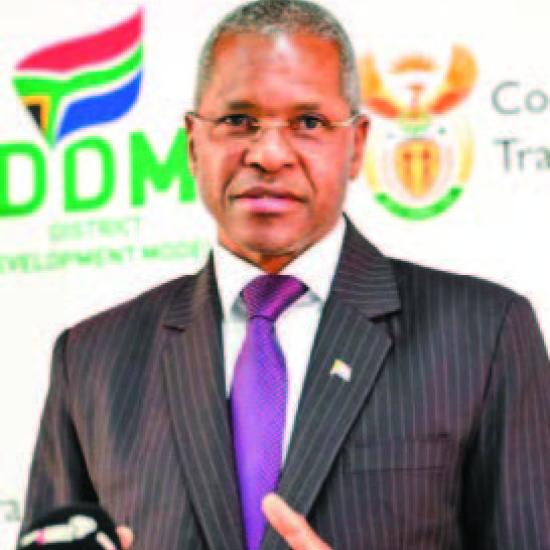
Cabinet's recent approval of the reviewed White Paper on Local Government, 2026 (WPLG26), marks a watershed moment for local government reform in South Africa.
It is the culmination of an extensive process to improve municipal performance and ensure that local government fulfils the constitutional promise made to the people of South Africa.
Section 152(1)(b) of the Constitution provides that one of the objectives of local government is “to ensure the provision of services to communities in a sustainable manner”. Section 152(2) further requires municipalities to strive, within their financial and administrative capacity, to achieve these objectives.
This constitutional obligation places municipalities at the centre of delivering essential services such as water, electricity, sanitation and waste removal, and ensuring that communities experience local government as a sphere that works for them.
Transformation
Following the advent of freedom and democracy in 1994, it became imperative to transform a local government system shaped by apartheid and racial segregation. The 1998 White Paper on Local Government (WPLG98) laid the foundation for democratic and developmental local government and sought, among other things, to address the profound spatial inequalities inherited from apartheid.
For almost three decades, that policy framework guided the establishment and evolution of democratic local government.
But South Africa has changed significantly since 1998. The pressures confronting municipalities have also changed.
A new framework
The revised White Paper therefore provides a new framework for building an ethical, accountable, capable and developmental local government system. It seeks to address persistent governance weaknesses, maladministration, inadequate financial controls, inefficiencies and corruption within parts of the municipal system.
The reforms will also facilitate the professionalisation of local government, promote greater stability in municipal administration and clarify the role of traditional and Khoi-San leadership.
Targeted interventions
Importantly, we are moving away from a one-size-fits-all approach.
A rural municipality serving dispersed villages cannot necessarily be expected to operate under the same funding, governance, and institutional model as a large metropolitan municipality. The revised framework recognises these differences and seeks to develop more appropriate arrangements according to the functions, circumstances and capacities of different categories of municipalities.
As the sphere of government closest to communities, local government carries an enormous responsibility.
The effectiveness of a municipality is ultimately judged by what residents experience every day: whether clean water flows from their taps, refuse is collected regularly, electricity and streetlights work, roads are maintained, and communities are kept clean and safe.
Yet our local government system is under considerable financial and institutional pressure. Rapid urbanisation, ageing and neglected infrastructure, increasing service demands and constrained municipal finances have placed many municipalities under severe strain.
For millions of South Africans, poor service delivery is not merely a source of frustration. It undermines communities' dignity and constitutional rights.
Clear signs of municipal service failure include uncollected revenue, taps frequently running dry, prolonged electricity interruptions that leave homes and streets in darkness, burst water pipes left unattended for days, and uncollected waste piling up on street corners.
In many communities, frustration with inadequate services and unfulfilled commitments has resulted in protests.
Serving the people
Service delivery is also about responding efficiently when things go wrong. It means repairing leaking water and sewage pipes, clearing blocked drains and filling potholes before they become dangerous.
A well functioning municipality should have an efficient customer service system that responds promptly to residents, an accurate and timeous billing system, effective revenue collection and councillors and municipal officials who engage regularly with communities.
Municipalities must also create an environment conducive to economic development and the establishment and sustainability of small businesses, particularly enterprises owned by women and young people. Local government must become a catalyst for socio-economic development, especially in historically neglected communities.
Reimagining local government
The need to reimagine local government has been developing over several years.
The South African Human Rights Commission's National Conference on Local Government Accountability, Service Delivery and Human Rights held in August 2022, facilitated an important national dialogue on the challenges facing local government.
The Presidential Local Government Summit followed in September 2022. It reinforced the need to restore municipal governance, professionalise municipal administrations, and improve the quality and efficiency of local government through better funding, planning and implementation.
A decisive moment came in July 2024 when, as Cooperative Governance and Traditional Affairs (CoGTA), we announced in Parliament our intention to review the 1998 White Paper.
The review involved extensive consultation with stakeholders, including the South African Local Government Association, national and provincial government departments, municipalities, traditional and Khoi-San leadership, non-governmental and community-based organisations, the private sector, business, labour, civil society and individual citizens.
This extensive process was necessary because the challenges facing local government cannot be solved by national government alone.
Building a functional municipal system
Many municipalities have experienced recurring administrative and governance difficulties. Section 139 of the Constitution empowers provincial executives to intervene when municipalities fail to fulfil their executive obligations. In some instances, struggling municipalities have consequently been placed under administration.
But intervention should not become the normal way in which municipalities are governed.
We must build municipalities with the leadership, professional administration, financial management and institutional capacity needed to perform their constitutional responsibilities without repeated intervention.That requires ethical and accountable leadership.
The revised White Paper therefore places significant emphasis on professionalisation and the merit-based appointment of suitably qualified and experienced personnel. Appointing people to senior positions through political patronage, without the necessary qualifications, competence or experience, inevitably weakens governance and ultimately compromises service delivery.
The reforms also envisage appropriate competency requirements for political leadership positions. Complementary legislative reforms currently before Parliament seek to strengthen requirements relating to the experience, skills and qualifications of municipal office bearers and specified committee positions.
Managing coalition governments
Political instability is another significant obstacle to effective municipal government.
Frequent changes in leadership, particularly in coalition-governed municipalities, can disrupt administration, delay decisions and undermine the delivery of essential services.
Complementing the White Paper reforms, the Local Government: Municipal Structures Amendment Bill of 2026, commonly referred to as the Municipal Coalitions Bill, currently before Parliament, seeks to establish a legislative framework for forming and managing coalition governments and mechanisms to minimise coalition-related instability.
The objective is not to determine which political parties should govern together. It is to ensure that, where voters produce a result requiring coalition government, political instability does not prevent a municipality from performing its constitutional responsibilities.
Implementation
Cabinet's approval of the revised White Paper marks the beginning of another important phase: implementation.
The implementation programme will require coordinated action across government, jointly led by CoGTA, The Presidency and National Treasury, supported by a time-bound transition management body.
Policies themselves do not fix municipalities. Implementation does.
Our task now is to translate the reforms contained in the White Paper into functioning institutions, sound financial management, professional administrations and, most importantly, better services for communities.
As CoGTA, our objective this year and beyond the Local Government Elections scheduled for Wednesday, 4 November 2026, remains clear: to fix local government and ensure that every municipality works.
But government cannot achieve this alone.
Citizens also have an important role in strengthening local democracy. Communities must participate in municipal affairs, hold their representatives accountable, make their voices heard and exercise their democratic right to vote.
The future of our municipalities will be determined not only by progressive policies or by those who are elected to public office, but also by the active participation of the communities they are elected to serve.
The revised White Paper allows South Africa to reset local government.
We must now turn that opportunity into functioning municipalities and tangible improvements in the everyday lives of our people. ❖