



Sustaining clean audits while advancing transport sector objectives
Reliable roads, safe public transport, efficient freight movement and modern infrastructure all depend on one thing: a government that manages public resources responsibly. Behind every transport project is a commitment to accountability, transparency and sound financial management.
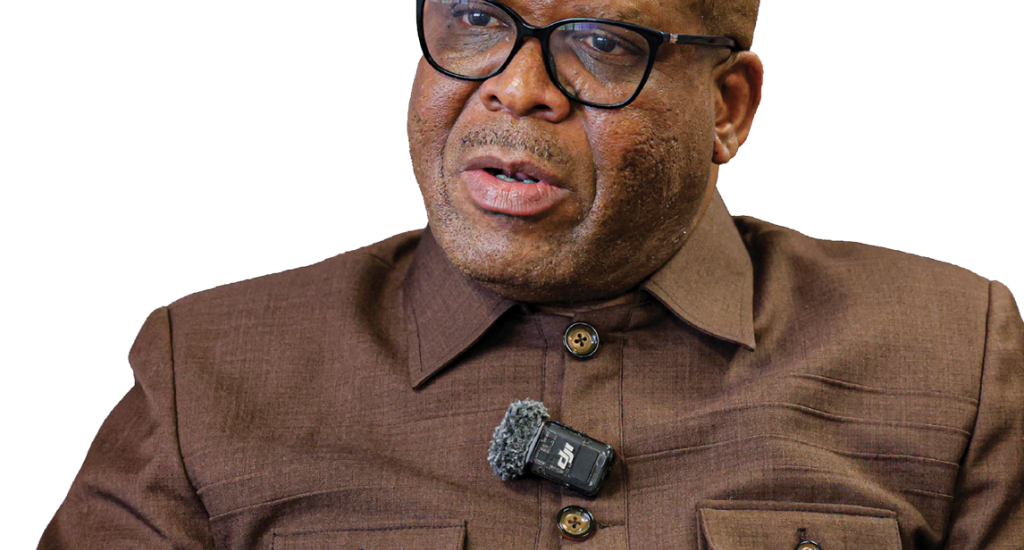
As South Africa marks Transport Month, Public Sector Manager magazine spoke to the Department of Transport Acting Director-General (ADG) Mathabatha Mokonyama about how the department transformed its governance systems to achieve two consecutive clean audits after more than three decades without one.
The department's clean audit outcomes for the 2024/25 and 2025/26 financial years represent more than an administrative achievement. They signal a culture change aimed at strengthening public confidence and ensuring that resources are used effectively to deliver quality transport infrastructure and services that support economic growth, regional trade and improved mobility for all South Africans.
According to Mokonyama, the milestone reflects the department's commitment to embedding sound governance, accountability and ethical leadership into its day-to-day operations.
“We should not treat auditing as an event that only concerns us during the audit cycle. We need to ensure that we always do everything right so that we are in a good position when auditors knock on our door,” said Mokonyama.
He added that the department has long benefited from the expertise of skilled financial managers who ensured that its financial statements accurately reflected its work. As a result, the department's financial statements have required no major corrections for the past seven or eight years.
Corrective measures
Achieving a clean audit required more than sound financial management. The department had to overcome challenges that repeatedly surfaced during the audit process.
Key areas of concern included the quality of performance information, the alignment between targets and achievements, consequence management and contract management.
Consequence management
One of the key areas the department had to confront on its journey to a clean audit was consequence management.
Mokonyama says the Auditor-General of South Africa (AGSA) had repeatedly raised concerns about how long it took the department to act against officials implicated in wrongdoing or negligence.
“For instance, when the department incurred irregular expenditure in previous years and investigations pointed to wrongdoing or negligence, we sometimes exceeded the periods provided for by the Irregular Expenditure Framework, and that is one of the things we needed to fix,” he explained.
Recognising that delayed action weakened accountability and affected audit outcomes, the department moved to strengthen its processes and ensure that matters requiring investigation and disciplinary action were dealt with more timeously.
According to Mokonyama, part of the department's success can also be attributed to a closer working relationship with the AGSA. Following each audit cycle, the department and auditors held post-audit workshops to unpack findings and identify areas requiring improvement.
The engagements provided officials with valuable insight into the AGSA's audit methodologies and expectations, helping them understand the standards against which the department's performance was being measured.
The department now develops clear post-audit action plans that spell out the corrective measures required and assign responsibility for implementing them. This approach has helped ensure that findings are not repeated and that weaknesses identified during audits are systematically addressed.
“We hope to sustain this clean audit feeling. We just need to keep doing what we have been doing in the past two financial years and even more,” he added.
Transport sector recovery
While achieving a clean audit is a significant milestone, Mokonyama points out that it is only one part of the department's mandate. At its core, the department exists to keep South Africa moving and to support the country's economic growth and development.
Like many institutions, the department felt the full impact of the COVID-19 lockdowns, which brought large parts of the transport sector to a standstill. Even after restrictions were lifted, recovery was far from immediate, as years of disruption had left their mark on critical infrastructure.
One of the hardest-hit areas was the rail sector. Extensive vandalism of trains and railway stations during the lockdown period left large parts of the network severely damaged, presenting a major hurdle when operations resumed.
“We had to embark on a recovery plan. Today I can tell you that of the targeted 40 corridors that we needed to recover, we have already recovered 35 and the trains are moving,” said Mokonyama.
The importance of rail extends far beyond transporting passengers. Freight rail carries minerals, agricultural products, manufactured goods and export cargo that drive economic activity, while passenger rail influences how people move between their homes, workplaces and communities. The efficiency of the rail network affects everything from travel times and commuting costs to the movement of goods through the economy.
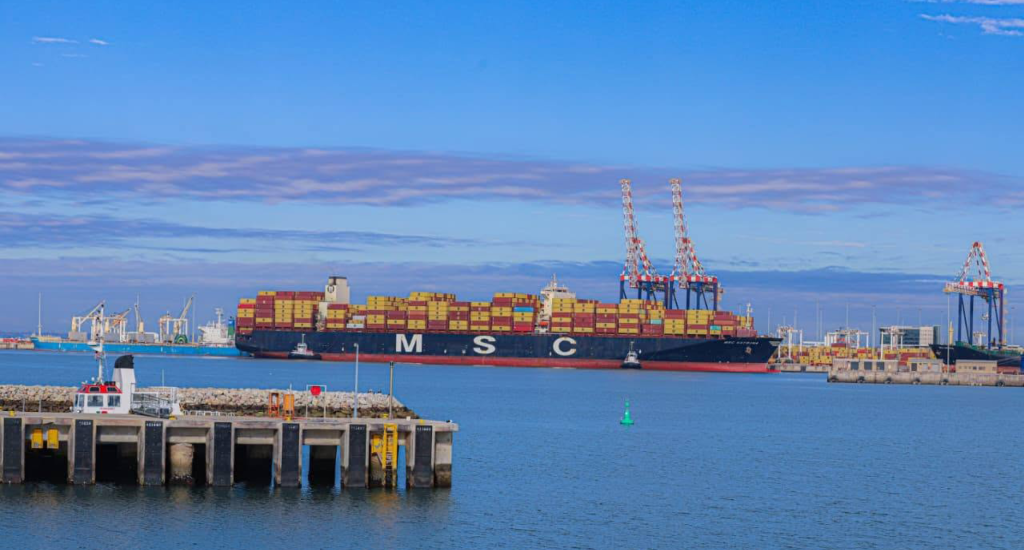
For this reason, the department's recovery efforts have also focused on restoring infrastructure in the freight sector. Mokonyama said the ability to move goods efficiently to ports and markets is essential for economic growth and competitiveness.

Beyond infrastructure and logistics, Mokonyama emphasised the transport sector's critical role as a major employer and economic enabler.
The sector provides thousands of direct jobs through the Department of Transport and its entities, as well as through industries such as bus, taxi and rail transport. Yet its indirect contribution is even greater, supporting countless economic activities that rely on the movement of people and goods.
The sector enables millions of South Africans to travel to work each day, connects businesses to suppliers and customers, and ensures that cargo reaches local and international markets. From farms and factories to mines, warehouses and harbours, much of the economy depends on a well-functioning transport system.
“If we do not do our bit as a sector, many things would not function. The industry contributes about R290 billion per annum to the economy of the country,” he says.
As a key enabler of trade, investment and development, the transport sector remains central to government's vision of a modern, efficient and integrated transport system. Continued investment in infrastructure, improved governance and enhanced operational performance are expected to support economic activity, facilitate regional connectivity and improve access to opportunities for South Africans.
videos & photos