



Trailblazing research: bringing cutting-edge microscopy to Africa
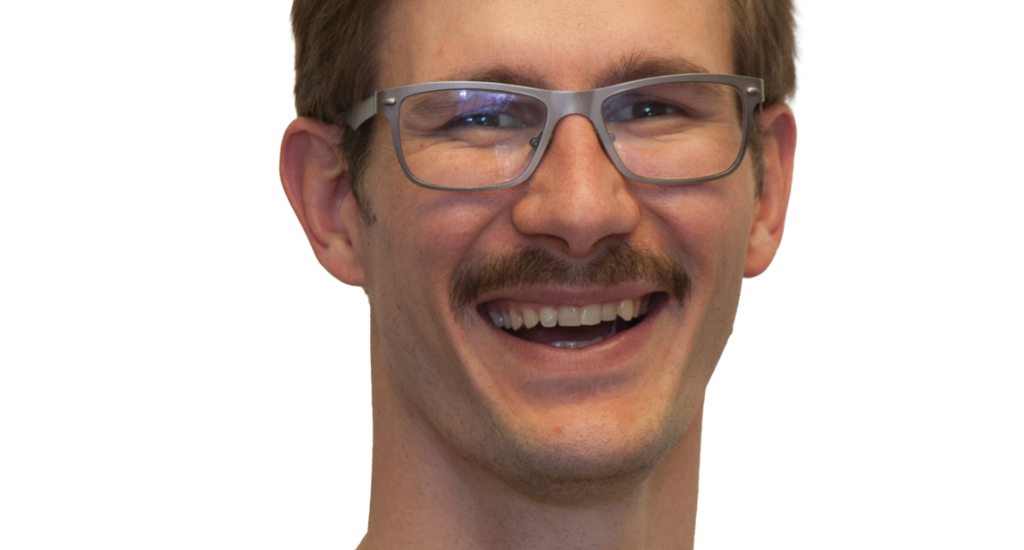
A groundbreaking piece of scientific equipment is set to transform wildlife parasite research in Africa, thanks to the vision and leadership of Professor Edward Netherlands of the University of the Free State (UFS).
The first laser microdissection platform of its kind on the continent was recently unveiled in the university's Department of Zoology and Entomology, providing researchers with a powerful tool to address persistent challenges in the study of wildlife blood parasites.
An Associate Professor in the department, Netherlands leads a research programme dedicated to understanding the biodiversity, evolution and ecology of wildlife blood parasites.
The acquisition of the state-of-the-art technology was made possible through a R4.5 million National Research Foundation (NRF) National Equipment Programme grant secured by Netherlands. Additional support from the UFS Large Equipment Fund and the Directorate Research Development brought the total investment to R7.4 million.
At the heart of the new facility is the Leica LMD6, a sophisticated laser microdissection platform that combines advanced microscopy with precision ultraviolet laser technology. The system enables researchers to identify, isolate and collect specific cells, tissues and microscopic structures directly from a specimen for detailed molecular analysis.
Unlike conventional microscopes, which are primarily used for imaging and observation, the Leica LMD6 allows scientists to physically isolate individual cells or targeted regions of interest. This capability opens the door to advanced investigations, including DNA sequencing, genomics and other specialised molecular studies.
The unveiling of the microscope marked the culmination of several years of planning and preparation. The platform is housed in a newly upgraded microscopy laboratory within the Department of Zoology and Entomology, providing researchers with access to technology previously unavailable in Africa.
It will be used in research focusing on the diversity, evolution, ecology and life cycles of blood parasites that infect wildlife, particularly amphibians, reptiles, and birds. It will also support future research in areas such as veterinary diagnostics, pathology, biodiversity research and single-cell molecular biology.
The new platform is also expected to benefit a wide range of scientific disciplines across the UFS. Researchers in fields such as infectious disease, molecular ecology and genetics, biodiversity and conservation science, veterinary science, cell biology, histology and pathology will also have access to the technology.
Netherlands told Public Sector Manager magazine that the idea for acquiring the technology stemmed from a longstanding challenge in wildlife blood parasite research.
“Many infected animals carry multiple parasite species simultaneously, and this is one of the greatest challenges in the wildlife parasitology that makes it extremely difficult to isolate DNA from individual parasites using conventional molecular techniques,” he explained.
A solution for researchers
Traditional DNA extraction methods collect genetic material from everything present in a sample, often resulting in mixed genetic sequences that are difficult to interpret accurately. For researchers seeking to understand individual parasite species, this has long been a significant obstacle.
Netherlands saw laser microdissection as a potential solution to the problem.
“I recognised that laser microdissection could solve this problem by allowing us to isolate single parasite-infected blood cells before DNA extraction,” he added.
The technology is expected to significantly enhance the identification of parasites, support the discovery of new species and advance research into parasite evolution, life cycles and disease ecology. More importantly, it enables scientists to investigate biological questions that were previously beyond the reach of conventional research methods.
Bringing the vision to life required years of planning and coordination. Netherlands had to demonstrate a clear national research need, establish collaborations, consult with researchers locally and internationally, design future research programmes around the technology and prepare a highly competitive funding application.
As the principal investigator, he led the development of the successful proposal submitted to the National Research Foundation's National Equipment Programme. From the initial concept to the installation of the instrument, the journey spanned several years and required sustained commitment and strategic planning.
“The Leica LMD6 represents a significant enhancement of the university's advanced imaging and molecular research capabilities and positions the UFS as a regional leader in single-cell and microdissection-based research,” he said. 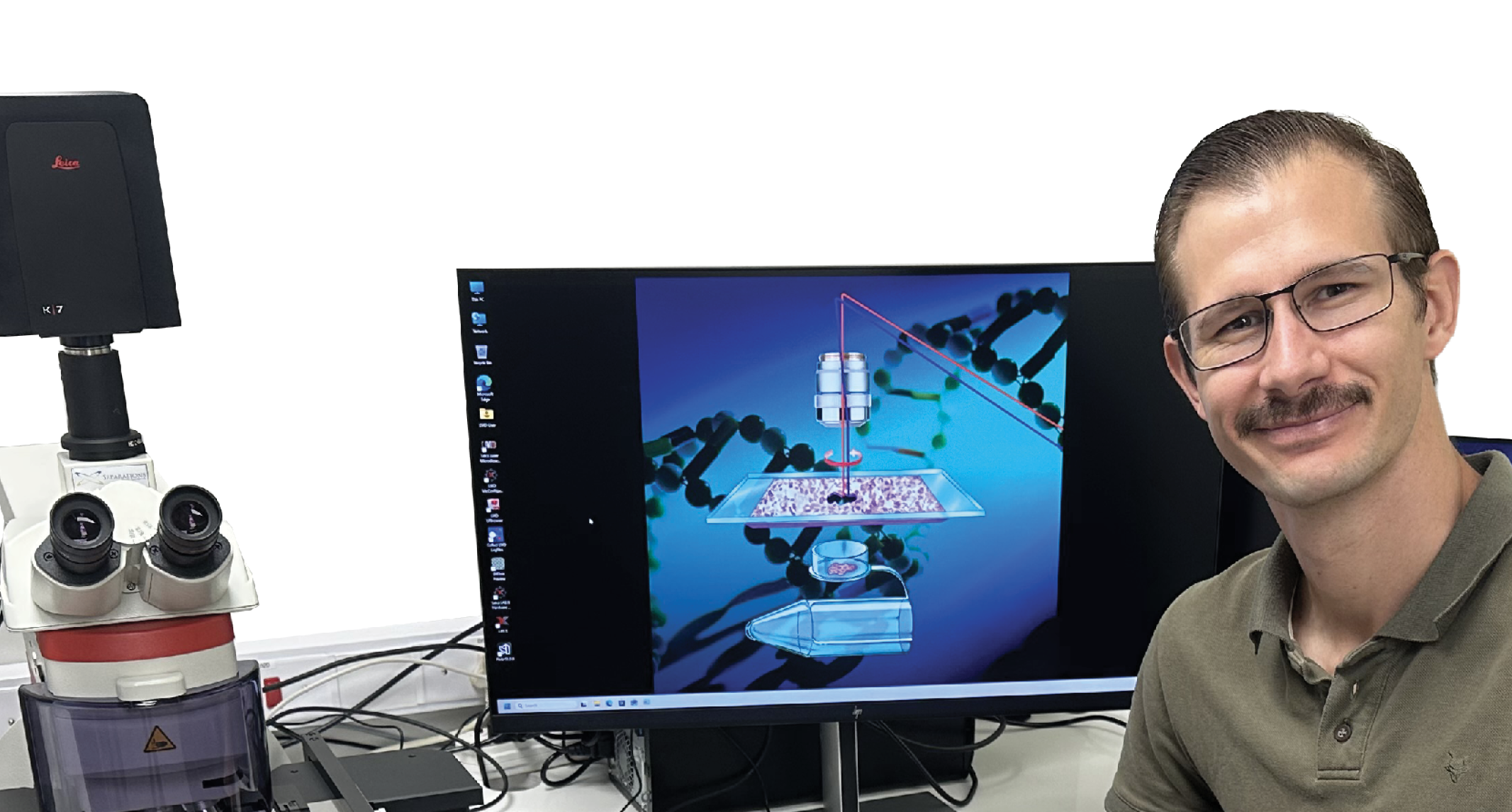
Recent research findings
Although the Leica LMD6 has only recently become operational, it is already delivering promising results.
One of the flagship projects underway involves the whole-genome sequencing of a Trypanosoma parasite that infects the African clawed frog (Xenopus laevis), commonly known as the platanna.
According to Netherlands, what makes the project particularly significant is that the genome is being generated from a single parasite cell isolated directly from a naturally infected blood smear rather than from cultured material.
This demonstrates the power of laser microdissection to isolate individual parasites from complex samples and generate high-quality genomic data from organisms that are extremely difficult, or even impossible, to culture in the laboratory.
Beyond this project, the technology is enabling Netherlands and his team to obtain species-specific genetic data from mixed parasite infections, link different life-cycle stages of parasites, and improve their understanding of parasite biodiversity and evolution.
These advances are opening entirely new avenues for wildlife disease research and position UFS at the forefront of biodiversity genomics in Africa.
“It is not simply about obtaining an instrument; it is about creating research capacity that will benefit students, colleagues and collaborators for many years,” he said.
Academic journey
Professor Edward Netherlands's path to becoming a leading researcher in wildlife parasitology began at the North-West University (NWU), where he completed a Bachelor of Science degree in Zoology and Botany, followed by an Honours degree in Zoology. He later earned a Master of Science in Zoology, specialising in parasitology and wildlife diseases.
He went on to complete a PhD in Biology through a joint programme between KU Leuven in Belgium and the NWU.
Following the completion of his doctorate, Netherlands undertook a postdoctoral fellowship at the NWU before joining the UFS as a senior lecturer. He has since progressed through the academic ranks and currently serves as an Associate Professor in the Department of Zoology and Entomology, where he balances teaching, postgraduate supervision and research.
Throughout his career, his contributions to science have earned recognition from the research community. One of the defining moments in his early career came in 2018, when he received the NRF Research Excellence for Next Generation Researchers Award. In the same year, he was also recognised by the NRF as the Best Final Year PhD Student across all disciplines.
His growing reputation as an emerging scientific leader was further highlighted in 2023, when he was named a top 10 finalist in the TW Kambule National Science and Technology Forum Awards. He is currently a nominee for the 2026 NRF Research Excellence Award in the Early Career/Emerging Researchers category.
The acquisition of Africa's first laser microdissection platform reflects the broader national emphasis on strengthening science, technology and innovation. Through continued investment in research infrastructure, skills development and collaborative research, government has committed to advance knowledge generation, support innovation and enhance the country's contribution to global scientific discoveries.