



Breast cancer care falls short of national guidelines, study finds

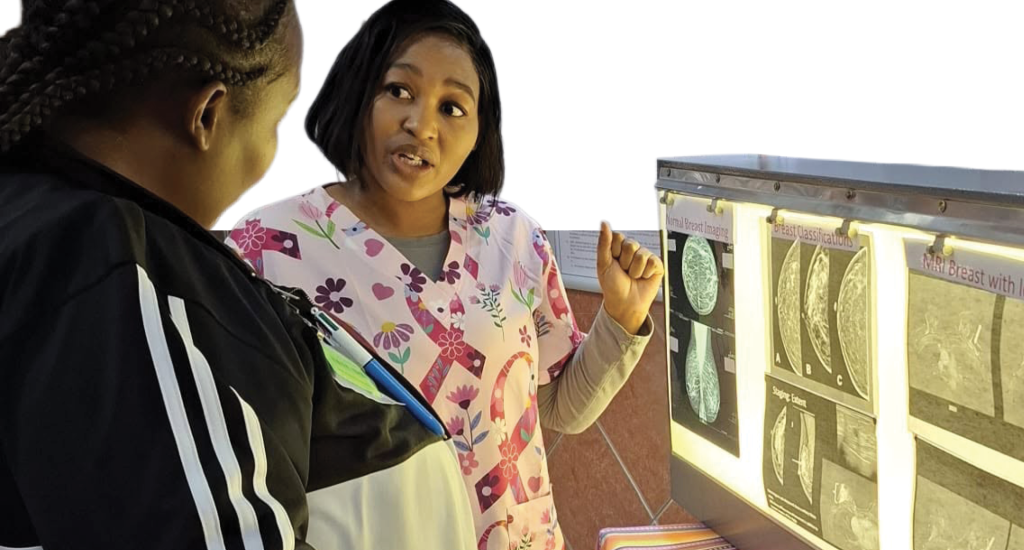
Every October, Breast Cancer Awareness Month encourages women to know their bodies, recognise warning signs and seek medical attention when something feels wrong. But while awareness remains a vital tool in the fight against breast cancer, new research suggests that early action alone is not enough.
For many women who depend on South Africa's public healthcare system, access to timely diagnosis, specialist care and treatment remains a significant challenge.
A major study led by Dr Laurie Milligan, a global surgery researcher at the University of Cape Town (UCT), has revealed deep systemic inequalities in breast cancer care across the country. The research highlights critical shortages of surgical services, specialist healthcare professionals and diagnostic capacity, leaving many women without access to potentially life-saving treatment.
Titled Breast Cancer Surgical Services in South Africa: Availability and Barriers to Guideline-Concordant Care, the study was led by UCT's Department of Surgery and Groote Schuur Hospital and published in the South African Medical Journal. Drawing on data from 43 public hospitals across all nine provinces, it provides the first national snapshot of breast cancer surgical services in South Africa's public health sector.
The findings point to significant disparities in service provision, with resource constraints and the uneven distribution of healthcare services limiting access to guideline-concordant care.
Lack of capacity
Speaking to Public Sector Manager magazine ahead of Breast Cancer Awareness Month, Milligan stressed that breast cancer treatment cannot be viewed simply as a question of whether a surgeon is available to perform an operation.
She indicated that effective cancer care requires an entire system, from early recognition and diagnosis through to staging, surgery, pathology, oncology, radiotherapy, rehabilitation, palliation and follow-up.
The study found that while national guidelines for breast cancer management are in place, many healthcare facilities lack the capacity to provide care that consistently meets those standards.
"Less urban provinces had poorer access to diagnostic and staging modalities. Across the facilities surveyed, 79% reported being able to perform breast-conserving surgery, but access to other key surgical interventions was limited, with only 53% performing sentinel lymph node biopsy, and just 35% providing breast reconstruction surgery," she explained.
The research also uncovered shortages in multidisciplinary expertise. Only seven of the 43 facilities surveyed reported having the radiologist, pathologist and mammographer recommended for a basic breast unit.
These findings reveal the need for sustained investment in public healthcare services, particularly as South Africa seeks to improve access to quality healthcare for women.
"This means, within the public sector, we need investment in the form of staffing, equipment, training and audit to support health facilities to meet the described standard of care," said Milligan.
"We need to train and retain surgeons, radiologists, pathologists, oncologists, specialist nurses and other healthcare professionals, while also thinking carefully about how these services are distributed across the country."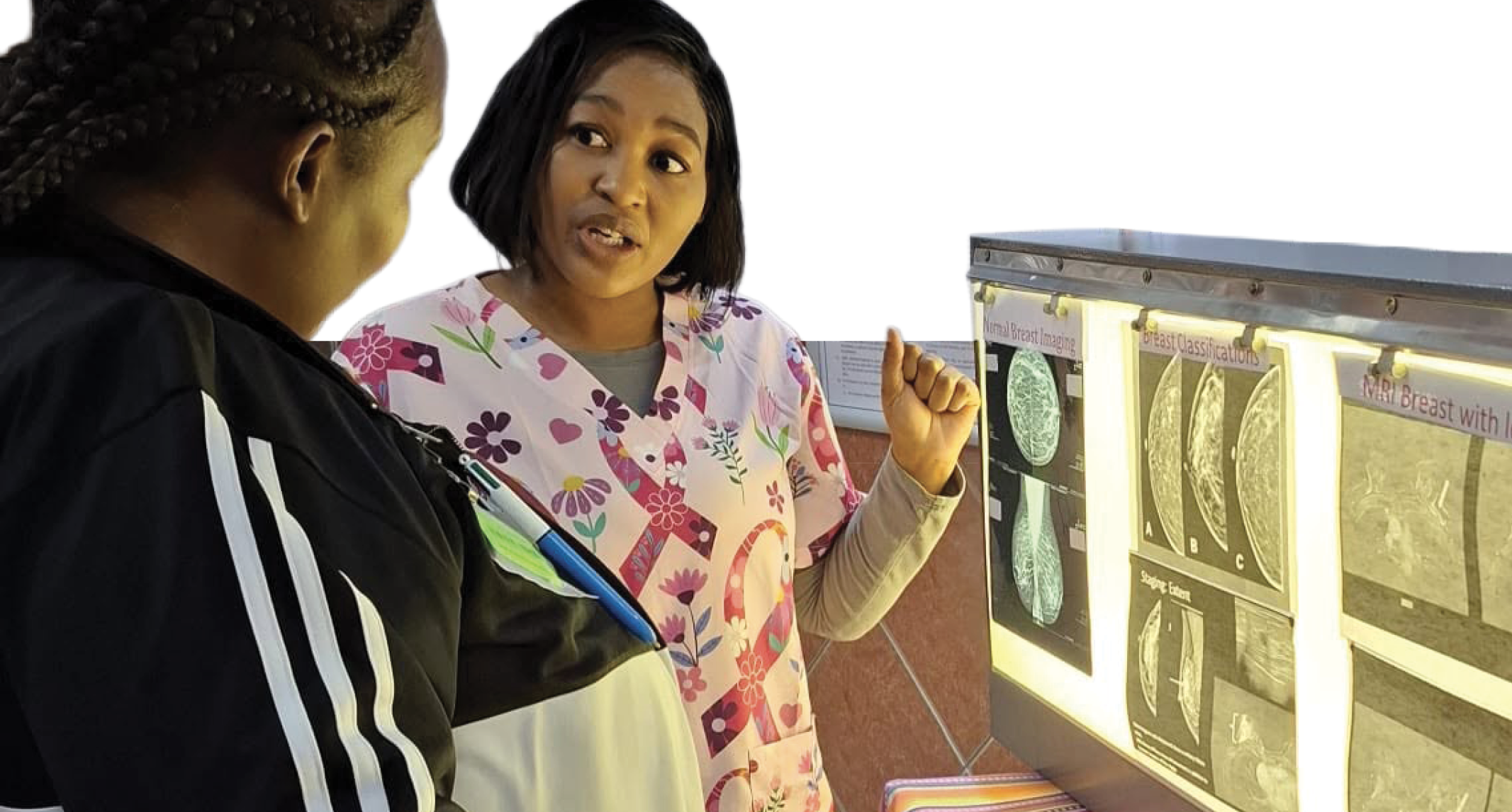
Strengthening healthcare at grassroots level
At the centre of the crisis is late diagnosis.
The study found that approximately 67% of breast cancer patients present with advanced-stage disease, reducing survival chances and limiting available treatment options.
For many women, particularly those living in underserved communities, delays in diagnosis can have serious consequences.
Although basic diagnostic tools such as mammography and biopsies are widely available, more advanced technologies, including MRI and PET scanning, remain out of reach for many facilities. As a result, women often face additional barriers before receiving the specialist care they need.
According to Milligan, strengthening services at primary healthcare and district level is critical to improving outcomes.
"If patients are diagnosed at a later stage, their treatment can become more complex and the options available to them may be more limited. We therefore need to strengthen services at primary and district level so that concerning symptoms can be recognised and investigated promptly, with efficient referral pathways to centres that can provide specialist care," she added.
Preparing for the future
The findings come at a time when South Africa is preparing for a growing cancer burden. The study suggests that the incidence of cancer in the country could double by 2030, increasing pressure on healthcare services already facing significant resource constraints.
Milligan said in order to address the challenge, there is a need to strengthen the entire cancer-care pathway.
With more patients expected to require treatment in the years ahead, investment will be needed not only in specialist services but also in prevention, early detection, pathology, imaging, oncology, radiotherapy, palliative care and follow-up services.
Reliable information will play an important role in this effort.
"Data is crucial. We need good information about where patients are being diagnosed, what stage they present at, how long they wait for different parts of their treatment and what their outcomes are. That information allows us to identify where the greatest gaps are and where investment is likely to have the biggest impact," she said.
Milligan also believes the organisation of specialist services warrants careful consideration.
"We also need to think differently about how specialist services are organised. Not every hospital will be able to provide every highly specialised service, but patients should be able to move through the healthcare system efficiently to access the level of care they require."
Beyond awareness
Milligan believes awareness campaigns must be accompanied by efforts to address the barriers women face within the healthcare system itself.
"I think it is really important for South Africans to understand just how common breast cancer is, but also to understand that there is much that can be done when it is detected and treated as early as possible," she said.
She encouraged women to seek medical attention if they notice a persistent or concerning change in their breasts. At the same time, she argued that awareness should not focus solely on individual responsibility.
"I would also like Breast Cancer Awareness Month to be about more than individual awareness. Our research highlights that there are significant barriers within the health system itself. We need to ask why so many women are presenting with advanced disease and what actions can be taken to make diagnosis and treatment more accessible," she said.
She added that awareness can only be effective if the healthcare system is able to respond when people seek help.
"Know your body and seek care if you are concerned, but we also need to continue investing in and advocating for a healthcare system where access to high quality breast cancer care does not depend on where you live or what resources you have."
Government stance
Government has identified the strengthening of public healthcare services as a national priority and continues to invest in initiatives aimed at improving access to quality healthcare. Efforts to expand healthcare infrastructure, train health professionals and improve equitable access to specialised services form part of broader measures to ensure that all South Africans can access the care they need.
Addressing inequalities in breast cancer services remains important to improving health outcomes for women and building a health system that leaves no one behind. ❖
videos & photos