




Documenting indigenous medicinal knowledge and plant use for childhood diseases
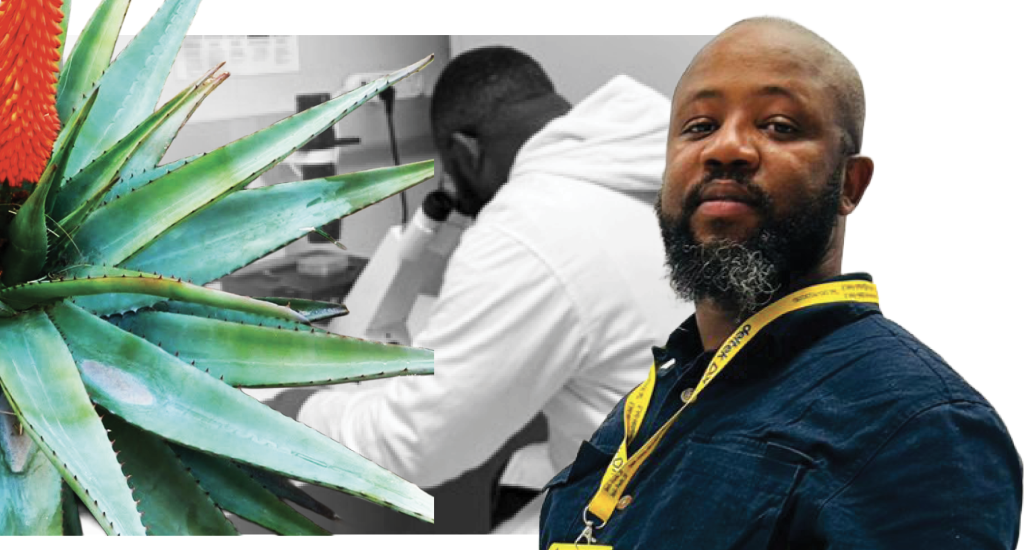
Dr Tshepiso Ndhlovu views South Africa's heritage as one of the country’s greatest assets, with its rich cultural diversity, flora and fauna, languages, traditions and indigenous knowledge systems that reflect centuries of accumulated wisdom that continue to shape the nation’s identity.
In a recent interview with PSM magazine ahead of Heritage Month, Ndhlovu said his work aims to document and preserve indigenous medicinal knowledge, and to evaluate plant species used by rural communities to manage human ailments, particularly childhood diseases.
He is a lecturer and researcher in the School of Biology and Environmental Sciences at the University of Mpumalanga. He is also the principal investigator for NRF-funded projects under the Thuthuka Post-PhD Track Programme.
The projects also support postgraduate student training and mentorship. Students actively participate in fieldwork, data collection, scientific writing and community engagement. His research focuses on ethnobotany, medicinal plants, indigenous knowledge systems, ethnopharmacology, biodiversity conservation and sustainable livelihoods.
“I investigate the use, conservation and value addition of medicinal plants and indigenous crops, particularly their roles in healthcare, food security and community wellbeing,” he explained.
Preserving traditional knowledge
Ndhlovu completed his doctoral studies at North-West University in 2023, where he investigated medicinal plants used to treat childhood diseases and their associated economic potential in the North West. He chose this area of research because childhood diseases remain a significant public health concern, particularly in rural communities, where access to formal healthcare services may be limited.
Throughout his academic journey, he discovered that many families across South Africa continue to rely on traditional medicine as either a primary or complementary healthcare option. Despite its widespread use, much of this knowledge remains undocumented or has not been scientifically evaluated.
His research findings demonstrated a rich diversity of indigenous medicinal plant species used by traditional health practitioners, highlighting the importance of preserving this knowledge while promoting sustainable utilisation.
He strongly believes that indigenous knowledge of medicinal plants, sustainable harvesting practices, food systems and environmental stewardship provides practical solutions for healthcare, biodiversity conservation and climate resilience. Many rural communities continue to rely on indigenous medicinal plants for primary healthcare, making this knowledge socially and economically significant.
“Documenting, preserving and promoting this knowledge ensures that future generations appreciate their cultural heritage while creating opportunities for scientific innovation, sustainable livelihoods and economic development,” he explained.
This commitment is reinforced by the Indigenous Knowledge Systems Act of 2019, which provides a legislative framework for the recognition, protection, development, promotion and sustainable use of indigenous knowledge.
The Act recognises indigenous knowledge as a valuable national asset. It seeks to ensure that knowledge holders are recognised, their intellectual property is protected and they benefit equitably from the use of their knowledge.
Partnering with communities
As the principal investigator for NRF-funded projects under the Thuthuka Post-PhD Track Programme, he focuses primarily on medicinal plants used to treat childhood diseases in Mpumalanga. His research integrates indigenous knowledge and scientific methodologies to support conservation, healthcare innovation and sustainable development.
“Our current research focuses primarily on childhood diseases that commonly affect children in rural communities, particularly respiratory illnesses, gastrointestinal disorders, skin conditions and other frequently reported childhood ailments that are traditionally treated using medicinal plants,” he explained.
He is encouraged that communities continue to possess extensive indigenous knowledge that has been carefully preserved across generations. This presents an important opportunity to document and scientifically investigate valuable medicinal plant resources before this knowledge is lost.
However, Ndhlovu is concerned that some medicinal plant species are becoming increasingly scarce because of unsustainable harvesting, habitat destruction and environmental change. His research is grounded in the principle that indigenous knowledge holders are not merely participants in research, but valued partners and co-creators of knowledge.
Throughout the research process, he encourages active participation, allowing communities to share their priorities, experiences and expectations. Importantly, he believes that research should not end with data collection.
He shares research findings with participating communities through feedback sessions, community engagements and educational activities so that the knowledge generated can contribute to local development and biodiversity conservation. Equally important, he says, is ensuring that research acknowledges and protects indigenous intellectual property rights while promoting equitable benefit-sharing.
A deeper understanding of nature
Ndhlovu says many medicinal plants have always been used to treat common ailments. Scientific investigation can validate these traditional uses, identify bioactive compounds and potentially contribute to the development of new medicines.
Documenting the use of medicinal plants also helps identify species that may be under harvesting pressure. This information can inform conservation measures such as cultivation programmes, community awareness initiatives and sustainable harvesting guidelines to protect vulnerable species.
“For example, some medicinal plant species used in South Africa have experienced population declines due to overharvesting and habitat loss. Research enables us to recommend conservation priorities and to promote cultivation as an alternative to harvesting from the wild,” he said.
Through his research, Ndhlovu is advancing the recognition of indigenous knowledge systems in mainstream science. At the same time, he is helping to build research capacity while promoting sustainable conservation and community development.
He has received several awards for research excellence and academic leadership. These include the University of Mpumalanga's Faculty Emerging Researcher of the Year Award in 2024, the Best Post-PhD Oral Presentation Award at the South African Annual Young Scientist Conference in 2024, and a Poster Award at the 73rd International Society for Medicinal Plant and Natural Product Research Conference in Naples, Italy, in 2025.